Science+10Oct 5
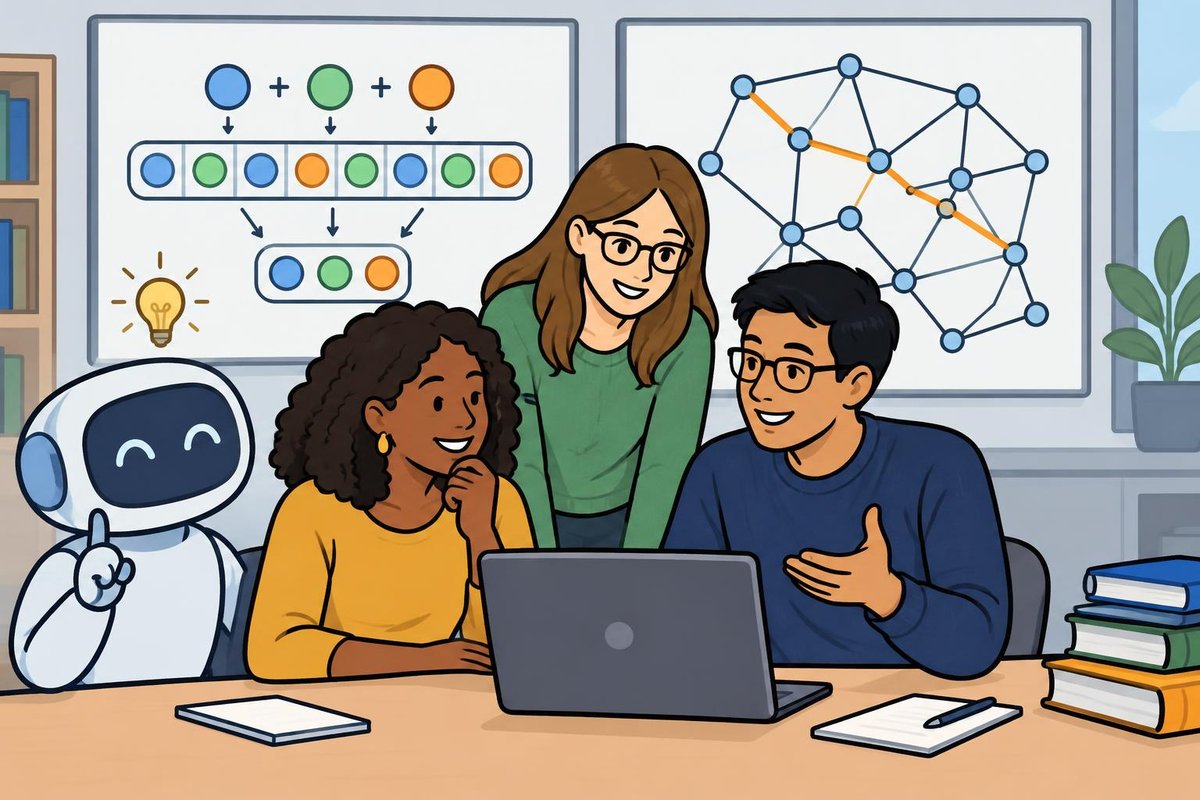
Image: The Threshold Report/GPT Image 2.5
AI-assisted algorithms beat longstanding 3SUM and shortest-path bounds
Virginia Williams and Josh Alman posted a preprint with new algorithms for two basic computing problems, according to Scott Aaronson. Their 3SUM method (finding whether any three numbers in a list add to zero) runs in O(n^1.9992) time, meaning its time bound grows with input size n raised to 1.9992. Their all-pairs shortest-path method (finding the shortest routes between every pair of points in a network) runs in O(n^2.9995) time. Aaronson says an Anthropic model supplied the crucial idea and the researchers wrote a digested presentation. Both exponents fall below the longstanding conjectured limits of 2 and 3, which describe computing work growing with input size squared and cubed.
Agents+5Text+2Oct 7
Image: anthropic.com
Anthropic releases cheaper Haiku with higher computer-use results
Claude Haiku 5.5 launched yesterday with adjustable reasoning effort for high-volume summaries, classification, support and agents assigned narrow tasks. Anthropic charges $0.10 per million input tokens and $0.50 per million output tokens (tokens are pieces of text a model processes) for prompts up to 100,000 tokens, claiming roughly 75% lower average operating costs than Haiku 4.5. Anthropic also halved Sonnet 5.5's price for reading cached text (previously saved input) to $0.10 per million tokens and introduced claimable monthly API credits of $100 for Max 5x, $200 for Max 20x and up to $500 pooled for Team subscribers. HubSpot tested whether Haiku could identify stale but ambiguous customer records without excessive false alarms and recorded its best suite result yet: 92.8%, averaged over three runs. Anthropic reports 72.4% on the offline portion of the OSWorld 2.1 computer-use test, compared with GPT-6 Luna's 48.9%.
Agents+5Text+5Oct 7
Image: microsoft.ai
MAI-Code-1.1-Flash adds downloadable coding alongside its Copilot deployment
A downloadable, compressed 3-bit copy of Microsoft's MAI-Code-1.1-Flash runs locally without per-call AI usage fees. It retains a 256K-token context window (the text it can handle at once, measured in small pieces called tokens). Microsoft deployed the model in GitHub Copilot at what it says is one-quarter the cost of version 1.0; the company also reports 25% fewer tokens per task and 25% faster streaming. Developer feedback led Microsoft to focus on command-line tasks (work done through typed commands) and .NET software development, with reported improvements of 22% on Terminal-Bench 2.1 and 15% on tasks using .NET (a platform for building software). Microsoft checked whether the changes helped in production by measuring code retention and return visits, which rose 4% and 9%, respectively. On SWE-Bench Verified and Terminal-Bench 2.1, Microsoft says the compressed model performs comparably to the uncompressed, full-precision model.
Science+5Oct 8
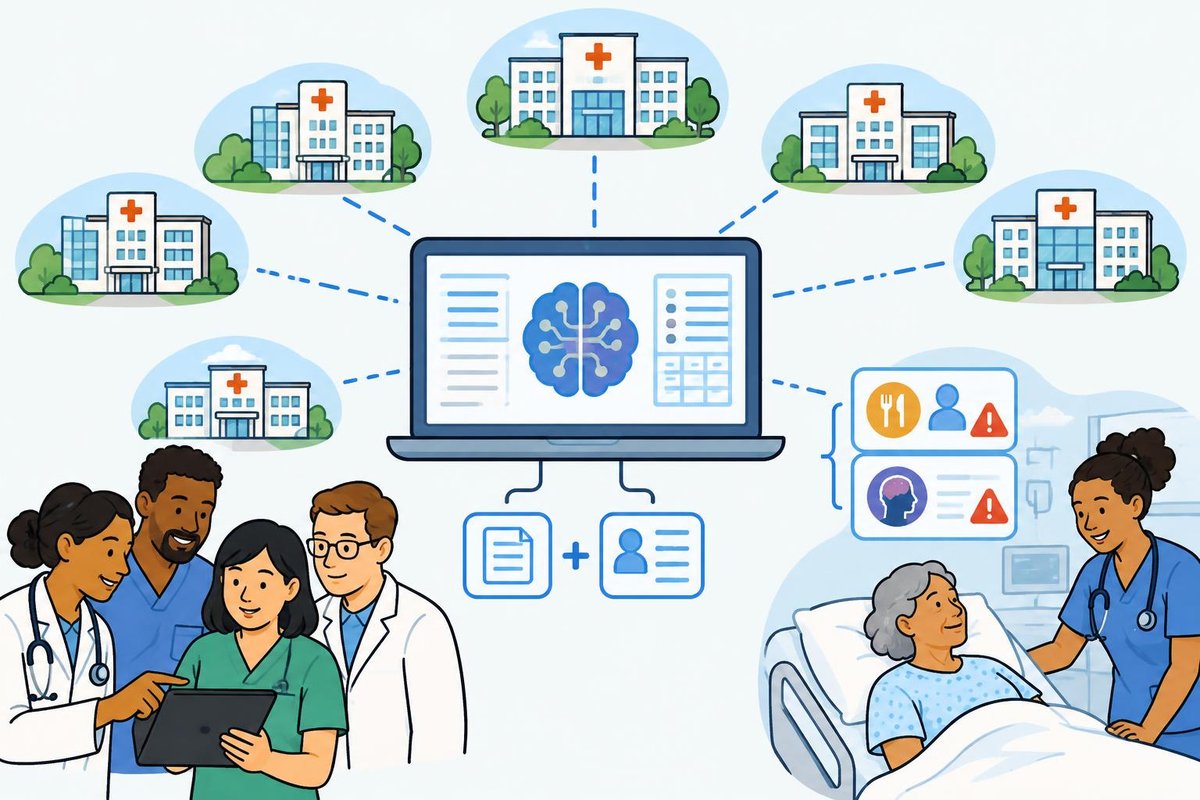
Image: The Threshold Report/GPT Image 2.5
Healthleap expands AI hospital screening to more than 50 sites
Healthleap says its AI screening system is operating in more than 50 hospitals, up from three partners over a year, flagging risks that might remain buried in clinical notes. The system combines language-model analysis of those notes with organized patient data and delivers morning risk scores for adult inpatients, including possible malnutrition and delirium. At the Hospital of the University of Pennsylvania, Healthleap attributes $6.3 million in additional reimbursement and $17.5 million from shorter stays to its malnutrition program. Healthleap puts that program's annualized financial impact at $23.8 million.
Agents+2Oct 6
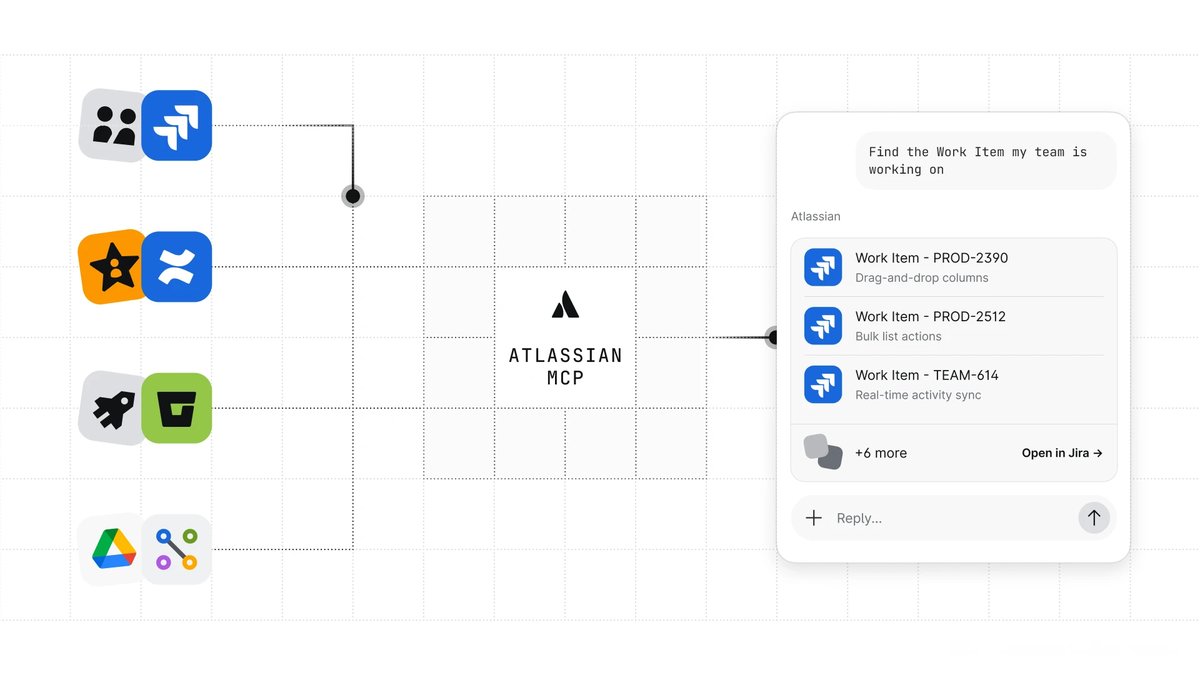
Image: atlassian.com
Atlassian expands its agent connector to over 220 tools
Atlassian's rebuilt agent connector can turn a meeting transcript into work items and documentation or inspect a ticket's comments, history and linked code without separate manual handoffs. It uses MCP (a protocol connecting AI agents to tools) and became generally available on Oct. 6. More than 220 tools span Jira, Confluence, Bitbucket Cloud, Loom and organizational context, including multi-step execution and document edits that account for conflicting changes. OAuth 2.1 (a standard for authorizing access), existing user permissions, separate action-risk categories, data-protection policies and centralized audit controls constrain that access. Atlassian says internal tests using Claude found up to 25% fewer tokens (pieces of text processed by the model) for the same Jira and Confluence work.
Agents+2Oct 8
Image: openai.com
Radisson launches a ChatGPT hotel plugin linked to direct booking
Radisson and Accenture built and launched a ChatGPT hotel plugin in six weeks using agentic development, meaning AI agents helped build the software. Travelers can compare maps, prices and amenities before continuing to Radisson's website to book; an installed plugin appears automatically in relevant conversations without an @RadissonHotels mention. In sponsored campaigns, OpenAI's case study attributes 54% of recorded checkout and booking events to ad views. OpenAI's July–August measurements put visit-to-booking conversion at approximately 1.5 times Radisson's organic-search rate.
Audio+2Text+2Oct 8
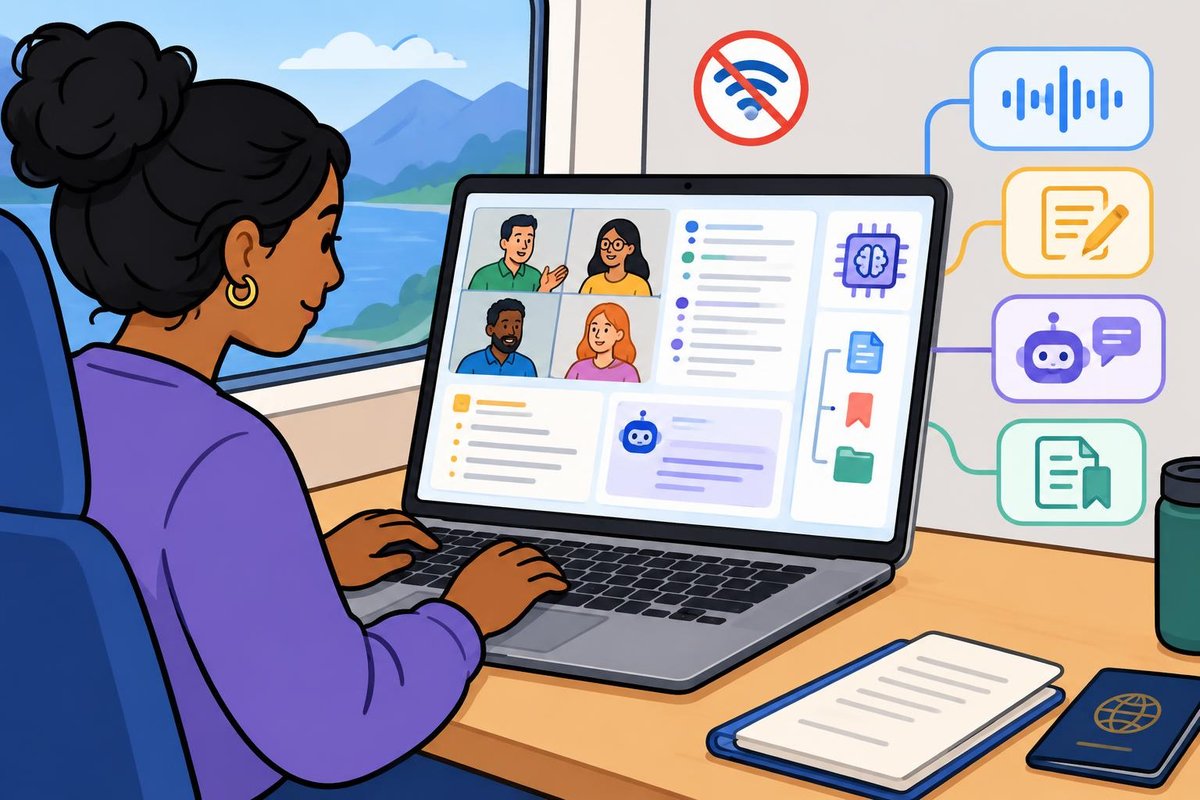
Image: The Threshold Report/GPT Image 2.5
Google releases an offline Mac app for meeting transcripts
Google released AI Edge Foresight today, letting Mac users transcribe meetings and work with notes and supporting documents without an internet connection. A split view places users' own shorthand notes beside AI-generated notes. EmbeddingGemma 2, which has 740 million parameters (values learned during training), runs on the device. Users can add documents and bookmarks to a knowledge collection that informs answers from a Gemma 4-powered assistant during meetings.
Robots+2Oct 8
ETH Zurich trains a robotic hand to walk and manipulate
ETH Zurich researchers trained a robotic hand to walk and handle objects without an arm, a design that could reach controls or objects in spaces too tight for a conventional robot body. The commercial hand carries an 80-gram backpack with a battery, a sensor and a computer; researchers trained separate software for crawling, getting upright, pressing keyboard keys and pushing objects. Physical tests on 14 surfaces averaged nine centimeters per second, and the hand righted itself in 21 of 25 trials. Using an overhead camera, it pushed a 41-gram cube to targets up to 40 centimeters away 15 times consecutively.
Robots+2Oct 8
AWS releases open-source software connecting robot training and deployment
The Physical AI Toolchain from AWS connects robot training with deployment and field feedback, aiming to reduce the work of joining those systems. AWS launched it today as open source, meaning developers can inspect and modify the code. The package combines SageMaker and IoT Greengrass (AWS software for training and deployment) with NVIDIA Isaac Sim, Isaac Lab, Isaac GR00T and Cosmos (simulation and model tools). AWS uses synthetic data (artificial training examples) to address scarce representative robot demonstrations, simulation to check models before physical deployment, and field data for subsequent training. Developers can use components separately, and the workflow does not require a particular robot hardware design.
Text+2Oct 7
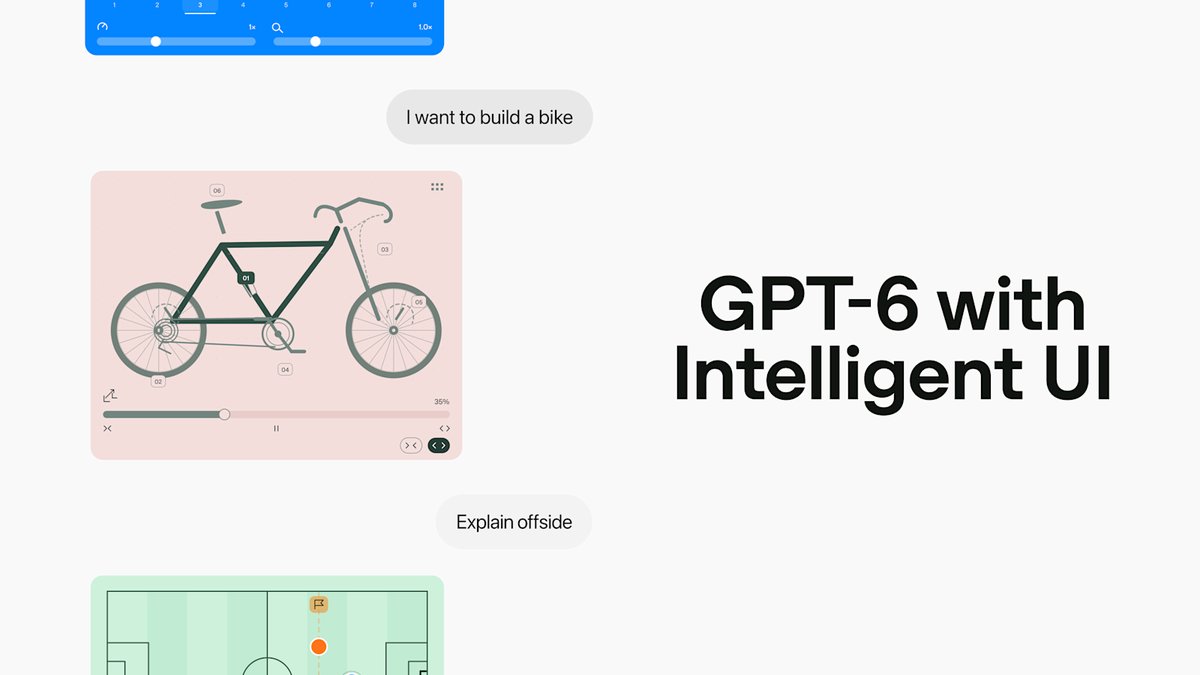
Image: openai.com
ChatGPT adds interactive tools inside its answers
Yesterday, OpenAI began rolling out GPT-6 with Intelligent UI to paid ChatGPT subscribers, letting people explore an explanation or use a calculator inside an answer. Paid users receive Sol; Luna was scheduled to expand access to Free and Go users on October 8, 2026. Answers can include interactive diagrams, charts and forms, which OpenAI evaluated for clarity, usefulness and completeness to teach the model when interaction helps and when plain text is enough. OpenAI says GPT-6 Instant starts web-search answers 44% sooner on average than GPT-5.6 Instant and better resists attempts to bypass its safety training.
Text+2Oct 7

Image: liquid.ai
Liquid AI releases downloadable models for fast local decisions
Liquid AI released two decision models with open weights, meaning developers can download, adapt and run them locally for request routing, classification and camera-based decisions without a hosted service. d1-3B handles text and images; experimental d1-omni-600M accepts text with images or audio, and both return structured answers after processing the input once. The release includes live-camera demos and a navigation demonstration connecting Isaac Sim (robot simulation software) to Jetson hardware. Liquid AI measured single-question response times of 16 milliseconds on Jetson AGX Thor and 50 milliseconds on Jetson Orin Nano. On its public decision benchmark, version 0.2.1, Liquid AI reports d1-3B scored 48.57, ahead of every evaluated model under 10 billion parameters (internal values learned during training) and on par with the 12-times-larger Decider 35B-A3B.
Text+2Oct 7
Image: perplexity.ai
Perplexity releases models that search document text and images
Perplexity's pplx-embed-v2-late models search text and page images directly, keeping the layout of PDFs, slides, charts and scans without first extracting their text. Versions with 0.6 billion and 9 billion parameters (the values a model learns) became available yesterday. Both retain numerical representations for individual pieces of input and use the same representation system, allowing the smaller query model to search a document collection prepared by the larger one. Perplexity evaluated searches in unfamiliar subject areas and agents' answers from 800 varied PDFs, and says it excluded test-associated datasets from training. The company reports 65.2% on ViDoRe v3, leading the evaluated systems that search images and text, and 92.4% answer accuracy on MADQA against 88.9% for the same agent using Mixedbread's retriever.
Text+2Oct 8
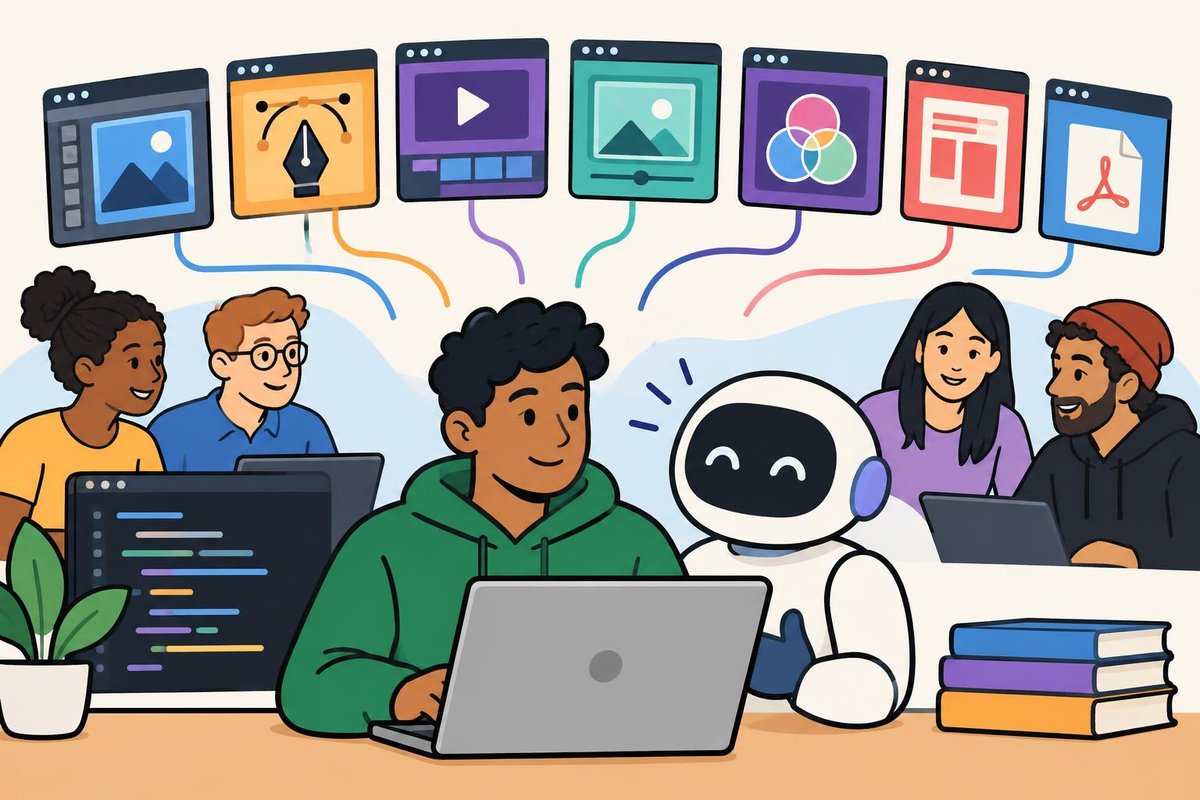
Image: The Threshold Report/GPT Image 2.5
Artcraft releases seven early creative apps built with Claude
Developer Brandon Thomas released seven free, open-source Artcraft apps, meaning users can inspect and modify their code. They recreate interfaces and tools from Photoshop, Illustrator, Premiere, Lightroom, After Effects, InDesign and Acrobat Pro. The applications use Rust (a programming language) and MIT/Apache licenses; browser versions use WebAssembly (a format for running compiled programs in a browser). Thomas says Claude Opus 5.5 helped build them as clean-room replacements, meaning new implementations made without copying the original code.


