Science+10Oct 5
Image: research.meta.ai
Meta publishes six human-checked math papers developed with Muse Spark
Meta shared six papers developed by mathematicians using Muse Spark 1.1 and 1.2 through the regular meta.ai chat interface, without a custom research setup. The results include a precise threshold for fitting ellipsoids (oval-shaped figures) to Gaussian data (meaning data with a bell-shaped distribution) and a proof of wave collapse in finite time. Counterexamples involve a group of 384 mathematical symmetries and a three-dimensional algebraic system; other results establish when a particular optimization approximation is exact and connect calculations in number theory and string theory. Researchers directed the work and checked AI-generated calculations, search programs and candidate proofs; five papers answer previously open research questions.
Compute & Infra+5Oct 5
Image: primeintellect.ai
Prime Intellect releases inference service for long-running AI agents
Prime Intellect released Prime Inference for long-running agents using open models (models whose files are available to run yourself), with support for existing OpenAI-compatible tools. The service offers serverless access (meaning Prime manages the servers) and reserved capacity, with automatic backup routing across data centers; its public GLM-5.3 endpoint has been live on OpenRouter since September 22, 2026. Prime mixed ongoing agent tasks with new long prompts to check speed, quality and simultaneous usage, and tested compressed caches (saved calculations) on long-input tasks for accuracy loss. Prime says separating prompt processing from text generation cut the delay between output pieces by nearly 40% at the 90th percentile (meaning the level covering 90% of measured delays); compression added about 50% more cache capacity, and production tool-call errors were near zero.
Compute & Infra+5Oct 5

Image: datacenterdynamics.com
Applied Digital adds 75MW at CoreWeave's North Dakota campus
Three 25MW halls are ready for service at the CoreWeave-leased Polaris Forge 1 campus in Ellendale, North Dakota, adding 75MW of power capacity for computing equipment. Applied Digital completed the 150MW Building 2 with the addition. The campus has 250MW ready for customers to use.
Text+5Oct 5
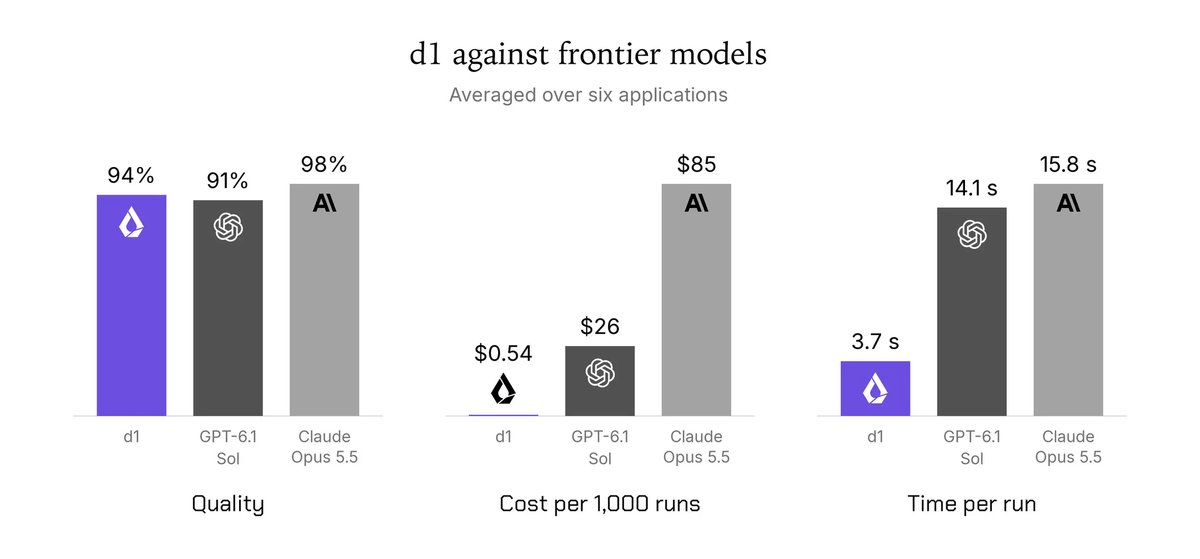
Image: x.com
Liquid AI adds image-based decisions to d1
The d1 decision model from Liquid AI gained image input for work such as filtering support tickets and inspecting circuit boards. Given images, text or both, it returns probabilities for yes/no, choice or score questions in a single processing pass without generating text. Liquid tested six real applications to check whether practical decisions could avoid the cost and delay of leading generative models, and reports text responses in 200 to 300 milliseconds. Across those tests, Liquid says d1 matched or beat GPT-6.1 Sol on four tasks, cost 19 to 200 times less than both Sol and Claude Opus 5.5, and answered faster on every task.
Agents+2Oct 6
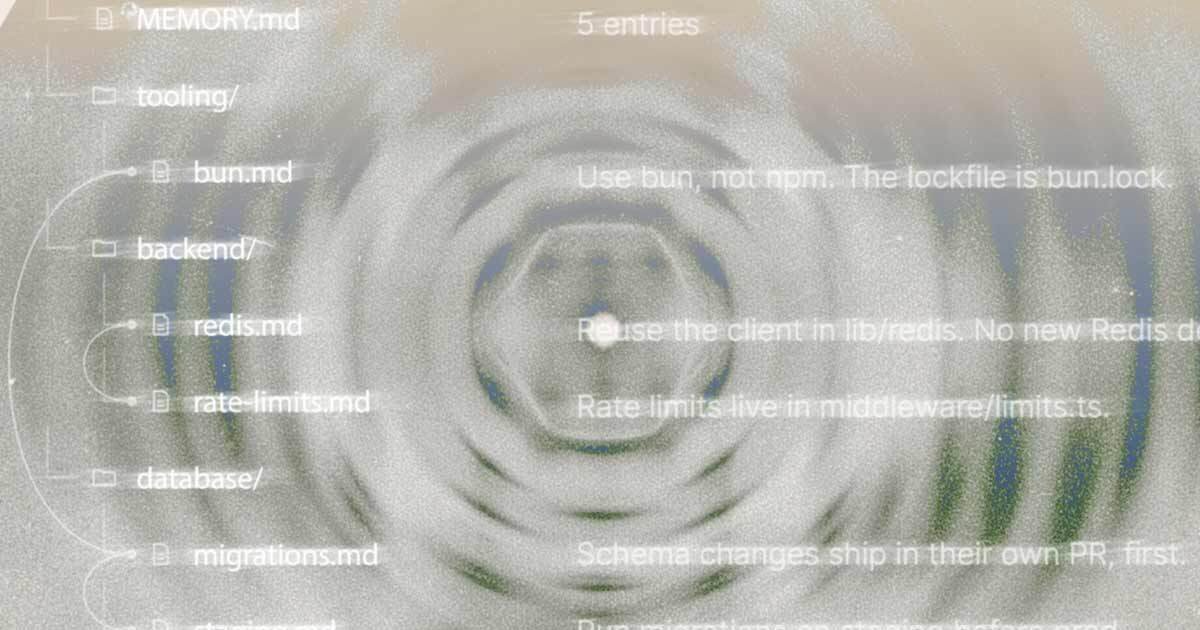
Image: devin.ai
Devin gains personal memory that carries lessons across sessions
Cognition introduced Memory and Dreaming in Devin so preferences, corrections and project lessons can carry into later tasks without users manually turning them into reusable skills. Devin stores Markdown notes (plain text with simple formatting) in a persistent Git repository (a version-tracked file store). A daily background process consolidates overlapping notes and removes short-lived or stale details, while users can inspect both memories and Dreaming sessions. Parallel sessions merge notes using revision checks and flag conflicting edits; Cognition also made the memory-system standard open source, meaning others can inspect and reuse it.
Audio+2Oct 2
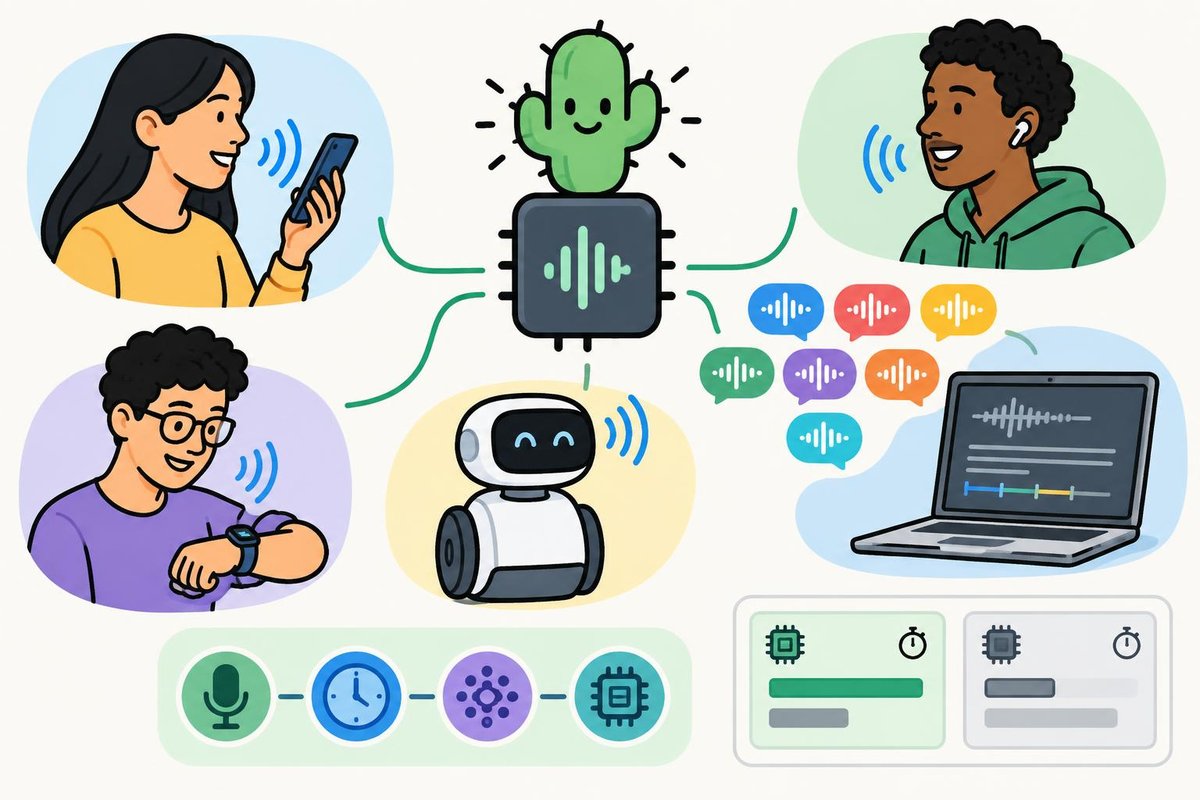
Image: The Threshold Report/GPT Image 2.5
Cactus releases a 16.9MB speech model for on-device transcription
Whistle, the 16.9MB speech-recognition model released by Cactus, can transcribe locally on phones, wearables, robots and other supported devices without sending audio to a server. It supports seven languages, word timestamps and speech embeddings (numerical representations of audio), all on the CPU (the device's main processor). In a test using ten seconds of audio on an Apple M4 Pro CPU, Cactus measured 11.1 milliseconds to the first token (a small unit of text) and 1,319 decoded tokens per second, compared with Whisper base's 73.2 milliseconds and 266 tokens per second. Whistle shares its engine with Needle, allowing one program to turn an audio clip into both a transcript and requests to software tools.
Compute & Infra+2Sep 29
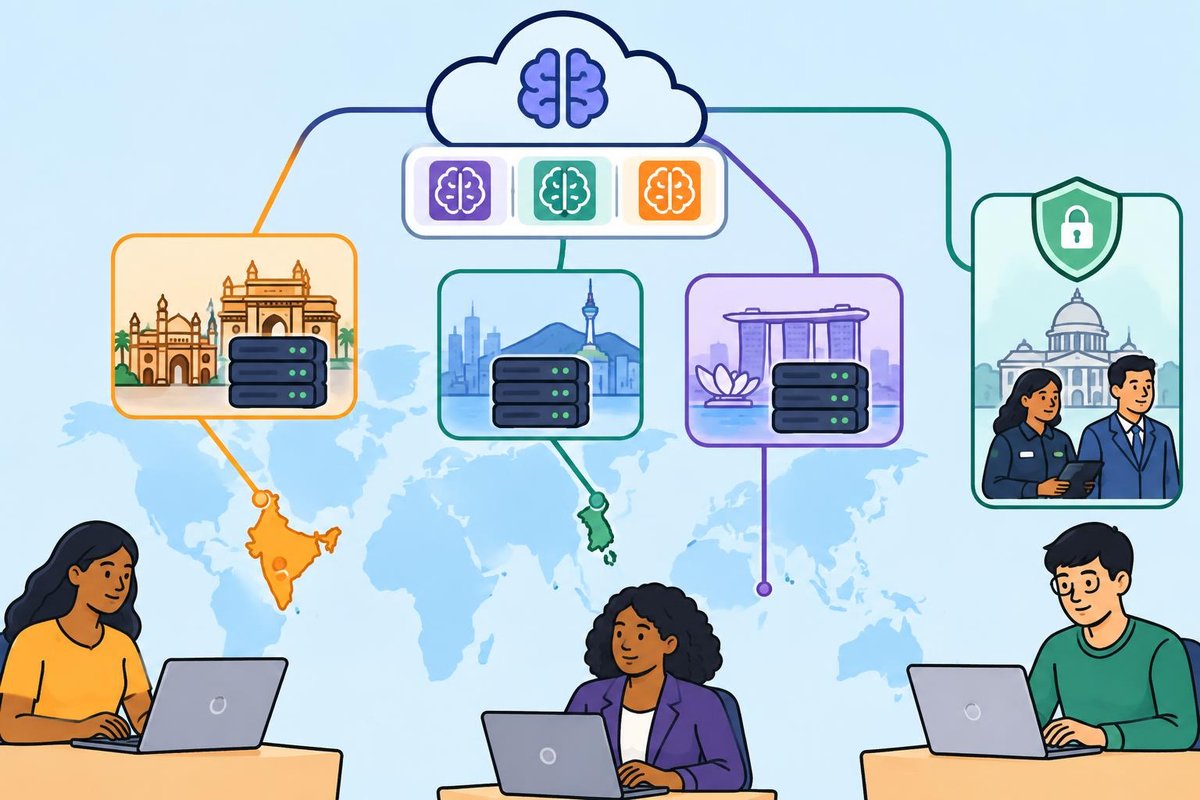
Image: The Threshold Report/GPT Image 2.5
AWS adds country-contained Claude processing in three Asian markets
Claude processing can stay within India, South Korea or Singapore through new Amazon Bedrock options for regulated businesses and public services with in-country requirements. In India, Claude Opus 5, Sonnet 5 and Haiku 4.5 can run across Mumbai and Hyderabad while processing remains inside the country. Seoul gained in-region Opus 5 and Sonnet 5, while Singapore gained Sonnet 5.
Science+2Oct 4
Image: vals.ai
Claude-assisted research identifies two semiconductor candidates for spin-based memory
Geby Jaff and Claude Opus 5.5 agents identified two candidate semiconductors predicted to have no net magnetism from electron spin (meaning electrons' magnetic orientation) in ideal crystals, potentially supporting memory without stray fields that interfere with neighboring components. Predicted band gaps (the energy electrons need to reach a conducting state) are 2.35 electron volts for the newly designed YBaMnFeO₅ and about 2.1 electron volts for the previously synthesized KV[Cr(CN)₆]. The calculations also predict substantial energy ranges that separate electrons by spin; the public record includes inputs, raw outputs, analysis code, a one-command checker, independent reruns and known caveats. A 1999 sample of KV[Cr(CN)₆] experimentally retained magnetic order up to 376 K, above room temperature.
Text+2Oct 6
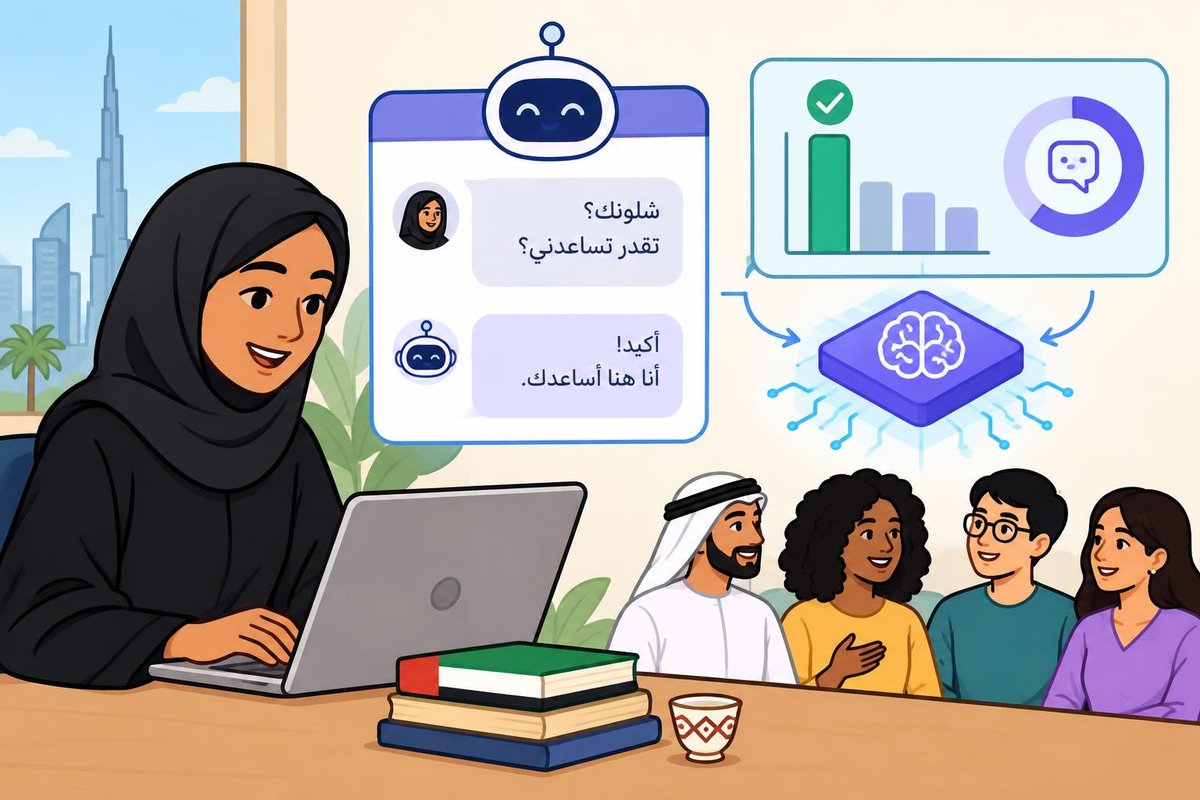
Image: The Threshold Report/GPT Image 2.5
TII makes its Emirati Arabic model available in Falcon Chat
Falcon Chat users can try Falcon-Emirati-7B, which Technology Innovation Institute made available today. The model builds on Falcon-H1-Arabic, and native speakers checked its naturalness, tone and cultural fit; open-ended tests checked whether it replied in Emirati. An AI judge scored its dialect fidelity (meaning how closely it follows Emirati speech) at 0.52, versus 0.05 or lower for four competing models, according to TII. On the 1,173-question Alyah test, TII reports 84.83% accuracy, ahead of every Arabic and multilingual model it compared.


