Science+10Oct 6
Image: openai.com
OpenAI releases 722 math manuscripts with computer-checkable proofs
OpenAI published 722 mathematics manuscripts in 372 groups of related results, allowing mathematicians to inspect and build on work from an unreleased internal model. The collection includes many proofs formalized in Lean (a language for computer-checkable proofs), ten summaries of model reasoning, and statistics on attempted problems. OpenAI estimates the average computing cost per result as equivalent to roughly three hours of ChatGPT Pro thinking. After consulting its independent mathematics advisory group, OpenAI established protocols for revising and citing the results. The advisory group says the manuscripts include solutions to hundreds of open questions.
Image+5Oct 6
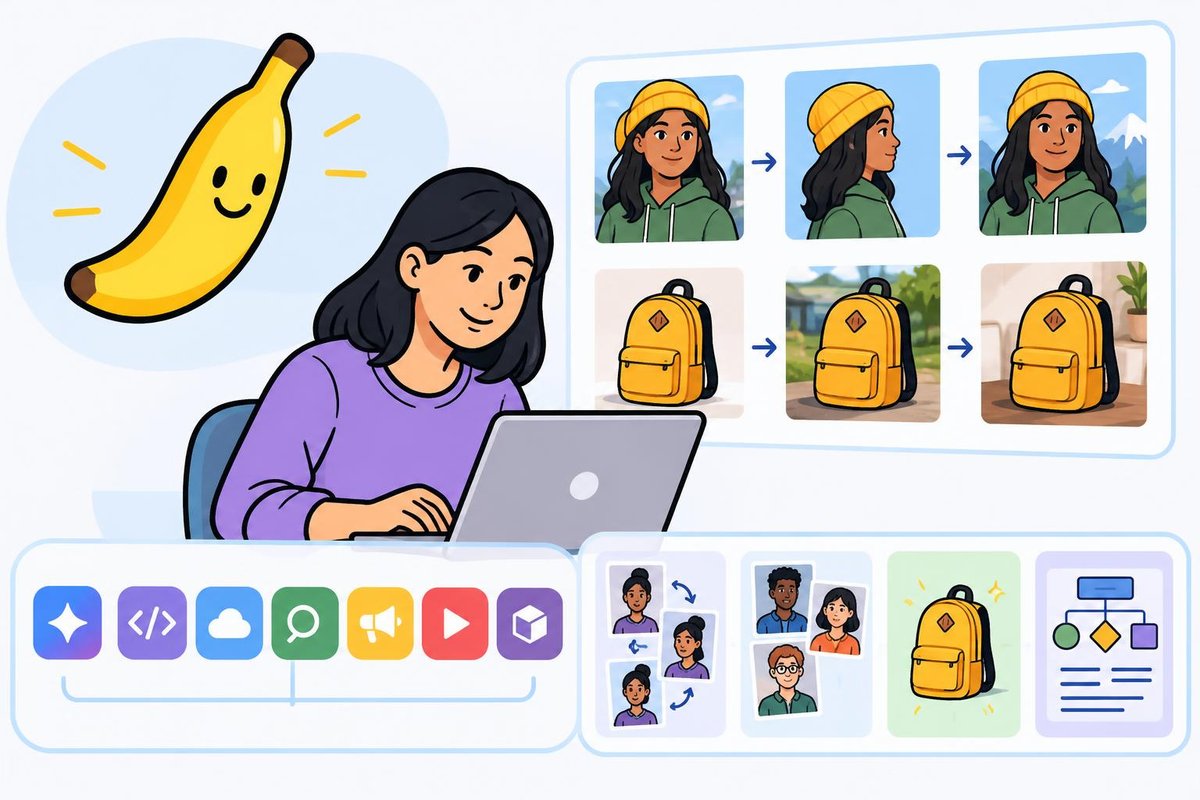
Image: The Threshold Report/GPT Image 2.5
Google releases Nano Banana 2.1 with improved image consistency
Nano Banana 2.1 is available through the Gemini app, AI Studio, Gemini API, Search AI Mode, Ads, Flow, and Stitch. The update targets repeated edits and multiple reference images, including work that needs consistent products or characters and readable diagrams. Google tested familiar Flash Image and Pro Image tasks to check that established creation and editing workflows had not deteriorated. In Google's evaluations, consistency across multiple characters scored 1,106 versus 978 for Nano Banana 2, while factual accuracy in infographics scored 0.521 versus 0.179 for the predecessor's thinking mode.
Text+5Oct 6
Image: mistral.ai
Mistral opens Large 4 for public API testing
Yesterday, Mistral opened a public API preview of Large 4, letting businesses test a European-hosted model for coding, document analysis, and security work. Large 4 handles multiple types of input and has one trillion parameters (values learned during training), with 49 billion active at a time. Input costs $1.36 per million tokens (units the model processes), and output costs $4.18 per million tokens. Mistral reports a top-five position on Artificial Analysis' cybersecurity ranking and 82% on its test of reproducing and patching vulnerabilities. Mistral is working with vetted partners and governments to test a cybersecurity variant with fewer content restrictions. The company says Large 4 competes with the strongest open models worldwide and exceeds GPT-6 Astra on selected finance, legal, and visual-grounding evaluations (tests of matching words to visual content).
Text+5Oct 7
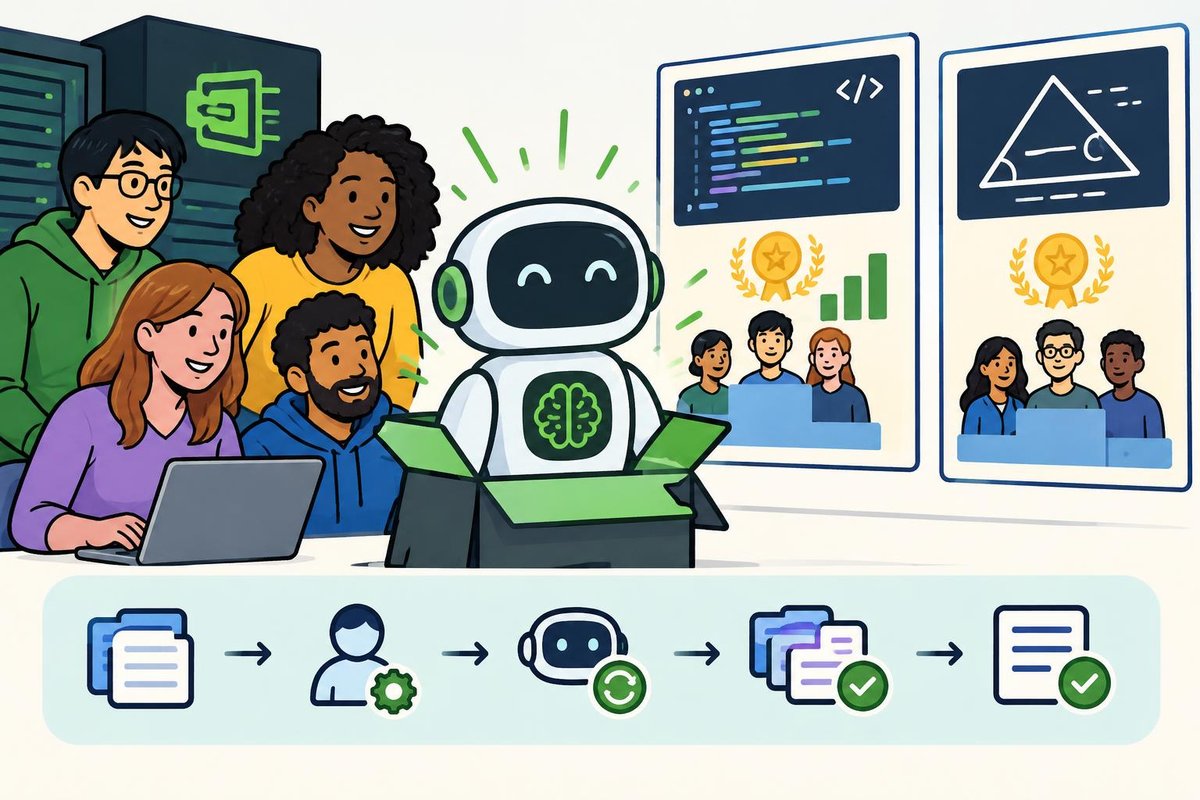
Image: The Threshold Report/GPT Image 2.5
NVIDIA releases Nemotron specialists with gold-level math and coding results
NVIDIA released Nemotron specialist models and training methods that developers can reuse for demanding coding and mathematics problems. The methods combine learning from examples and feedback with repeated generation, checking, and refinement. Developers can inspect the submitted proofs and workflows, use shared training data, and test against a new 200-problem mathematics benchmark. NVIDIA reports 30 out of 42 on IMO 2026 (an international mathematics competition), above the gold threshold of 29, with official graders assessing the proofs. At IOI 2026 (an international programming contest), its run followed human time, internet, and submission limits, though it was unofficial and unsupervised. NVIDIA reports a score of 535.4 out of 600, above the top human score of 498.27.
Agents+2Oct 7

Image: newsroom.amd.com
AMD releases Ross for embedded hardware and software development
AMD released Ross, an assistant that connects an engineer's preferred language model to AMD's embedded hardware and software tools. Engineers can reuse documented procedures in their chosen editor or command-line environment, with documentation searches available locally or in the cloud. Ross combines MCP servers (connectors between models and tools) with a validated documentation database, expert-authored procedures, and runnable design examples. It supports timing analysis, hardware debugging, embedded software, power estimation, and schematic review through ordinary-language requests. Ross also supports high-level synthesis optimization (improving how code is converted into hardware).
Agents+2Oct 6
Image: thenextweb.com
Hark Pro launches for groceries, bills, and bookings
Hark released Hark Pro on the web, iOS, and Android, with a free option and subscriptions at $20 and $100 per month for tasks such as grocery shopping, bills, and bookings. Users can watch browser actions in a visible window alongside proactive task suggestions and small dashboards. Hark says passwords and payment details are stored in an encrypted vault that the company cannot read. The company says its model, trained to operate computers, can complete tasks end to end without handing work back to users and run up to six browsers at once.
Agents+2Text+2Oct 7
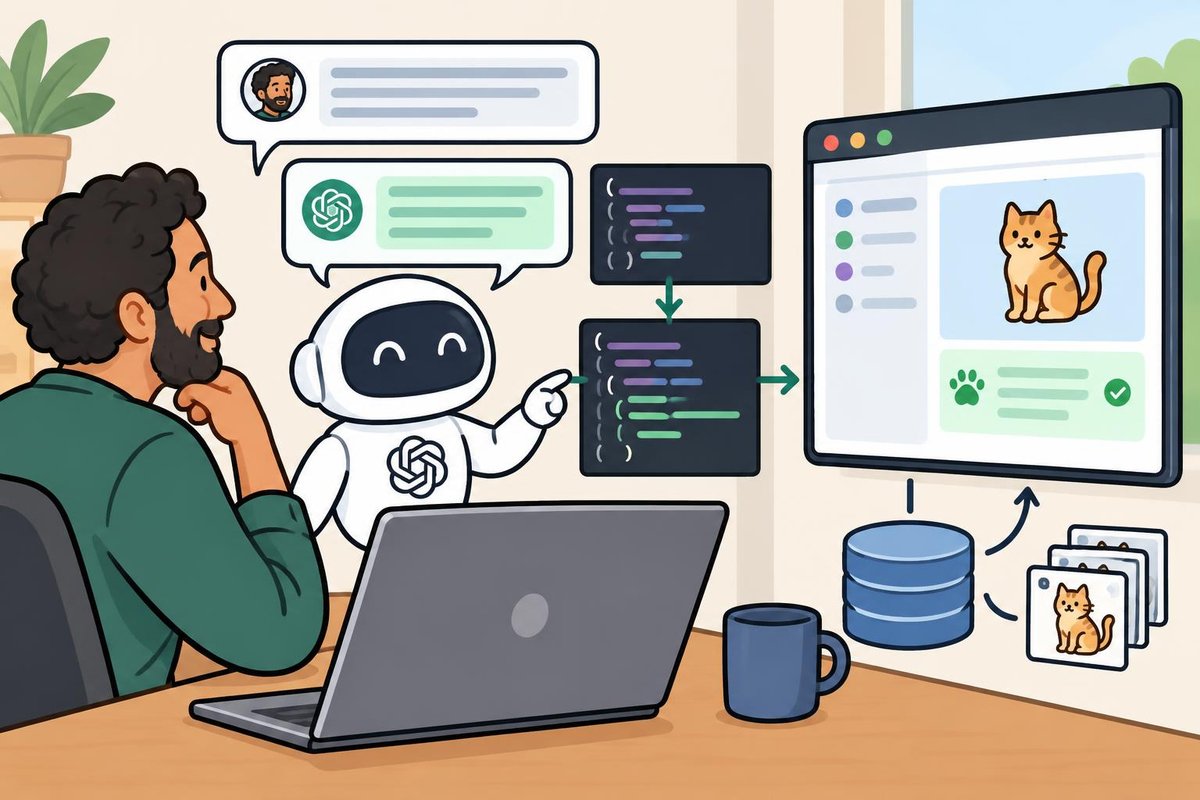
Image: The Threshold Report/GPT Image 2.5
Geoffrey Huntley releases Jiti for modifying running Lisp applications
Geoffrey Huntley released Jiti, a working environment for Common Lisp (a programming language) in which an OpenAI model inspects and changes an application while it runs. The model can write, redefine, or remove functions (reusable pieces of code), with evaluation and recovery systems around its changes. Accepted functions and managed data are saved as lasting revisions, allowing users to extend the application without a separate editing and rebuilding cycle. Those functions execute as ordinary Lisp code and do not inherently require another model request each time they are used.
Audio+2Image+2Text+2Video+2Oct 6
Image: deepmind.google
EmbeddingGemma 2 brings audio into offline cross-media search
With Google's release of EmbeddingGemma 2, developers can search audio alongside text, code, images, and video without sending personal files to the cloud. The complete model needed about 567MB of active memory on a Pixel 11 Pro after quantization (reducing the precision of stored numbers), Google says. Its 740 million parameters (values learned during training) turn those inputs into a shared numerical format for finding related content. Developers can use the Apache 2.0 model's optional components for a smaller text-only configuration, while shorter output lists can cut local search storage by up to sixfold. Google says it ranks first among comparable search models that handle multiple media types and have fewer than one billion parameters on relevant tests, matching or beating some larger competitors.
Image+2Text+2Oct 7
Image: developers.openai.com
Decisions API opens image classification with GPT-6 Luna
GPT-6 Luna powers OpenAI's Decisions API, available in public beta for classifying text or images and checking damage. The API returns estimated probabilities, preset answers, or scores against a rubric (a set of criteria), including for request routing and work prioritization without generating prose. Input costs $0.10 per million tokens (the units a model processes), with no charges for output tokens or caching. Qualifying customers can opt for zero data retention and HIPAA health-data arrangements, with data residency and regional processing supported in the United States and Europe. According to OpenAI, responses are about ten times faster than through its Responses API.
Compute & Infra+2Sep 21
Five Googlebook laptops open for preorder, starting at $899
Google's hardware partners opened preorders for five Android-based Googlebook laptops, first reported on Sept. 21 and confirmed on October 7, 2026. The systems aim to put Android apps and Google's AI tools on a desktop-style computer. Prices start at $899, and dedicated AI processors are rated at 45 trillion operations per second. Google says the laptops include Gemini features that use screen context, voice input, and Antigravity for AI-assisted development.
Compute & Infra+2Oct 7
Image: github.com
AI-assisted openTPU runs language models on reprogrammable hardware
AI agents helped develop openTPU, a released Apache 2.0 hardware-and-software stack that runs language models on a Kintex-7 PCIe card. The card uses an FPGA (a chip whose circuitry can be reconfigured), and openTPU includes hardware designs, a command format, and software to translate programs, simulate the chip, measure performance, and run it from a computer. The project compared the card's generated tokens (units of model output) and prediction scores with its simulator to check that the hardware followed the intended computation. A four-bit LFM2.5-230M configuration (using lower-precision model values) produced 82.1 tokens per second, including overhead from the host computer. Qwen3.5-35B-A3B ran at 3.95 tokens per second with specialized parts of the model streamed from the host computer's storage.
Robots+2Oct 6
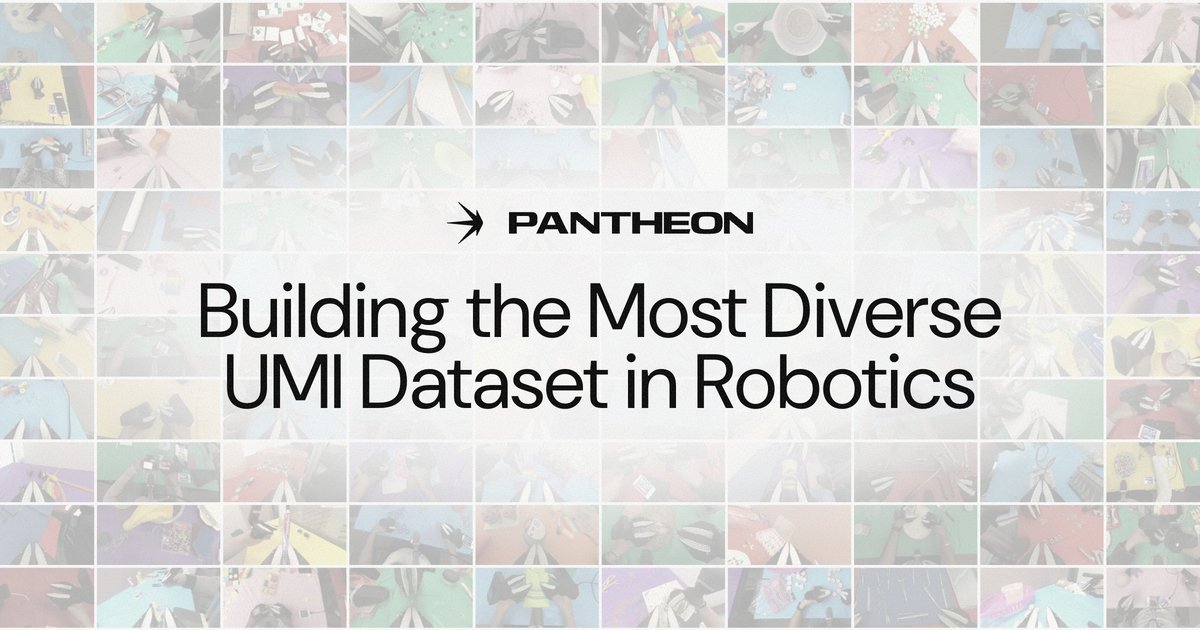
Image: pantheon.inc
Pantheon releases 100 hours of labeled robot-training recordings
Pantheon released a 100-hour annotated sample of recorded object-handling tasks for robot training from its Universal Manipulation Interface dataset. Its vision-and-language annotation process made freeform recordings usable for training without labeling every task during collection. Pantheon says 90 operators collected more than one million unique tasks in eight weeks at an average cost of $10 per recorded hour. The data includes failed grasps, drops, and recovery attempts, giving models examples of handling mistakes. Pantheon describes the collection as the most task- and environment-diverse dataset of its kind.
Robots+2Oct 6
Overview AI releases inspection cameras with built-in setup agents
OV Spark and OV Spark Pro are available from Overview AI with ten inspection tools and an on-camera assistant for setup and diagnostics. The assistant recommends checks, explains captured results, and builds operator screens from plain-language requests. Training, running the AI, inspection decisions, production-controller communication, and the operator interface all operate on the camera. A quality engineer with little prior camera experience configured the customer inspection at Mansfield Engineered Components. An OV Spark is running there at an end-of-line station previously checked only by an operator, where missing washers are the most frequent defect.
Text+2Oct 7
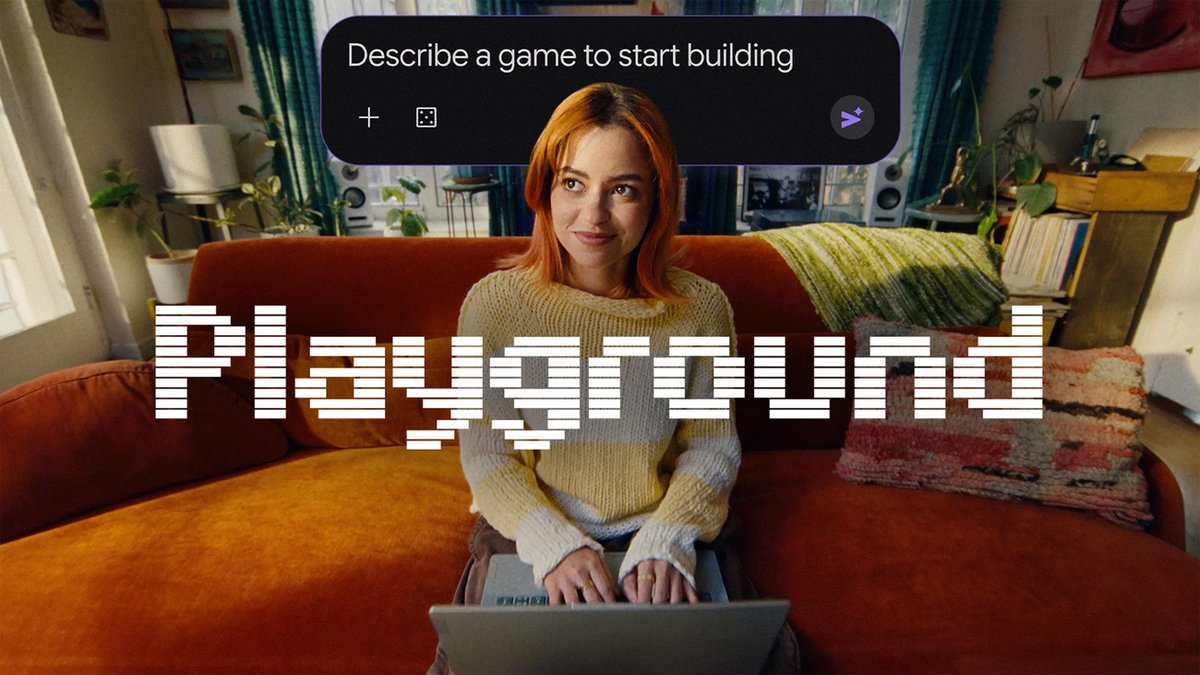
Image: blog.google
Google opens Playground for building games from text
U.S. users aged 18 and older can build, test, and revise games without writing code in Google's released experimental browser platform, Playground. Creation access is rolling out based on Google One membership. Creators can keep games private, share playable links, or publish them to a community gallery that works on phones and laptops. Leaderboards and multiplayer are supported in selected genres.


