TextNov 3Other News

Image: The Threshold Report/GPT Image 2.5
IBM trains Palette to make presentations in its design style
IBM Research trained Palette to make presentation decks in IBM’s design style, testing a model that an organization could run itself. The model has 20 billion parameters (learned numerical values) and was trained using about 1,000 AI-generated decks. Its workflow separates planning, slide generation and a checking stage that repairs layout problems. IBM reports scores of 59.7 for Palette and 60.8 for NotebookLM across three presentation categories in the PresentBench test; Palette ranked first in two.
TextNov 3Other News

Image: cloud.google.com
Nammu21 tests AI-extracted loan terms on Google Cloud’s ledger
Nammu21 and Google Cloud modeled a $1.945 billion term-loan segment to test a shared, programmable version of a credit agreement. Nammu21’s AI system structured the agreement’s terms and turned them into programmable contracts on Google Cloud Universal Ledger. The demonstration modeled participant consent, transfers and repayments against those terms, testing whether parties could avoid repeatedly reconciling separate interpretations.
Science+2Agents+2Nov 3Real Progress

Image: deepmind.google
Google chemistry agent proposes molecule designs in an hour
In a roughly one-hour demonstration, a Google agent proposed new molecule designs related to lung-cancer drugs. Its released Antigravity Cheminformatics Skills supported a search through thousands of compounds and comparisons between molecular pairs. The agent suggested macrocycles (molecules with large rings) and possible ways to make them; Google says a conventional design iteration can take multiple days.
RobotsNov 4Other News
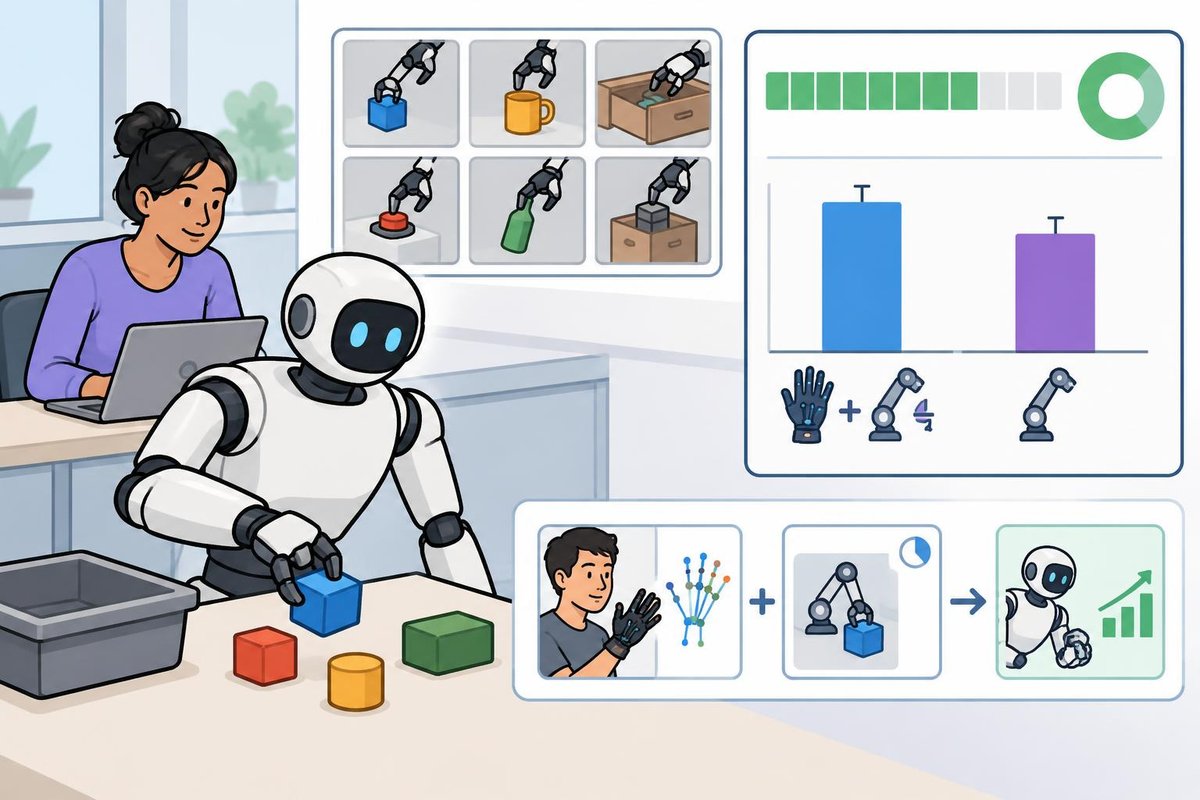
Image: The Threshold Report/GPT Image 2.5
LiberAI reports Liber-0 results on 60 GPT-6-proposed robot tasks
Without robot demonstrations collected specifically for the tasks, LiberAI’s Liber-0 succeeded in 36% of 600 trials across 60 tasks proposed by GPT-6, the company says. The team also tested whether human recordings could reduce the robot-specific data needed to teach object manipulation. Combining human glove recordings with one-quarter of the robot demonstration pool earned a 75.6 progress score, versus 72.8 using the full robot demonstration pool alone.
RobotsNov 2Other News
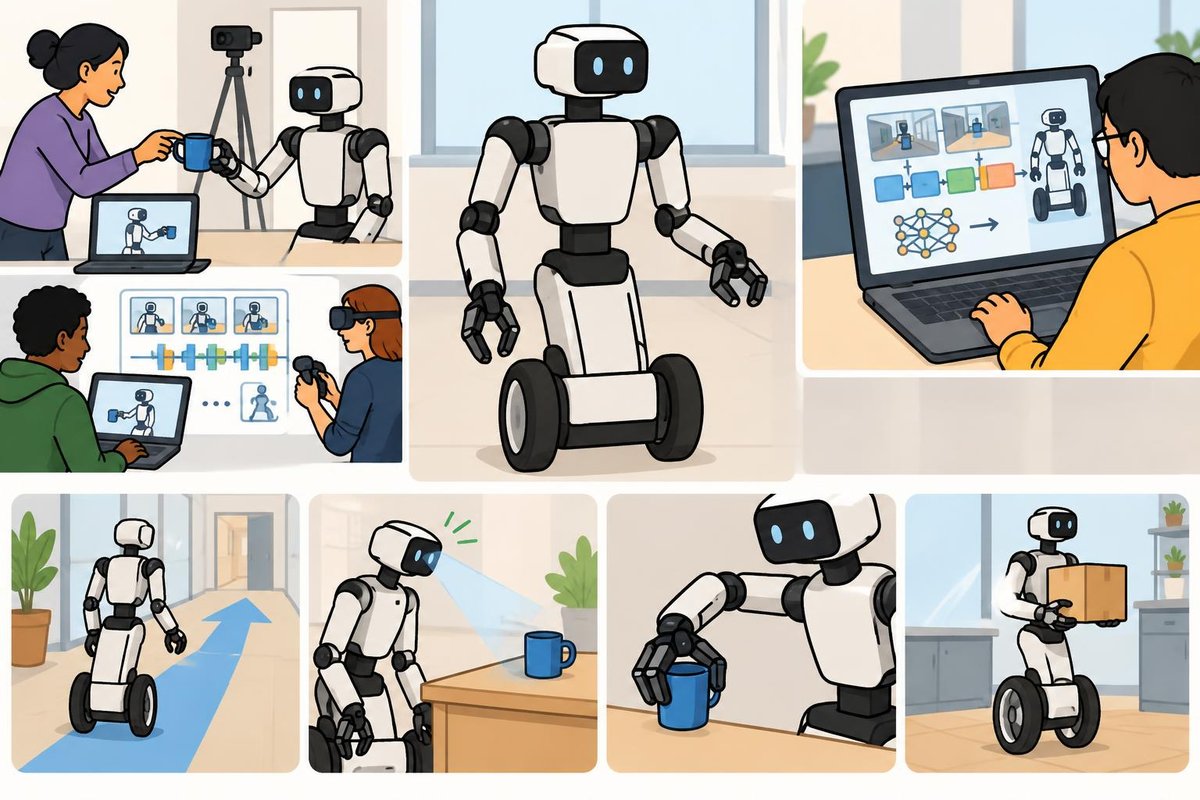
Image: The Threshold Report/GPT Image 2.5
Researchers demonstrate Pixel wheeled humanoid for movement and manipulation
Researchers demonstrated Pixel, a low-cost wheeled humanoid that combines movement and object handling in one research system. Its design brings together compliant grippers (grippers that yield under contact), human and robot demonstrations, whole-body control and learning guided by language instructions. Researchers tested navigation, dexterity and coordinated movement, along with active perception (taking actions to gather information).
Compute & InfraNov 3Other News
Image: theregister.com
Revolut reports lower AI coding costs on its own hardware
About 2,000 Revolut engineers use GLM models running on the company’s own hardware by default. Revolut says the cost of running its AI coding models fell roughly 90% after the switch. It serves GLM-5.3 on 56 NVIDIA B200 graphics processors, retaining other models for tasks that require image understanding. After its AI-tool rollout, Revolut reports improvements of 60% in coding time and 70% in lead time (the time it takes work to reach delivery).
Compute & InfraNov 4Other News
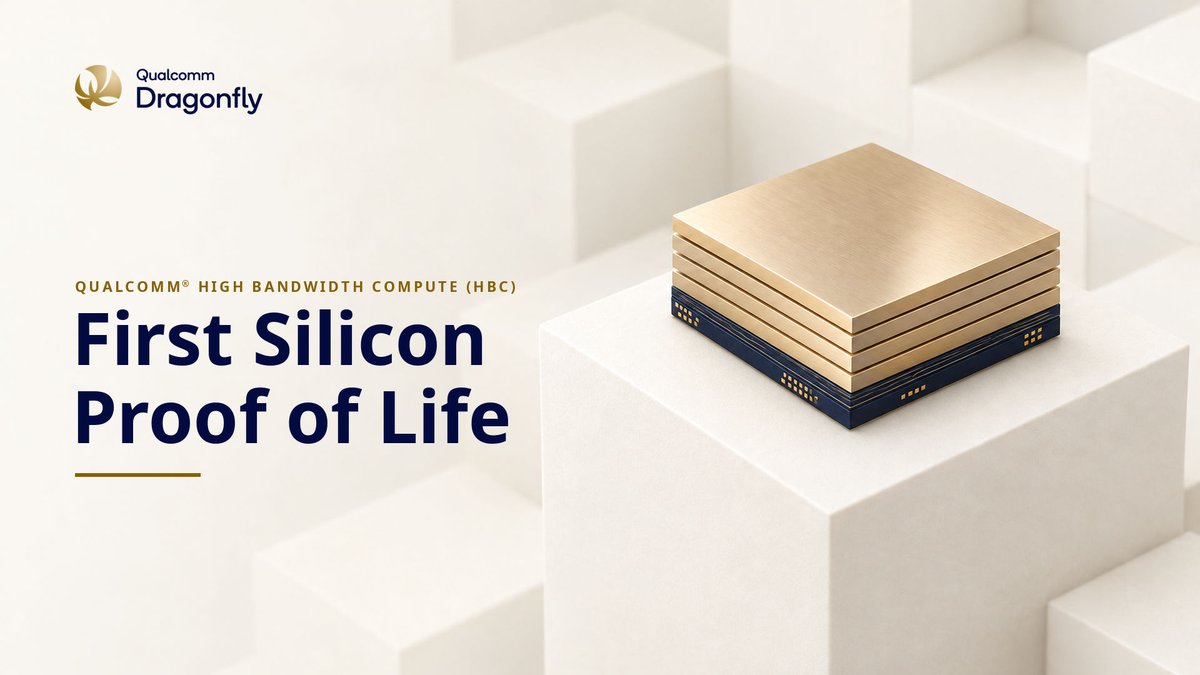
Image: qualcomm.com
Qualcomm reports lab validation of memory-stacked AI chip
Qualcomm says its first High Bandwidth Compute chip passed lab validation, using a design that moves AI computation closer to memory. The design bonds stacked LPDDR (low-power memory) directly to an AI-processing base chip. Early tests showed 18 times the effective bandwidth (data moved per second) of LPDDR5X memory. Qualcomm also reports more than five times the bandwidth per watt of HBM4, another memory technology.
Compute & InfraNov 3Other News
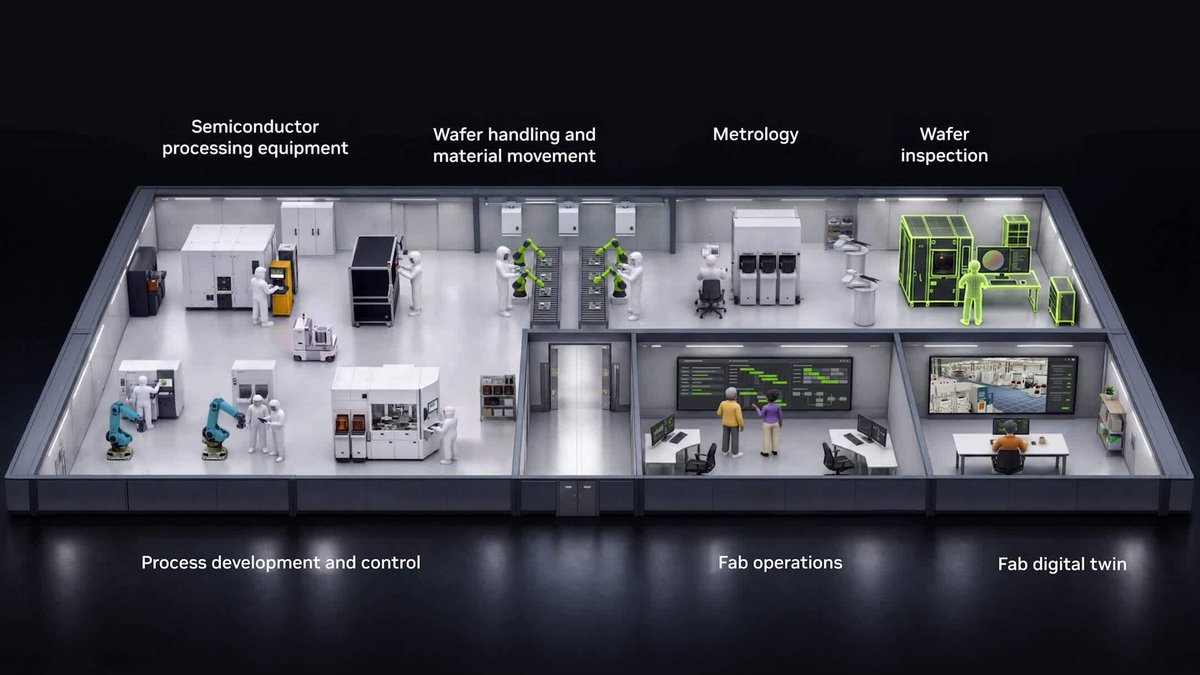
Image: blogs.nvidia.com
Lam Research and Advantest report faster chipmaking work with AI
A model from Lam Research predicts the behavior of plasma (the electrically charged gas used to etch chips) in milliseconds, according to NVIDIA. A full simulation takes days, so faster predictions could help engineers examine more process choices before costly physical trials. Advantest also uses AI agents to select models on its chip-testing floor, NVIDIA says. NVIDIA puts Advantest’s response times at minutes, down from hours.
Compute & InfraNov 4Security
Image: anthropic.com
Anthropic releases prototype for verifying which model generated an answer
Anthropic released the code for FlashProve, a prototype for checking which AI model generated an answer, and says Claude helped improve it. FlashProve uses cryptographic proofs (mathematical evidence) to verify that specified model weights (learned numerical settings) produced an output without revealing those weights. Anthropic tested a model with 400 billion learned settings stored at reduced numerical precision. The company reports proof generation at roughly 110 tokens (pieces of text) per second on a single H100 chip.
Positive - Anthropic released a prototype that cryptographically verifies which model weights produced an answer, allowing independent checks without exposing the weights.
Compute & InfraNov 3Security

Image: The Threshold Report/GPT Image 2.5
Xen patches two Claude-discovered flaws in virtual-machine isolation
Yesterday, Xen patched two memory-copying flaws that could let a malicious virtual machine read or write other systems’ memory, including Dom0 (the domain that controls the host). Anthropic found the flaws using Claude, Stephan Lipp validated them, and CodeAnt reported them independently. The flaws affect Xen versions from 4.6 onward.
Positive - Researchers used Claude to uncover Xen flaws, and Xen shipped patches closing paths for malicious guests to read or overwrite other systems’ memory.


