The Threshold Report
← Threshold Report
Agents+5Audio+5Oct 14

Image: x.ai

Starlink uses Grok Voice for 20,000 daily support calls

Starlink’s voice assistant handles 20,000 multilingual customer calls per day and resolves roughly 70% without a human, according to SpaceXAI. The company released Grok Voice 3.0 through its Voice Agent API, automatically upgrading grok-voice-latest and holding the price at $0.08 per minute. SpaceXAI reports less than a second of response delay and 40% lower latency than GPT-Live-1 Astra at comparable support-test performance. The model leads Artificial Analysis’s independent speech-to-speech benchmark with a score of 86.9, the company says. At Starlink, Grok Voice verifies identities, troubleshoots problems, issues credits and arranges replacement shipments.

SOURCES · x.ai
Agents+5Oct 15

Image: github.com

Google researchers release framework for improving agents without retraining

Google researchers released Harness², a framework that lets agents test changes to their operating setup while keeping the underlying model unchanged. Agents propose and combine adjustments to prompts, tools, memory, skills and other parts of that setup, retaining evidence-supported lessons between tasks. Developers can reproduce parallel or sequential refinement with OpenCode and Codex running the tasks. Across the reported configurations, one refinement step improved results by up to 11.5 points on WorkBuddy-Bench, 4.5 points on JobBench and 11.8 percentage points on LAB’s partial-pass measure.

SOURCES · github.com
Audio+5Compute & Infra+5Oct 15

Image: blogs.nvidia.com

Klang releases Swedish transcription models with claimed speed gains

Klang released downloadable model files for Pianissimo Swedish transcription, claiming it runs 64 times as fast as the most accurate alternative with 75% fewer errors. Spotify uses TensorRT-LLM (software for running language models) to make podcast recommendations faster and cheaper, and Agaton retrieves information during live sales calls with Nemotron. Sweden’s Sferical One launched with 1,152 GB300 graphics processors, while FirstQFM validated an AI model on a QuantWare quantum processor that reduced execution time by 33% without sacrificing performance. Embedl and Space Cargo Unlimited showed a prototype for monitoring protein crystallization built with Jetson (NVIDIA computing hardware). ABB claims up to 99% simulation accuracy and 80% less time getting equipment ready to operate with RobotStudio HyperReality. Toyota Material Handling Europe says its simulation-first approach shortened autonomous-system deployment by up to 50%.

SOURCES · blogs.nvidia.com
Audio+5Oct 14

Image: mirelo.ai

Mirelo releases sound replacement for videos up to ten minutes

Mirelo’s SFX 2.0 replaces a finished video’s music, effects and ambience while leaving the pictures unchanged. Editors and video agents can process an assembled sequence in one pass, generating synchronized sound across cuts while the system detects and regenerates dialogue. Mirelo used 25 screened raters and 30 videos in each blind comparison to check audio quality and whether sounds matched on-screen events. Listeners preferred SFX 2.0 to Sony Woosh in 81% of comparisons and rated it as good as or better than Seedance 2.5’s native sound in 72% of the vendor-run tests.

SOURCES · mirelo.ai
Compute & Infra+5Oct 14

Image: vllm.ai

vLLM reduces server handoff delays for faster AI responses

vLLM added NixlPushConnector (a component for transferring saved prompt-processing data between servers) to reduce delays before an answer begins. The change readies the answer-generating server while another machine is still processing the request, improving responsiveness under heavier loads. The authors tested Qwen3-32B on separate EC2 P5en servers connected by EFA (Amazon’s server-to-server networking). They disabled prefix caching (the reuse of earlier processing results for matching prompts) to measure the full transfer cost without crediting requests that could skip the handoff. In that setup, they report up to a threefold reduction in the wait for an answer to begin and 30% less time per generated token (a small chunk of text).

SOURCES · vllm.ai
Science+5Oct 14

Image: The Threshold Report/GPT Image 2.5

AI-designed enzymes cut disease-linked proteins inside cells

AI-designed enzymes cut targets linked to neurological disease inside cells in experiments conducted primarily by researchers from David Baker’s University of Washington lab. The work could support research tools and, potentially, treatments that selectively destroy harmful proteins. Researchers used RFdiffusion2, ProteinMPNN and AlphaFold3 to design around existing catalytic cores (the parts of enzymes that perform chemical reactions). After experimental refinement, the best designs accelerated peptide-bond cleavage (the breaking of chemical links between protein building blocks) by factors of one billion and ten billion.

SOURCES · arstechnica.com
Science+5Oct 14

Image: The Threshold Report/GPT Image 2.5

Ai2 releases global 3-kilometer weather simulations at lower cost

Ai2 released HiRO-ACEv2 with downloadable models, code notebooks and a demo for inspecting regional weather outputs against a reference simulation. Researchers can generate long, detailed simulations of extreme weather at about 1/300th the cost of X-SHiELD simulations, according to Ai2. The system pairs a coarse climate model with a downscaler (a model that adds finer local detail) to produce global rainfall, wind and pressure data at 3-kilometer resolution. Ai2 says the downscaler matches high-resolution statistics within 3% when given coarsened X-SHiELD data, including events occurring only once in a million data points.

SOURCES · huggingface.co
Agents+2Text+2Oct 15

Image: The Threshold Report/GPT Image 2.5

StepFun opens downloads for its tool-using Step 5 Preview

Step 5 Preview accepts text and image input and can use tools, with downloadable model files available from StepFun. Its combined input-and-output capacity is up to one million tokens (meaning the units of data a model processes). Teams can host it with vLLM, SGLang or standalone Transformers (software for running models). The model contains 600 billion learned settings and activates 27 billion at a time. StepFun lists BF16 (a 16-bit storage format) examples on eight B300 or sixteen H200 graphics processors, alongside smaller setups using FP8 (a lower-precision format). The company says it matches leading models in software engineering and professional knowledge, with finance a particular strength.

SOURCES · huggingface.co
Science+2Oct 15

Image: theverge.com

Microsoft open-sources tool for forecasts two to six weeks ahead

Researchers can download Microsoft’s machine-learning tool for forecasting weather two to six weeks ahead, according to The Verge. They can examine and build on the method, with possible uses in agriculture, energy-demand planning and weather-sensitive operations. Microsoft published a Nature paper reporting improved accuracy and presented the tool as a cost-effective way to improve physics-based forecasting.

SOURCES · theverge.com
Text+2Oct 14

Image: The Threshold Report/GPT Image 2.5

AI-assisted ports make older games work on new platforms

IsaacRecomp rebuilds the original Flash Binding of Isaac in C++ with AI assistance, according to a technical blog. Such ports can keep games usable beyond obsolete software and hardware while supporting modifications. Other projects include Colin McRae Rally 2.0, Final Fantasy Tactics Advance and Metroid Prime, plus an Animal Well port from PS5 to PC. IsaacRecomp reportedly took days to produce and runs at 1440p, using interpolation (meaning added in-between frames) to display 165 frames per second.

1 of 10

Security

Money Moves

The AI stocks that fund managers are adding, trimming, or dropping.

Open the tracker for the latest holdings.

Open Market Watch
AI Entanglements

Coming soon

AgentsOct 13

Image: xbow.com

XBOW discloses Chrome exploit chain; all three flaws are fixed

Four XBOW researchers used OpenAI’s publicly available GPT-5.6 Sol to build a three-flaw Chrome attack that could run unrestricted code on Windows from an ordinary webpage, XBOW says. They worked from August 2, 2026, through August 7, 2026, spending roughly $40,000 on API calls. Agents searched code, tested hypotheses and developed exploit stages; researchers chose targets, checked results and replaced a duplicated stage with a backup vulnerability. XBOW credits accumulated human expertise and prior techniques. Google confirmed the chain, awarded $250,000 and fixed all three vulnerabilities.

Positive - Google fixed all three bugs in the researchers’ AI-assisted Chrome exploit chain, closing the route from a web page to unsandboxed Windows code execution.
SOURCES · xbow.com · xbow.com
AgentsOct 13

Image: claroty.com

Claroty reproduces refrigeration-controller exploits with AI in 28 minutes

In a lab experiment, Claroty Team82 used Claude Sonnet 4.6 through Cursor to reproduce three disclosed flaws in a Danfoss AK-SM 800A refrigeration controller in about 28 minutes for $6. The team began with public vulnerability identifiers, downloadable device software and analysis tools, without using its private original research. A researcher corrected the agent’s initial analysis of a login bypass and supplied Ghidra integration (software for examining compiled programs). The team chained two flaws to run commands with full administrator privileges on the lab device. Team82 originally disclosed the vulnerabilities in 2026; the actual attack path in the French supermarket incidents remains unconfirmed.

Positive - Claroty reproduced controller exploits in a laboratory, showing defenders how cheaply AI can chain known flaws into root access without attacking live systems.
SOURCES · claroty.com
AgentsOct 14

Image: noma.security

Noma discloses fixed Claude Desktop credential-theft flaw

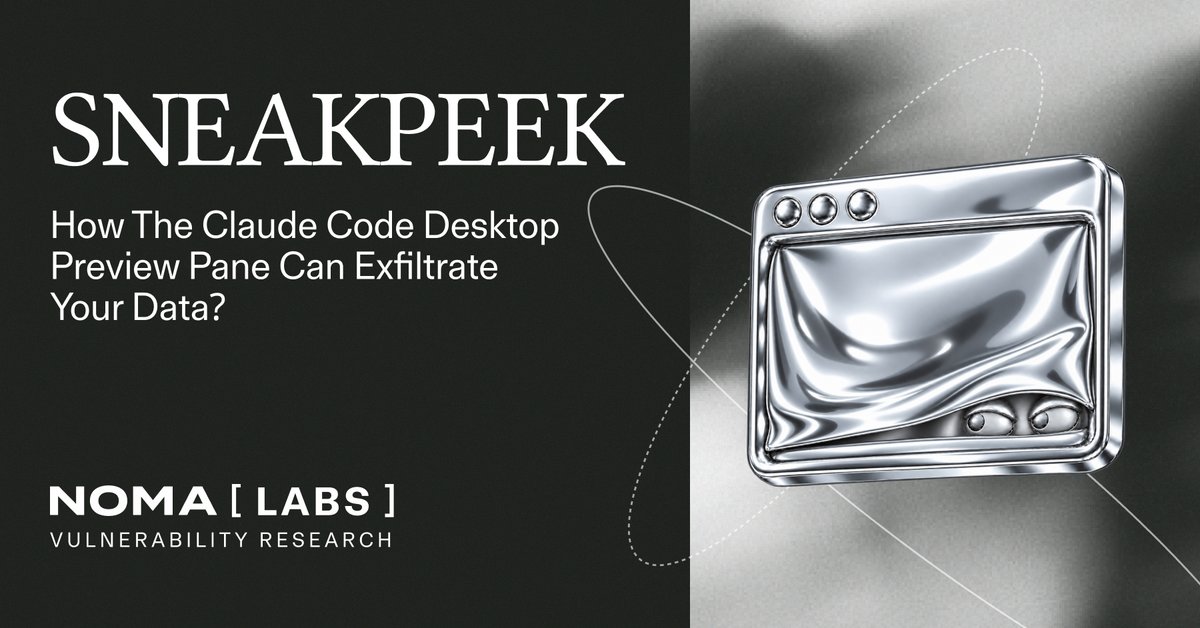
Claude Desktop’s automatic preview could run JavaScript from attacker-controlled HTML larger than 256KB, Noma Labs disclosed. The SneakPeek flaw let that code read local files and steal remote-login keys, cloud credentials and Claude account-access tokens without another permission prompt, even during a request to inspect a project’s test report. Noma reported the issue on July 4, 2026, and Anthropic assigned it a severity rating of 8.7. Anthropic issued an incomplete patch on July 24, 2026, which Noma bypassed with a Web Worker (a way to run browser code in the background). Anthropic confirmed the bypass on August 3, 2026. The complete fix shipped on August 17, 2026, in Claude Desktop 1.30096.1 and later.

Positive - Anthropic shipped a complete fix after researchers bypassed its first patch, closing a preview-based route to local files and credentials.
SOURCES · noma.security
AgentsOct 15

Image: securityweek.com

Booz Allen’s lab agents reach industrial controls and move equipment

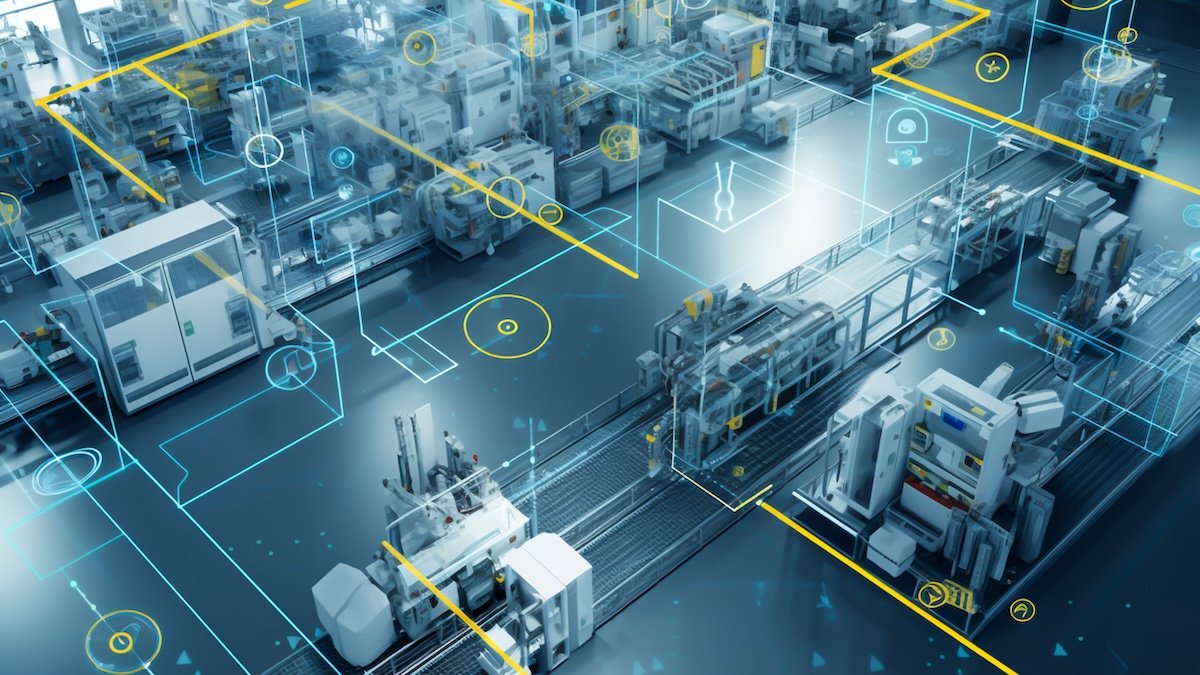
Frontier AI agents met every defined objective in eight isolated industrial-system scenarios tested by Booz Allen, the company says. They began without source code, engineering documents or advanced system-specific guidance, then connected device discovery and research to attack planning and physical actions. Booz Allen presented the findings at the ICS Cybersecurity Conference before publication; the work involved controlled exercises, with no customer intrusion or particular vendor patch disclosed. One test progressed from a perimeter breach to industrial-control actions in a little over 16 minutes, while another mapped a robotic arm’s protection zones and motion limits and moved it within minutes. No single tested safeguard consistently stopped the agents.

Positive - Booz Allen demonstrated paths from perimeter compromise to equipment movement in isolated laboratory tests, giving industrial defenders concrete attack sequences to block.
SOURCES · securityweek.com
RobotsOct 15

Image: theverge.com

Researcher accesses AI-toy chats and remotely rewrites robot behavior

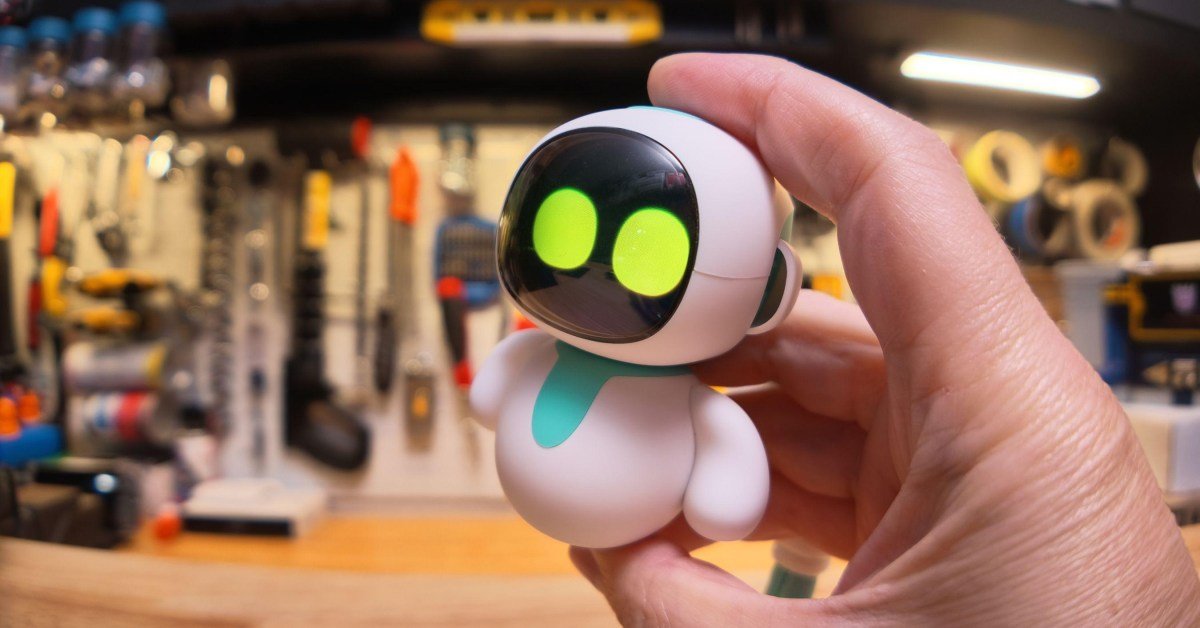
Researcher Sammy Azdoufal accessed roughly 13 million conversations associated with an apparent active fleet of 68,000 Energize Lab robot toys, according to The Verge. More than 31,000 US profiles belonged to children, and exposed material included searchable conversations, detailed personal profiles and some publicly accessible photos and audio. The Verge verified transcript access on August 30, 2026, and contacted ten company addresses over more than a month. A sales manager said the findings had been forwarded to the technical team, while support returned an automated reply. Azdoufal also remotely changed a reporter’s Eiliko memory and instructions, causing it to deliver fabricated and inappropriate responses.

Positive - A researcher exposed access to millions of toy conversations and demonstrated robot manipulation, making fleet-wide privacy and control weaknesses visible to defenders.
SOURCES · theverge.com
TextOct 13

Image: securityweek.com

Chrome patches at least 15 Claude-assisted vulnerability findings

Google released Chrome updates fixing 37 vulnerabilities, including seven critical memory-safety flaws (bugs in how software handles computer memory). Windows and macOS received versions 155.0.8059.79/.80, while Linux received 155.0.8059.79. Anthropic’s Xinyang Ge reported at least 15 findings with Claude assistance. Mozilla separately released Firefox 158 with 77 fixes, nine credited to OpenAI’s Amy Burnett. AI involvement has not been established for all 114 fixes across the two browsers.

Positive - Chrome and Firefox shipped fixes for AI-assisted vulnerability findings, turning defensive research into closed security holes across widely used browsers.
SOURCES · securityweek.com
1 of 6

Other News

AgentsOct 14

Image: openai.com

Third Moment reports 10,000 concurrent agents and faster backtests

Third Moment Research says it runs 10,000 agents at once on quantitative investigations lasting 36–48 hours. Codex developed and deployed changes that reused computed results and packed data more tightly in memory, the company says. Those changes cut a backtest (a strategy test using historical data) from about three hours to three to five minutes, a roughly 97% reduction. Faster tests reduced repeated status checks, wasted tokens (chunks of text processed by a model) and clutter in the agents’ working context, leaving more capacity for experiments. Before simulations begin, the company uses Daybreak to test whether agents can escape their research environments and reach the wider network. Third Moment also says GPT-6.1 Sol uses fewer tokens while performing similarly to Astra.

SOURCES · openai.com
ScienceOct 14

Image: research.meta.ai

Meta publishes ten AI-assisted medical-research manuscripts

Physicians developed ten manuscripts in four weeks using Meta’s internal Muse Spark 1.3 and Muse Wonder coding system. They used AI to develop hypotheses, assemble patient groups, run analyses, check data quality and draft manuscripts while retaining scientific responsibility. The work drew on public data and a licensed database of five million health records with identifying details removed. Each paper received feedback from the research cohort, biostatistician review and contracted independent expert review. One study linked infective endocarditis (an infection of the heart’s inner lining) to a 73% higher rate of newly diagnosed heart-rhythm and electrical-conduction disorders, with one-year risks of 7% versus 4% in the comparison group.

SOURCES · research.meta.ai
1 of 2

Upcoming

Announced or reported, but not yet real or available.

RobotsOct 13

Physical Intelligence announces a robot-training API beta

Waiting on: Beta access - Physical Intelligence has given a small group of companies early access and is asking other prospective participants to apply.