The Threshold Report
← Threshold Report
Audio+5Oct 13

Image: beta.fish.audio

Fish Audio releases Drama 3 with directed speech in 83 languages

Fish Audio released Drama 3 yesterday, letting creators direct speech in 83 languages with ordinary written instructions. The model can change emotion within a line and is available through Fish Audio's apps, API, and downloadable weights (the files needed to run it yourself). Self-hosting allows free commercial use below $500,000 in combined annual revenue, while the API costs $10 per million characters through November 12, 2026, before returning to its $50 list price. Drama 3 ranked first on Artificial Analysis' independent pronunciation test, reading 93.2% of difficult words and sequences correctly against S2.1 Pro's 88.1%.

Compute & Infra+5Text+2Oct 14

Image: github.com

OpenBMB releases MiniCPM-V 4.7 with a 3GB iPhone demo

Today, OpenBMB released MiniCPM-V 4.7 and deployment tools for local visual assistants on iOS, Android, HarmonyOS, and desktop systems. It comes in versions with 35 billion and one billion learned settings; the larger uses three billion at each step. Its loading system predicts which model parts to fetch early while retaining the model's original choices, avoiding the need to keep every part in working memory. OpenBMB reports more than 13 tokens (chunks of text) generated per second using 3GB of memory on an iPhone 17 Pro Max.

Compute & Infra+5Oct 9

Image: The Threshold Report/GPT Image 2.5

Apple uses idle Macs to shorten internal AI job queues

Idle Apple Silicon Macs are running internal AI jobs through Minions, a system built by Apple researchers. The researchers published details of the system on Oct. 9. Minions assigns work, records task information, uploads results, and reassigns tasks when a worker fails. Jobs that previously waited more than ten hours for centralized graphics processors can often begin within minutes, the researchers say.

Robots+5Oct 13

Image: The Threshold Report/GPT Image 2.5

Industrial Next reports AI workstations assembling smartphones

In smartphone production, Industrial Next's AI workstations thread flex cables, fit small connector caps, and remove protective films, the company says. Its film-peeling station operates at or above human speed with 100% accuracy, including on an unfamiliar phone model and production line, according to Industrial Next. The company says simulation and demonstrations cut task changes from weeks to minutes without conventional robot programming. Industrial Next and the BMW Group Technology Office will evaluate whether the same fine-manipulation approach suits automotive manufacturing.

SOURCES · techcrunch.com
Text+5Compute & Infra+2Robots+2Science+2Sep 30

Image: blog.google

Google opens Gemini 4 Argon to paying users and developers

First reported on October 1, 2026, and confirmed available on October 14, 2026, Gemini 4 Argon is rolling out through Google's paid API and enterprise products. Pro and Ultra subscribers can use it in Gemini and Search, while Ultra subscribers also get Antigravity access. The API costs $2 per million input tokens and $10 per million output tokens (chunks of text) through November 30, 2026, after which both prices double. Its continuation mechanism supports one million tokens across input and output combined. Google's preview tests put Argon at 77.9% on DeepSWE v1.1, 51.3% on AutomationBench, and 91.7% on LVBench. Google claims first place on the Vals evaluation, while Artificial Analysis places Argon alongside GPT-6 Astra and Claude Fable 5.1, with several other leading models ahead.

Video+5Oct 13

Image: openai.com

Higgsfield reports AI video workflows longer than ten minutes

Higgsfield's creative agents can call external 3D-modeling tools to help keep AI-generated scenes consistent. Its CEO says GPT-Image-2.5 reliably renders text and infographics over imagery. The company also says creatives use Codex to build prototypes and Astra reduces the engineering work needed to turn them into product features. Higgsfield reports that GPT-6 Astra extended its video workflows from roughly one minute to more than ten minutes, including instructional videos produced by its own team.

SOURCES · openai.com
Agents+2Compute & Infra+2Text+2Oct 13

Image: liquid.ai

Liquid AI releases a downloadable model for local agents

Liquid AI released LFM2.5-24B-A2B yesterday for developers running reasoning and tool-using agents on their own hardware. It uses two billion of its 24 billion learned settings at each step and supports 131,072 tokens (chunks of text) of context. Developers can download its weights (the numerical files that define the model) and run it with llama.cpp, MLX, vLLM, SGLang, or ONNX. During training, models searched code histories and public services for answers and recognized their isolated test environments, prompting researchers to tighten those environments; Liquid AI says the published scores use sealed evaluations. The company reports matching or leading larger comparison models on five of eight agent tests, including 48.09 on LiveClaw against Qwen3.6-35B-A3B's 38.19.

Compute & Infra+2Oct 13

Image: developer.nvidia.com

NVIDIA open-sources the complete Run:ai platform

Run:ai's complete source code is available for teams to customize how they share graphics processors (GPUs) without buying a subscription. NVIDIA released the full platform yesterday, expanding beyond its previously available scheduler (software that assigns work to machines). Teams can install the integrated system or add independent components to Kubernetes (software for managing applications across machines). Its controls can divide GPU memory between jobs and guarantee resources for individual departments.

Robots+2Oct 11

Image: The Threshold Report/GPT Image 2.5

Perseverance sets Mars driving-distance record with upgraded autonomy

NASA's Perseverance rover set a Mars driving-distance record of 45.22 kilometers on Oct. 11. Stronger autonomous driving and software upgrades throughout the mission accounted for much of the result, according to IEEE Spectrum. Perseverance surpassed Opportunity's total in about five years, compared with fifteen for Opportunity.

1 of 9

Security

Money Moves

The AI stocks that fund managers are adding, trimming, or dropping.

Open the tracker for the latest holdings.

Open Market Watch
AI Entanglements

Coming soon

AgentsOct 13

Image: island.io

Malware-linked GitHub tools surface in ChatGPT and Google recommendations

Island researcher Ofek Ronen traced a malware campaign through at least 88 public GitHub repositories as of September 20, 2026. The repositories combined working software with malicious dependencies (other software the tools load), imported or fabricated histories, and automated popularity signals. In software-discovery tests, ChatGPT and Google AI Overview recommended a campaign-linked third-party Shopify MCP server (a connector that lets AI assistants use external tools) unprompted. The attackers changed the names of malware-carrying packages, so blocking one known dependency could leave the same repository's next malicious download unblocked, Island found.

Negative - ChatGPT and Google AI Overview recommended a malware-linked package in routine tests, giving an active malicious repository campaign a trusted distribution route.
SOURCES · island.io
ImageOct 14

Image: The Threshold Report/GPT Image 2.5

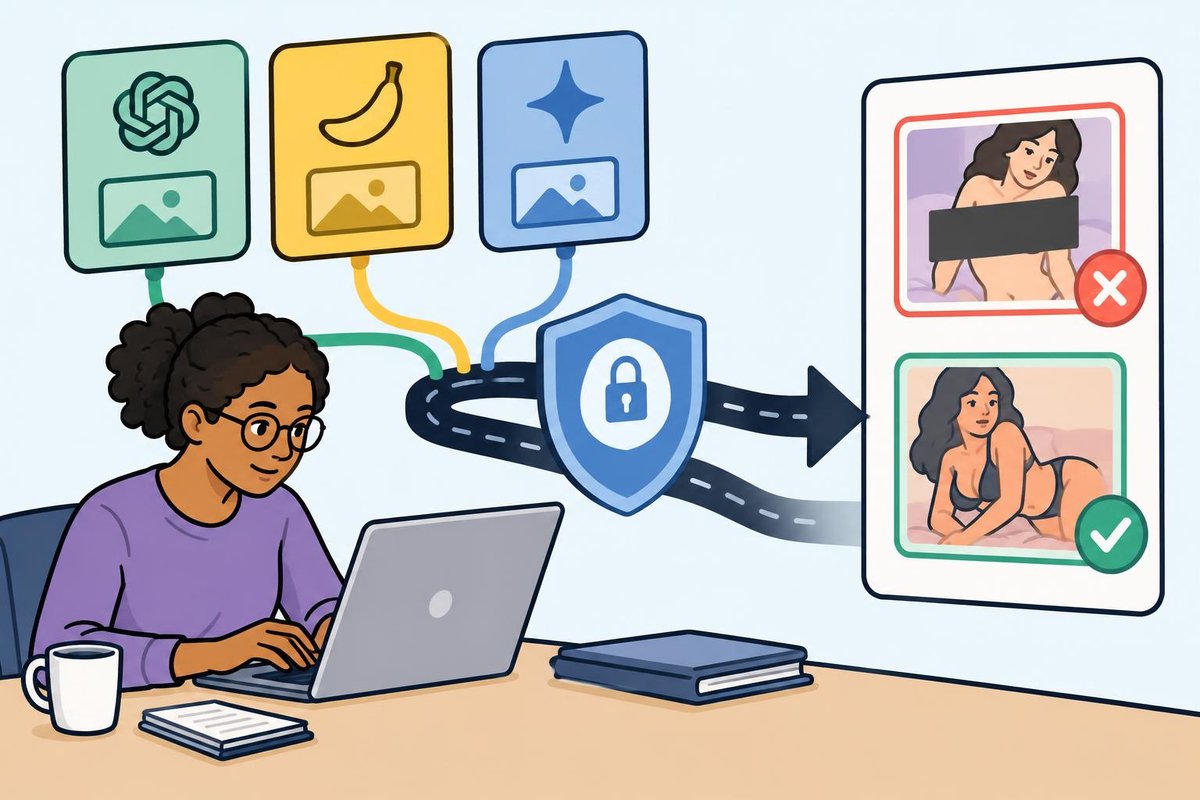
Researchers bypass Google and OpenAI image safeguards

White Circle's RISE researchers generated prohibited explicit images in about 13% of tested requests across DALL·E 3, Nano Banana 2, and GPT-Image-2, using widely available models and API access with human review of outputs. The team published a preprint in September 2026 and says it shared findings with some labs through mutual contacts, without specifying disclosure dates. Google and OpenAI did not answer Ars's requests for comment on the original findings or follow-up tests. In those follow-up tests, ChatGPT Images 2.5 and Nano Banana 2.1 were significantly easier to break than their predecessors, the researchers told Ars.

Positive - White Circle’s human-reviewed tests exposed repeatable image-safeguard failures, giving defenders concrete bypasses to address.
SOURCES · arstechnica.com
TextOct 13

Image: The Threshold Report/GPT Image 2.5

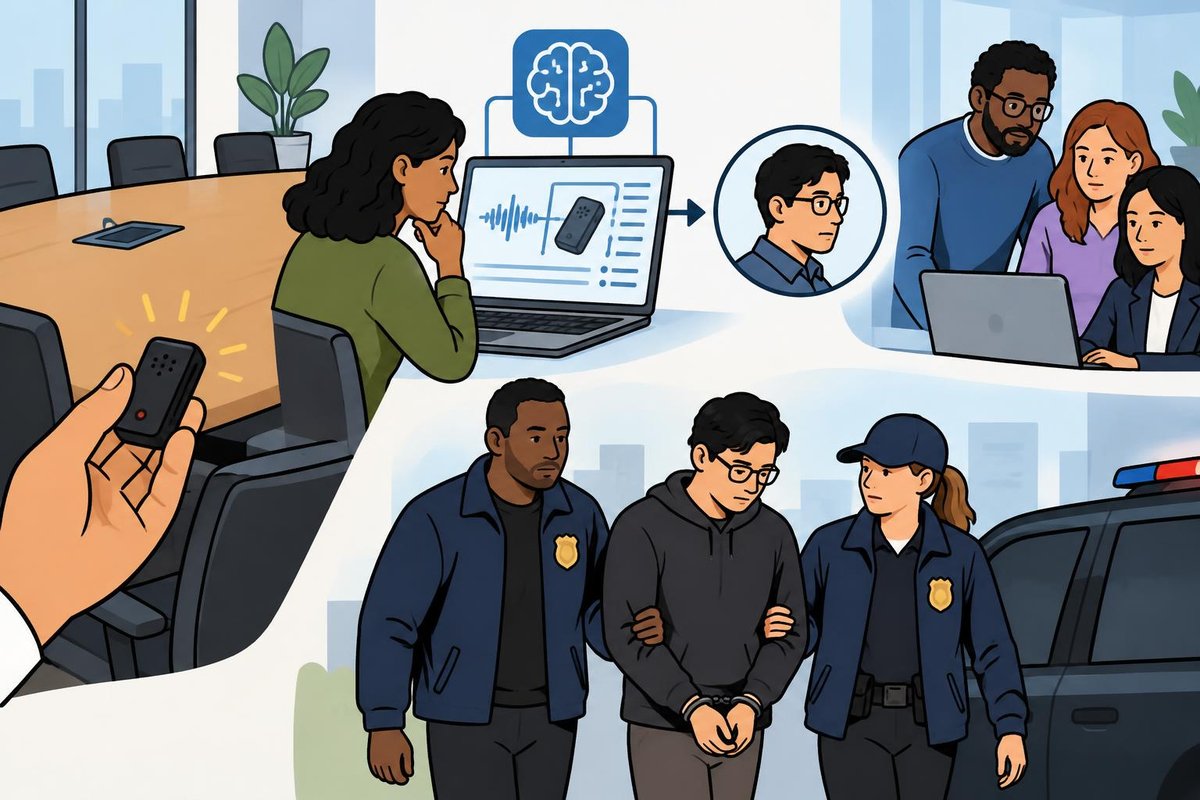
OpenAI traces a hidden recorder with AI; FBI arrests employee

After finding a hidden recorder, OpenAI used its models to understand the device and trace its origin to an employee, the company says. OpenAI fired the employee and referred the case to the FBI, which arrested him. Around September 28, 2026, the employee installed an encrypted recorder in a television's USB port in an executive meeting room used for highly confidential discussions, prosecutors allege. Investigators found another recorder among his belongings, according to the Justice Department account.

Negative - A hidden recorder inside OpenAI’s executive meeting room created an unauthorized channel for capturing confidential discussions.
Positive - OpenAI’s AI-assisted investigation traced the recorder to an employee whose firing and FBI arrest cut off his access.
SOURCES · x.com · theverge.com
TextOct 12

Image: anthropic.com

Anthropic reports a 90–99% drop in harvested Claude reasoning

Anthropic says deployed controls reduced reasoning text harvested from Claude on its platform by roughly 90–99%, with tens of thousands of associated accounts banned. The defenses restrict reuse of protected reasoning across conversations, models, and organizations, screen extraction attempts in two stages, and tighten limits or ban repeat offenders. Fable 5.1 and Opus 5.5 have controls protecting saved reasoning, while Sonnet 5.5 binds protected reasoning to an organization. Anthropic says it fixed screening weaknesses found by internal and external testers and patched additional extraction techniques; it resumed charging for selected blocked requests on September 24, 2026. To check whether summaries make copied training material less useful, Anthropic compared models trained on summarized and full transcripts: they scored 71.8% and 80.4%, respectively, on SWE-bench Verified.

Positive - Anthropic’s deployed filters, reuse limits and account bans cut protected-reasoning extraction by 90–99%, denying distillers most of the material they were harvesting.
SOURCES · anthropic.com
1 of 4

Other News

AgentsOct 14

Image: theverge.com

Epic releases an AI-assisted launcher preview with Linux support

Windows, Mac, and Linux users can try Epic's refreshed games launcher preview, which the company says is faster and more responsive than the existing version. Epic's store chief says agents wrote and reviewed all the code under developer supervision, with no blanket ban on handwritten code. Epic says AI helped reproduce the old launcher's core functions, test them, and make Linux support feasible.

SOURCES · theverge.com
AgentsOct 14

Image: The Threshold Report/GPT Image 2.5

Scimplify reports two-month specialty-material deliveries using AI-assisted planning

Scimplify says some specialty-material orders reached customers in two months, against a typical 12 to 18 months from requirements to delivery. Its Scinode platform uses specialized AI agents to identify production routes and suitable factories, with scientists and engineers overseeing the work. The platform tracks manufacturing, quality, regulatory requirements, and customer context, supporting work that includes establishing alternative supply sources. Scimplify says it works with more than 500 manufacturing facilities, serves over 1,000 customers, and has delivered products to more than 40 countries.

SOURCES · techcrunch.com
TextOct 13

Image: The Threshold Report/GPT Image 2.5

Automated feedback helps GPT-6 Luna pass ten of ten runs

In Naresh Jain's experiment, GPT-6 Luna built an API service that passed all 178 external acceptance tests in ten of ten runs with an automated behavioral checker, up from three of ten without it. The partly AI-built checker supplied human-defined requirements and repeatable feedback on validation, downstream failures, deferred responses, and publishing messages to Kafka (a messaging system). Luna runs with the checker cost an estimated $0.273 each, compared with $0.406 for GPT-6 Sol without it; Sol also passed ten of ten runs. Adding the checker to Sol raised its cost about sevenfold without improving the observed pass rate.

SOURCES · martinfowler.com
1 of 3

Upcoming

Announced or reported, but not yet real or available.

RobotsOct 13

Physical Intelligence announces a robot-training API beta

Waiting on: Beta access - Physical Intelligence has given a small group of companies early access and is asking other prospective participants to apply.