AI progress, only when it's real.

Mode:·

New

AI progress that became real (usable, deployed, approved, or released). All reports.

Robots+5Aug 26

Image: The Threshold Report/GPT Image 2

Bedrock excavators dig without operators on US construction sites

Autonomous excavators from Bedrock Robotics are working at a water-treatment project in Nevada and earthwork projects in Texas, handling early clearing, cut-and-fill, and foundation preparation with the cab empty. Contractors have spent years short of skilled heavy-equipment operators, and the repetitive earthmoving is exactly the part a machine can grind through. This is paid work on active sites, announced on August 26, and not a fenced-off demonstration.

Agents+2Text+2Aug 25

Image: The Threshold Report/GPT Image 2

Granite 4.2's bigger models are trained for terminal and tool work

The 8B and 30B versions of IBM's Granite 4.2, released on August 25, went through reinforcement learning on agent tasks such as running terminal commands, searching the web, and calling outside tools. A 3B version rounds out the family, and all three ship under the Apache license, so a team can host them on hardware it controls. Each one can be run in a thinking mode, a low-effort thinking mode, or with no deliberation at all. Agent builders who need a model inside their own network now have another family to try.

Agents+2Text+2Aug 26

Image: openai.com

Non-engineers at loveholidays built live search pages with Codex

Product, design, and commercial staff at the travel site loveholidays now build customer-facing search experiences themselves, through a Search Playground the company assembled with Codex that draws on its existing design system. More than 10 experiences have come out of it, most of them made by people who are not engineers, and at least three are running on the live site. An idea can be tried without first winning a slot in the engineering queue. Engineers put their time into packaging validation and release practices into reusable workflows instead.

SOURCES · openai.com
Agents+2Text+2Aug 26

Image: The Threshold Report/GPT Image 2

Ox Alpha, a coding and agent model, reaches OpenRouter

A reasoning model built for coding, sustained agent runs, and work that combines text with visual context is live on OpenRouter, and on August 26 Z.ai said the model, Ox Alpha, is its own, part of the GLM family. Developers can point an agent at it now through that hosted route. Z.ai says the weights will follow, but they are not out.

SOURCES · techcrunch.com
Agents+2Text+2Aug 25

Image: The Threshold Report/GPT Image 2

Claude carries memories between chat and Cowork

As of August 25, Claude passes memories between its chat product and Claude Cowork, so a project worked out in conversation does not have to be explained again when the doing starts. Memories are saved during a conversation rather than only once it ends, and a user can read them, edit them, or delete them. Talk through a plan in one place, then ask Cowork to execute it with the same context already loaded.

SOURCES · techcrunch.com
Agents+2Aug 25

Perplexity's Portable Computer runs its agent on local RTX hardware

Perplexity's Computer agent now comes in a local build, Portable Computer, released on August 25 for RTX PCs and DGX Spark machines. One application bundles the local models, tools, connectors, inference, and an isolated workspace, so a multi-step task starts on your own device. Before any individual step goes out to a cloud model, the app asks permission. Sensitive files can be analyzed at home without spending cloud credits on the work.

SOURCES · venturebeat.com
Compute & Infra+2Aug 26

Armada launches Orion, a 10MW modular data center for AI

Armada launched Orion on August 26, a 10MW modular data-center system built to drop into existing structures or spread across distributed sites. Its six-module core is specified to hold up to 2,880 GPUs across 40 racks, designed for Nvidia Blackwell hardware and the Vera Rubin generation that follows. Operators can site it on land they already own and feed it from distributed or behind-the-meter power, that is, electricity drawn straight from a generating source rather than the public grid. For anyone who needs AI capacity sooner than a conventional build allows, it is a bigger prefabricated block to buy.

Compute & Infra+2Aug 26

Papua New Guinea opens its first AI-ready data center

Datec PNG and Telikom PNG launched Kumul Cloud Infinity on August 26, offering cloud computing, AI services, and data storage held inside Papua New Guinea. Datec's chairman said the facility is equipped with Nvidia H200 GPUs. Government agencies, companies, and researchers there can keep those workloads under national jurisdiction instead of sending all of it offshore.

Compute & Infra+2Aug 26

Exa opens a direct fiber route between Barcelona and Bilbao

Exa Infrastructure opened a direct long-haul terrestrial route between Barcelona and Bilbao on August 26, connecting Catalonia's data centers and the Mediterranean cable landings more directly to Atlantic and transatlantic systems. Cloud and data-center operators gain a second path between Spain's two coasts, including for traffic serving AI sites inland such as Zaragoza.

Text+2Aug 26

Image: The Threshold Report/GPT Image 2

Sentence Transformers 6.0 adds trainable multi-vector search models

Version 6.0 of Sentence Transformers, released on August 26, adds a MultiVectorEncoder model type and a training workflow for ColBERT-style late interaction, meaning the model compares individual tokens between a query and a document instead of compressing each one into a single vector. Developers can fine-tune such a model on their own documents or train one from a base transformer, on their own hardware. For specialized collections where a single vector throws away useful detail, token-level matching can catch what ordinary search misses.

SOURCES · huggingface.co

Security

AgentsAug 26

Image: cloud.google.com

Mandiant chains agents to hunt vulnerabilities in source code

Mandiant described the Agentic Vulnerability Discovery Harness on August 26, built on Google's Agent Development Kit, a framework for wiring several agents together. The system works through threat modeling, then entry-point discovery, then hypothesis generation, and only escalates a finding to a person once it has been confirmed. That is a longer chain of reasoning over the same source code than an automated scanner performs, and it aims human review at findings that already carry supporting evidence.

Positive - Mandiant’s multi-agent review system searches source code for vulnerabilities while reserving confirmed findings for human validation.
SOURCES · cloud.google.com
AgentsAug 26

Image: github.com

SpecterOps releases Blacklight to map local AI-agent exposure

Blacklight, released by SpecterOps on August 26, finds and explains the local attack surface (that is, the software and access an intruder could reach) created when AI agent tools get installed on a machine. It runs on Windows, macOS, and Linux and is pointed at locally deployed agent environments. Administrators who have watched employees and developers install agent tooling on their own can now take an inventory of what those installs expose.

Positive - Blacklight gives defenders a cross-platform way to identify the local systems and interfaces that AI agents could expose.
SOURCES · github.com
AgentsAug 26

Image: linkedin.com

Detectors plus Claude and Codex produce a Mozilla vulnerability report

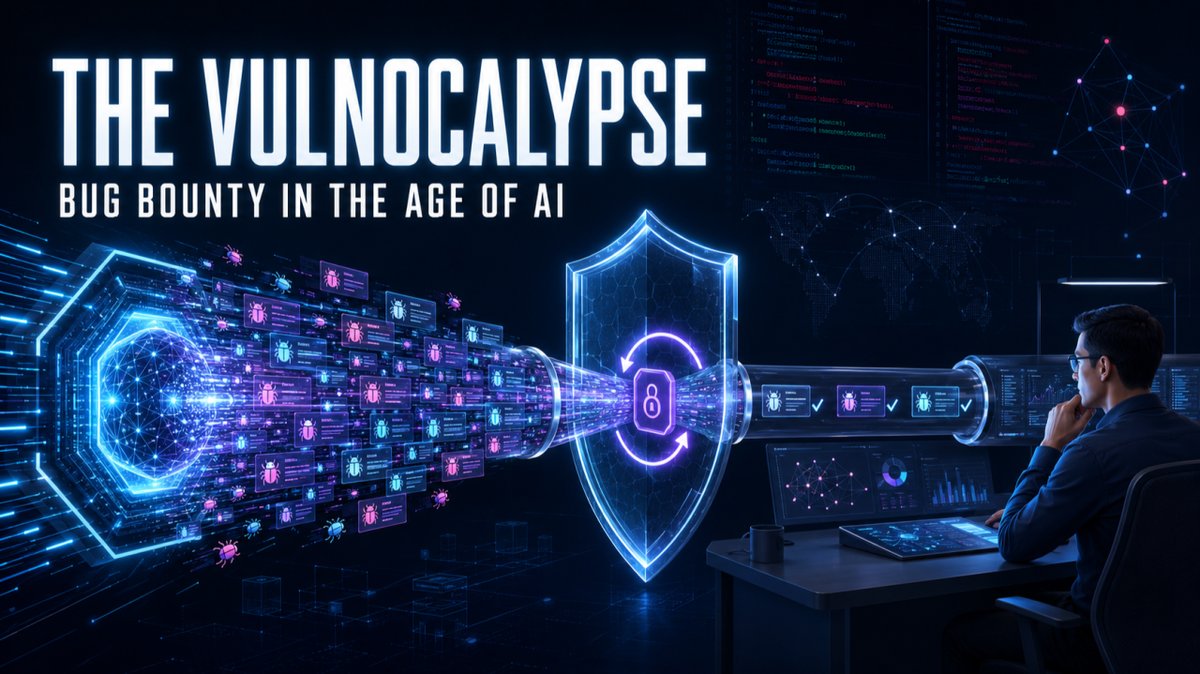
Security researcher Anshuman Bhartiya built a monitoring setup with 18 vulnerability-specific detectors that watch source-code changes, and on August 26 he described how it surfaced an issue in Mozilla's TaskCluster. Claude prepared most of the submission, Codex checked the claims on its own, and Bhartiya supervised the whole run. Evidence gathering, reproduction, the written report, and triage follow-up all moved through that pipeline. Bug bounty programs may see more reports arriving already complete.

Negative - A researcher found and reported a Mozilla TaskCluster vulnerability, but no patch was reported to close the exposed flaw.
SOURCES · linkedin.com
AgentsAug 26

Marimo patches a flaw that ran MCP commands on notebook open

Marimo patched CVE-2026-75149 on August 26, a code-injection flaw in versions before 0.23.15. Opening a crafted notebook in edit mode could start an attacker-controlled MCP server command as a local subprocess, before a single notebook cell was run; MCP is the protocol that connects AI tools to outside services. Updating removes that path, and it shows how an MCP integration can turn the simple act of opening a file into code execution.

Positive - Marimo patched a flaw that let crafted notebooks launch attacker-controlled local commands before any cell ran.
AgentsAug 26

Vercel's Run SDK isolates code an agent writes

Vercel shipped Run SDK on August 26, which evaluates untrusted JavaScript, or TypeScript with its types stripped out, in a fresh QuickJS context inside a worker thread. Code that runs there cannot reach the surrounding application's systems directly. Agent builders who want a model to execute what it just wrote no longer have to hand it the application itself.

Positive - Vercel’s SDK confines agent-generated JavaScript to an isolated runtime so it cannot directly reach application systems.
SOURCES · vercel.com
TextAug 26

Goodfire opens Silico interpretability platform and a $1 million grant

Silico, Goodfire's platform for examining what happens inside a model when it produces a particular behavior, became generally available on August 26. Goodfire also opened a grant program offering $1 million in free Silico usage to academic and nonprofit interpretability researchers, meaning people who study model internals rather than model outputs. Researchers outside the frontier labs can use it instead of building their own interpretability stack from scratch.

Positive - Goodfire opened its model-inspection platform to the public and funded researcher access, broadening the community able to examine hidden model behavior.

Others

TextAug 26

Image: The Threshold Report/GPT Image 2

GPT-5.6 Terra and Luna arrive in AWS GovCloud

Amazon Bedrock now carries OpenAI's GPT-5.6 Terra and GPT-5.6 Luna in AWS GovCloud (US), the separated region AWS runs for US government work, as of August 26. Eligible public-sector customers and their contractors can select either model without moving workloads out of that environment.

SOURCES · aws.amazon.com

Upcoming

Announced or reported, but not yet real or available.

Compute & InfraAug 26

Spain drafts hourly renewable-matching rule for new data centers

Waiting on: Regulatory approval - the decree is still a draft going through public consultation.

Where things stood

Live Board

Text122▲ 10
Audio102— 0
Video102— 0
Image100— 0
Agents136▲ 10
Robots114▲ 5
Science105— 0
Compute & Infra139▲ 6

AI risk & readiness

Under controlChaos
21 positive · 108 pts10 negative · 64 pts

← Back to the board