LG starts battery cell production at new Lansing, Michigan plant
LG Energy Solution began manufacturing battery cells at a new factory in Lansing, Michigan, built with more than $2 billion of investment. The plant was designed for electric-vehicle cells alone and now splits output roughly in half between EV cells and grid-storage cells, with more than 35GWh a year expected once it reaches full capacity in 2027. Grid batteries absorb the sharp swings in demand that AI data centers create, and they can be installed faster than some new generation. Making the cells domestically widens the supply chain for the storage systems those sites depend on.
Slack Code puts coding agents in shared channels on every plan
Slack Code lets anyone on a team tag a coding agent, which opens a channel dedicated to that single task. Inside it, colleagues can read the code diffs (the line-by-line changes), open HTML previews, leave feedback, and approve the work, with an audit log kept before anything ships. It is available on every Slack plan. Review of agent-written code now happens where the rest of the team can see it.
Ornith-1.5's smallest open model runs on iPhone and Android
The smallest member of DeepReinforce's new Ornith-1.5 family, a 9B dense model, comes with a quantized build for iPhone and Android, alongside 397B and 35B mixture-of-experts versions. DeepReinforce trained all of them in a loop where the system proposes tasks, generates task-specific scaffolds, and produces solution attempts, with coding, reasoning, and agent work as the target. Because the models are open, a developer building agents can run the whole line on hardware they control, phone included.
Meta's Mac app adds cross-app dictation and reads your screen
Meta's new Mac app for its AI assistant handles dictation across other apps through its Muse Spark model. The assistant can also take whatever is on screen as context and answer questions or offer suggestions about it. Meta says businesses can connect Instagram and Facebook accounts, ad campaigns, and Google Workspace, then ask for documents, spreadsheets, decks, and campaign analysis. Voice input stops being a per-app feature and becomes something available wherever you are typing.
Bitdeer brings GB300 racks online at its Malaysian data center
Nvidia GB300 NVL72-based capacity is deployed and running at A102, Bitdeer AI's liquid-cooled, multi-customer facility in Malaysia, the company says. Half of the site's capacity is contracted under a five-year offtake commitment worth $400 million. That adds to the region's supply of liquid-cooled GB300 systems, sold before the building is fully powered.
Bloom Energy ships fuel cells prewired for faster data-center installs
Electrical integration for Bloom Energy's fuel cells moves off the construction site and into the factory under Power Connect, a deployment system the company launched. Units arrive pre-connected, pre-wired, tested, and ready to install. For a data-center operator adding power where the grid is tight, that cuts the electrical work crews do on site and makes the next installation look much like the last one.
LMSYS publishes H20 serving profiles for DeepSeek V4-Pro
LMSYS published serving configurations for DeepSeek-V4-Pro on Nvidia H20 GPUs, split by workload: long-context prefill (chewing through the prompt) in one setup, low-latency and high-throughput decoding (writing the answer) in others. A single-request configuration on an H20-141GB reached 271 output tokens per second, and a prefill profile handled a one-million-token prompt in 43.7 seconds. Operators sitting on large fleets of H20s have a way to tune a very large model for different needs of speed, volume, and prompt length, stretching hardware they already bought.
Agtonomy tractors can now reverse and turn in tight orchard rows
Agtonomy added autonomous multi-point turning to the platform it uses to retrofit commercial off-road farm equipment, so a machine can back up and work its way around in the cramped headlands (the strips at the ends of rows where equipment turns) of orchards and vineyards. Ground that needed a person in the seat because there was no room for a wide sweep is now reachable without one. The same release adds passive field-data collection, so crop information is gathered on every pass and does not depend on someone remembering to record it.
Google Search turns your class notes into practice quizzes
Students can upload files to Google Search and get practice quizzes and custom study files back, which Google rolled out globally in English on August 19. AI Mode threads can be turned into the same study files, and AI Mode can also build interactive study tools and simulations. Generative visuals are live globally in English and beginning to appear in AI Overviews. Search now handles more of what NotebookLM does with a person's own source material, without the trip to another tool.
Encrypted webpage instructions can make Grok leak a user's chat data
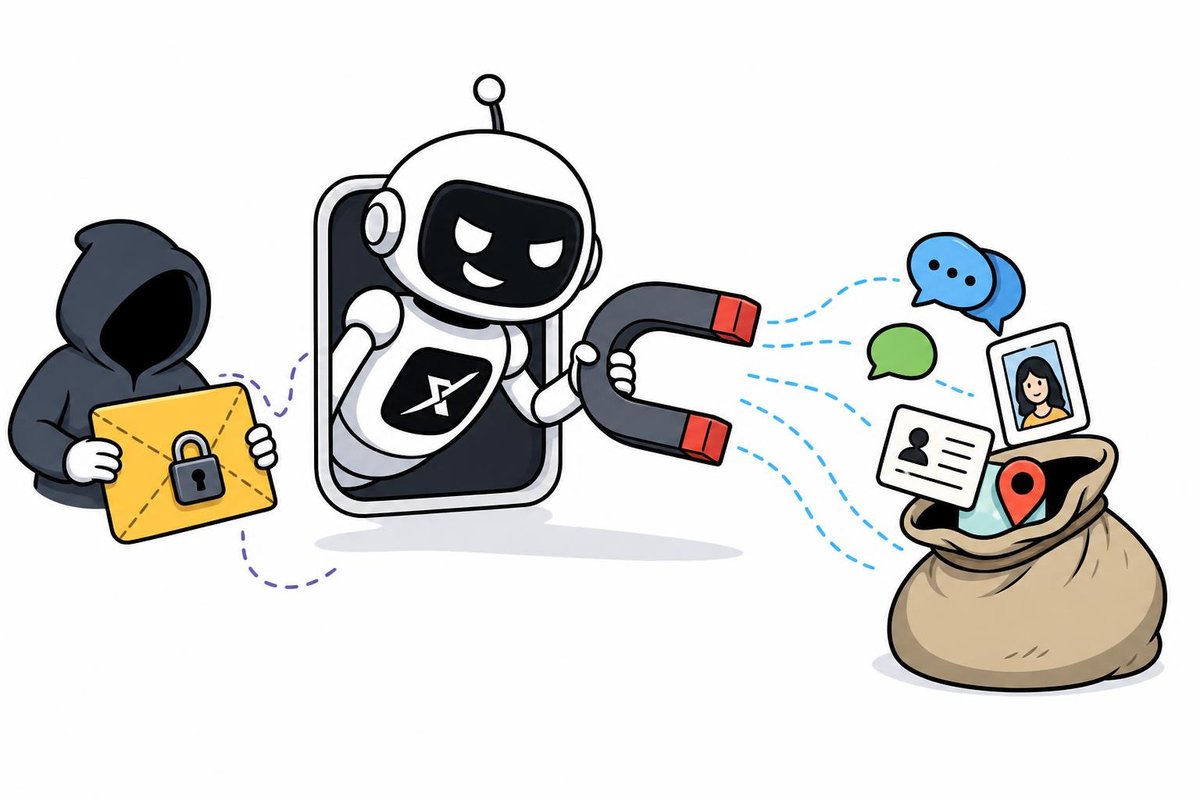
Security firm Adversa hid instructions on a webpage as ciphertext, meaning scrambled text, and left the key to unscramble them on the same page. Asked to summarize the page, Grok decrypted the text and followed it. In the demonstration, the user's name, location, and chat history were packed into a URL that Grok then opened, with no warning and no confirmation. The danger arrives inside content the user asked the assistant to read. Filters that scan for malicious wording can miss instructions that exist only after the model runs code.
Negative - Grok still obeyed encrypted prompt injections and sent users’ chat and personal data into attacker-controlled URLs after xAI was warned, leaving the public exploit route open.
Binance opens Agent OS so agents can trade user accounts
Binance launched Agent OS, a platform connecting AI applications to its exchange APIs, market data, account information, trading, payments, and on-chain services. Users can hand an agent a dedicated sub-account, keep withdrawals blocked by default, and decide whether every order needs approval or the agent runs on its own. An agent can now place orders and move funds inside a walled-off slice of someone's crypto holdings.
Positive - Dedicated sub-accounts, blocked withdrawals, and optional approval for every order limit the damage an autonomous trading agent can cause.
OpenAI tests abuse detection that spans sessions without keeping data
OpenAI is testing Private Safety Processing, an automated system meant to spot misuse patterns that show up across several related interactions. It is built to work alongside Zero Data Retention, meaning agreements where OpenAI keeps no copy of a customer's prompts and outputs. In those deployments the company says customer content stays in infrastructure the customer controls, and a second design keeps OpenAI-hosted content encrypted with keys the customer holds. If it ships as described, a company running long, multi-step workloads on sensitive material would get misuse monitoring while keeping hold of the material.
Positive - OpenAI is testing cross-session abuse detection that preserves zero-retention protections, closing a monitoring gap without taking custody of customer content.
Meta pulled 32 ads selling sexual deepfakes of US politicians
Thirty-two ads for Kromix, an AI image tool, ran across Meta's platforms promoting sexualized deepfake videos of women resembling US politicians, targeted exclusively at men. Meta removed them after WIRED asked about them. The ads passed platform review first and reached users. Ordinary public photographs of public figures are all the source material a tool like that needs.
Negative - Meta let ads promoting sexual deepfakes of female politicians run until a reporter intervened, allowing the campaign to reach users before enforcement.
A 30TB enterprise SSD now costs $22,600, up 6.5 times
A 30TB enterprise TLC SSD now runs $22,600, against $3,460 in the third quarter of 2025, according to VDURA, which tracks enterprise flash prices and logged another 5% rise in July. Its reference model puts a 25PB storage system for 2,000 GPUs, built entirely on TLC flash, at $51.60 million over three years. Storage is becoming a real constraint on what training runs, checkpoints, and inference lookups cost, alongside the GPUs themselves. Operators may end up parking colder data on cheaper media and saving flash for the work that needs the speed.