AgentsOct 20
Image: blog.cloudflare.com
Cloudflare cuts AI review costs 68% and retains higher-effort checks
At Cloudflare, engineers cut average AI code-review costs by 68%, from $2.43 to $0.77, and median review time from 4 minutes 9 seconds to 1 minute 32 seconds. They used agent-assisted optimization, prompt-cache reuse (reusing previously processed instructions), fewer tool calls and model changes. Engineers checked authors' later edits and used blind AI judging to test whether cheaper reviews became shallower, retaining high-effort settings when medium effort missed useful findings. The high-effort code-quality reviewer maintained a similar rate of important findings with less noise and fewer inflated severity labels; before replacing its execution system, Cloudflare also ran both versions in parallel and measured 98% agreement on approval decisions.
Positive - Cloudflare's high-effort code reviewer maintained important findings while reducing noise and inflated severity labels, helping developers prioritize genuine problems.
AgentsOct 19

Image: The Threshold Report/GPT Image 2.5
Developers release AI-assisted tools to remove smart-TV ads and tracking
Developers Gathin T. and Muzzammil Yasin Sabuwala published cleanyourtv and dumbtv after using coding agents to modify smart televisions and build simpler launchers, helping owners replace intrusive interfaces and disable unwanted software. One reported Claude Code workflow removed 25 Xiaomi software packages over Wi-Fi. dumbtv's creator used DeepSeek and Claude models and reports testing the full process on Fire TV and several Android/Google TV brands. cleanyourtv requires no root access (full administrator privileges) and allows owners to restore factory settings.
Positive - Developers used AI to build tested tools that remove tracking and unwanted software from owners' televisions, giving users greater control over their devices.
AgentsOct 20

Image: brightsec.com
Bright reports AI-assisted tests found flaws in 45% of tested projects
Bright Security says STAR Fuzzer found maintainer-rated High or Critical flaws in 45% of projects tested during a two-day run. Its AI agents selected targets, built test harnesses (code connecting programs to automated tests), verified that they reached intended functions and sorted the findings; 37% of vulnerable projects were already in OSS-Fuzz (an established automated-testing program). Bright replayed inputs suspected of exhausting system resources in freshly started programs to distinguish genuine target bugs from errors in the test code. Reported fixes include Fider 0.38.0, TwelveMonkeys 3.15.0, Crystal 1.21.1, scrimage 4.6.8 and universal-ctags code revision 780bd7a.
Positive - AI-driven fuzzing found serious flaws across open-source projects and maintainers shipped fixes, turning automated discovery into closed security holes.
TextOct 19
Image: bbc.com
DHS discloses civilian-agency ban on DeepSeek and derivative products
The Department of Homeland Security ordered federal civilian agencies to stop buying and remove DeepSeek products and third-party technology built using DeepSeek, subject to exceptions. The ban took effect at the end of July, according to the BBC, before DHS publicly disclosed it yesterday. DHS imposed the restriction over national-security and government-data-access concerns, according to TechCrunch.
Negative - DHS's order forces DeepSeek and third-party tools built on it out of civilian agencies, imposing a broad government block on the provider.
TextOct 20

Image: The Threshold Report/GPT Image 2.5
Meta pauses Muse sharing after researchers uncover 6,800 conversation links
One passive-DNS query (a search of recorded domain-name lookups) revealed 6,800 Muse conversation-sharing links, Claroc researchers said on October 19, 2026. Sampled conversations contained personal and business secrets. Conversation titles appeared in searchable subdomains (the part of a web address before the main domain). After Ars published the findings today, Meta paused Muse sharing while reviewing how links could be discovered.
Positive - Meta paused Muse sharing after researchers found discoverable conversation links, closing the route that exposed users' personal and business secrets.
TextOct 19
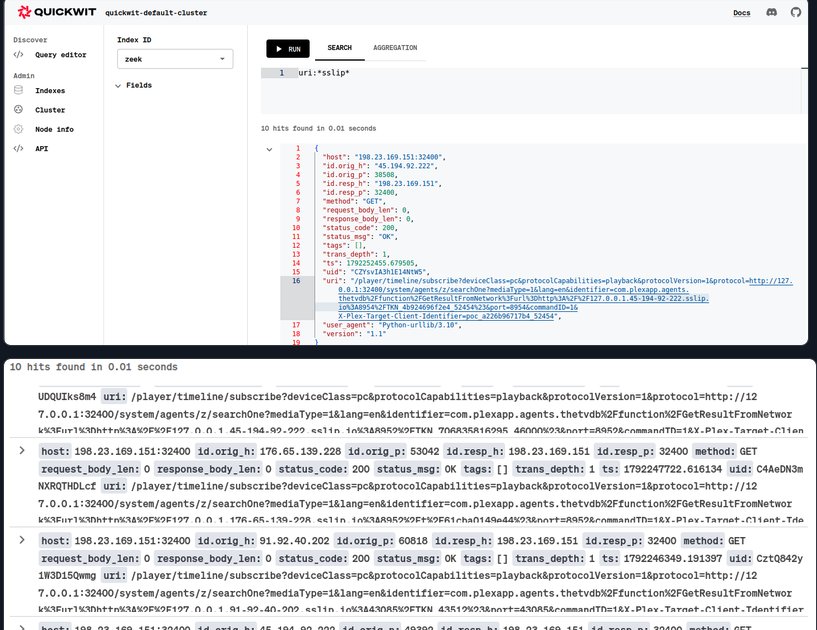
Image: boredhackerblog.info
Attackers use AI-assisted Plex exploit to install miners and proxies
Attackers used Plex2Shell to install cryptocurrency-mining software and tools that route other people's internet traffic through exposed Plex servers, researchers observed. The discoverer of the four-flaw chain said AI was used heavily during iterative discovery, verification and exploit development. The discoverer submitted the chain in a bug report to Plex, which released fixes in early September. Ars advises users to run version 1.43.3.
Negative - Attackers used the AI-assisted Plex exploit chain to install miners and proxy software on real systems, turning the capability into demonstrated harm against victims.