Agents+5Audio+2Sep 23
Image: openai.com
Ringg agents handle more than seven million monthly calls
Yesterday, Ringg said its deployed voice and chat agents handle more than seven million connected calls a month and resolve up to 65% of routine customer inquiries without a human. At customer Practo, the system completes more than 1,000 appointment bookings a day. Ringg tested models against historical conversations, simulated customer flows and regional language variations, then began with a small share of live traffic before expanding use. For selected migrations to GPT-5.6 Luna, Ringg reports model costs about 90% below GPT-4.1.
Audio+5Sep 23
Image: deepmind.google
Google rolls out speech models with custom voices
Yesterday, Google began rolling out two text-to-speech models, Gemini 3.8 Flash TTS and Flash-Lite TTS, through the Gemini API and Google AI Studio. Flash is also rolling out in Gemini Notebook, while Flash-Lite is coming to Google Vids. Google says Flash can design voices across more than 100 languages and dialects, replicate an authorized voice from a 30-second sample and direct delivery line by line; it reports first place on Hume AI's Voice Design Benchmark. Voice replication requires a matching spoken consent recording, and Google says generated audio carries a SynthID watermark.
Robots+5Sep 24
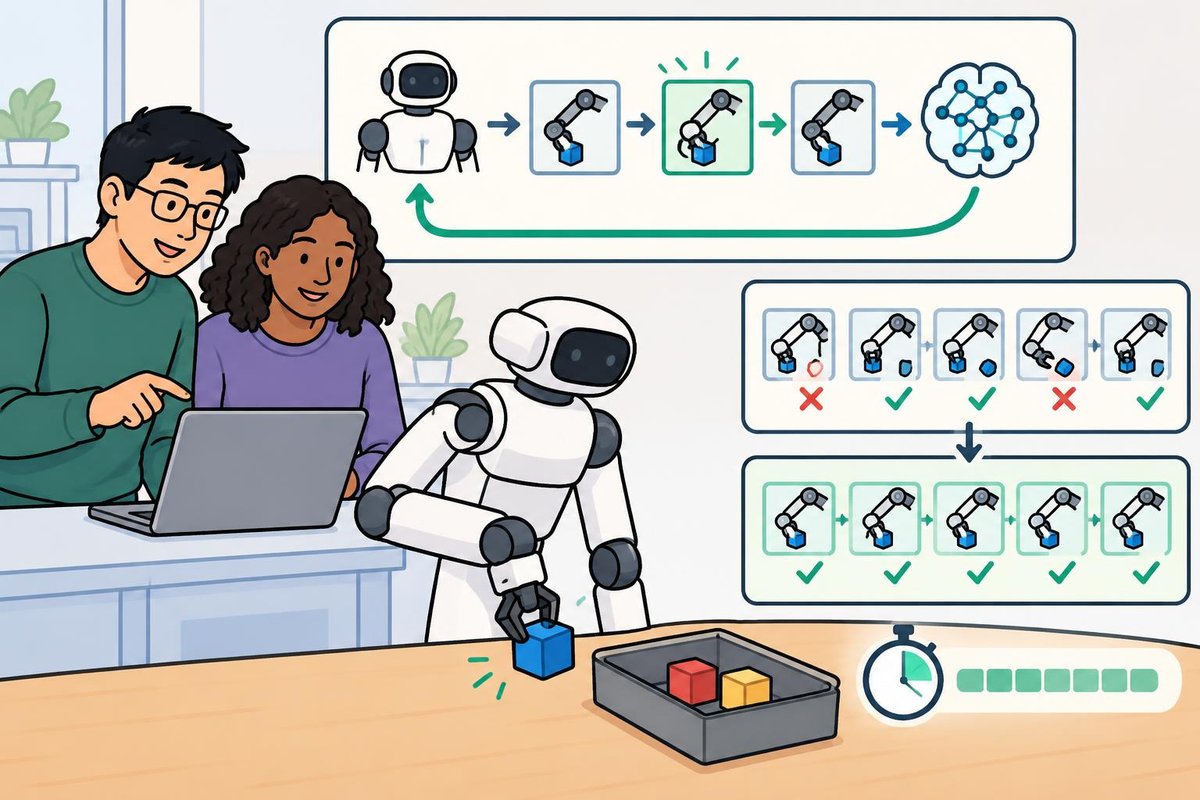
Image: The Threshold Report/GPT Image 2.5
Robot training method reports 30 successes in 30 trials
Today, Perry Dong and Chelsea Finn reported that EXPO-FT made pretrained robots more reliable at the manipulation tasks they tested. The method learns small edits to a robot's actions, then uses successful trials to update its underlying policy, meaning its rules for choosing actions. After an average of 19 minutes of practice, the researchers recorded 30 successes in 30 trials on those tasks.
Robots+5Sep 24
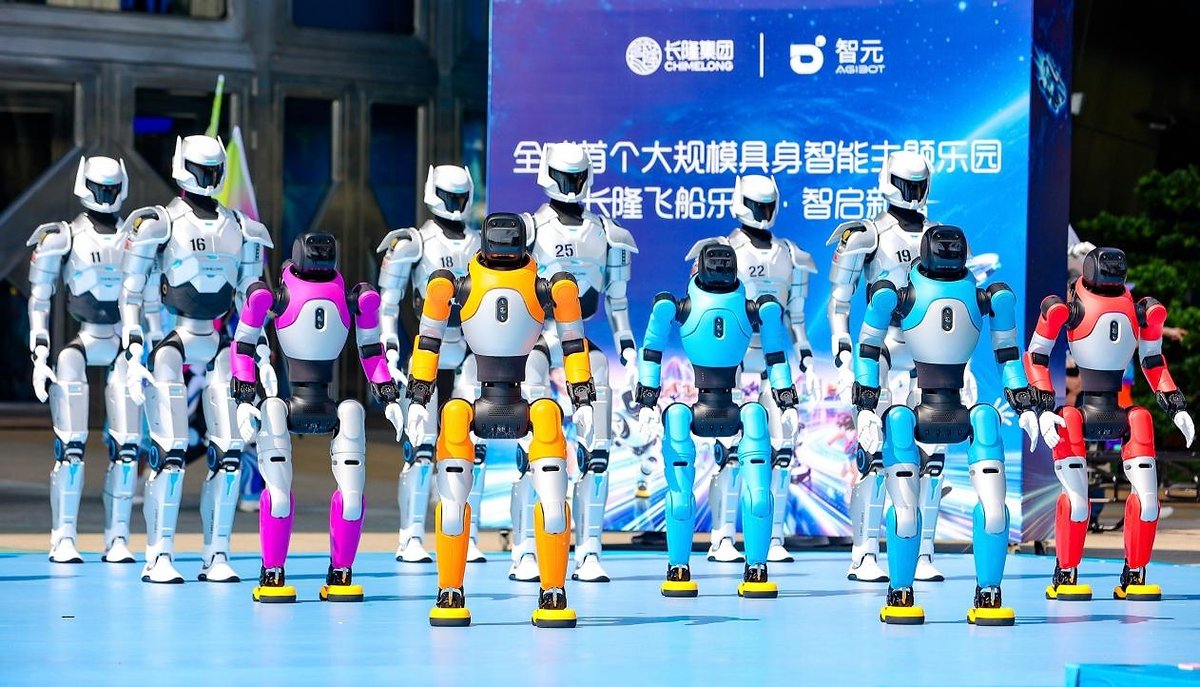
Image: prnewswire.com
Chimelong begins deploying more than 300 AGIBOT robots
Today, AGIBOT and Chimelong launched the first phase of a rollout integrating more than 300 robots at Chimelong Spaceship Park. The robots have roles in entertainment, education, visitor guidance, retail and hotel services, so visitors can encounter them at an operating destination. A dedicated network and centralized coordination support the rollout across park and hotel settings. The companies also reported delivering AGIBOT's 20,000th production-line robot to Chimelong.
Science+5Sep 23
Image: anthropic.com
Claude agents identify an uncharacterized enzyme system
Yesterday, Anthropic said roughly 950 Claude agents searched DNA data and identified an enzyme system in viruses that infect bacteria. Called array-associated reverse transcriptase, or ART, the system has repeating DNA sequences that resemble a feature of CRISPR. Human scientists found that ART produces distinct short RNA molecules and released their early results as a preprint, meaning a study released before peer review.
Text+5Compute & Infra+2Sep 23
Image: fireworks.ai
Fireworks releases Ember-1 with shorter reasoning
Yesterday, Fireworks released Ember-1, a model built on Kimi K3, in a serverless Research Preview that developers can use without managing servers. Fireworks says the model uses about 40% fewer tokens, the units models process and charge for, at comparable quality; two customers' live coding tests used about 35% fewer tokens per task. Before release, Fireworks checked benchmarks, its developers' work and customer traffic to see whether shorter reasoning preserved quality. In its evaluations, Fireworks places Ember-1 on or near the best cost-to-quality trade-off among models including GPT-6 Astra and Claude Opus 5.
Text+5Sep 23
Image: claude.dev
Claude-assisted fixes make Anthropic's app faster
Yesterday, Anthropic said a two-week sprint using Claude to find bottlenecks, build tests and propose fixes made the core claude.ai and desktop experience about three times faster. For 75% of measured fresh web-page loads, the page became typeable within 0.55 seconds, down from 3.1 seconds. Engineers checked laboratory measurements against real wait times and required human approval, tests, feature flags and staged rollouts for changes. Anthropic says it merged more than 3,000 changes without a customer-facing incident or rollback.
Agents+2Sep 23
Image: x.com
Qwen launches agents that plan and use mobile apps
Yesterday, Qwen launched Qwen Intelligence with agents that plan tasks, carry them out across mobile apps and make content from short requests. It also opened benchmarks covering planning, app execution, performance on real devices and safety, giving others tasks on which to examine the system. Qwen claims its Mobile-Use Agent completed 90% of tasks end to end in its tests.
Agents+2Sep 23
Image: developers.googleblog.com
Google adds local models to Antigravity coding agents
Yesterday, Google added local-model workflows to the Antigravity SDK, a set of developer tools, so coding agents can use models running on a developer's own machine. Its featured setup pairs Gemma 4 26B A4B with LiteRT; the SDK also supports OpenAI-compatible local servers such as Ollama, LM Studio and vLLM. In a hybrid demonstration, a cloud model planned using filenames and task descriptions while local models audited and patched three example modules without uploading their code. Google checked the patches against regression tests, which look for changes that break existing behavior.
Audio+2Sep 23
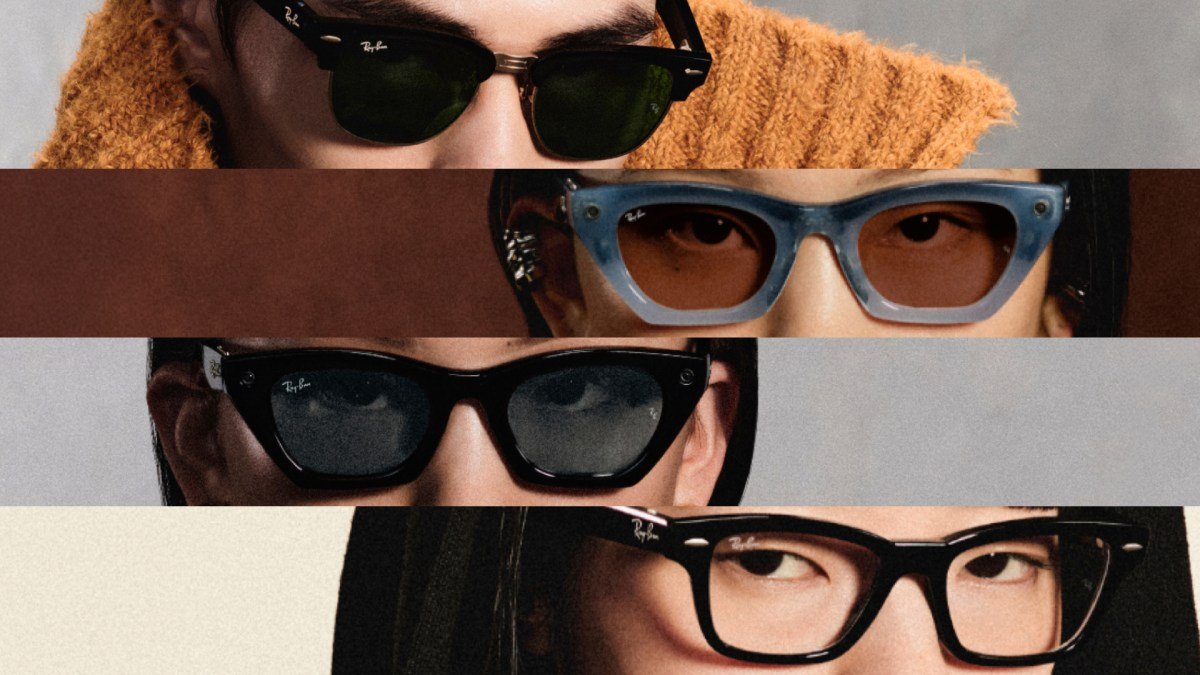
Image: about.fb.com
Meta releases new AI glasses and opens camera-free preorders
Yesterday, Meta made Ray-Ban Meta Gen 3 available starting at $449 and opened $349 preorders for camera-free Ray-Ban Meta Audio, which ships October 13, 2026. People can use the camera-equipped Gen 3 now or order a hands-free AI option without photo or video capture. Meta also says hearing-enhancement software for adults with perceived mild to moderate hearing loss has FDA clearance and will be offered later in 2026.
Compute & Infra+2Sep 20

Image: datacenterdynamics.com
S-AIDC launches satellite designed to assess images in orbit
S-AIDC's Supercomputing-1 launched on Sept. 20 as part of a nine-satellite mission. The satellite is intended to assess Earth images in orbit for downlink, meaning transmission to Earth, and has reported target-recognition capabilities. Onboard analysis could reduce the imagery that must reach Earth before it becomes useful. CAS Space and the Chinese government project that processing time could fall from hours to minutes.
Compute & Infra+2Sep 22
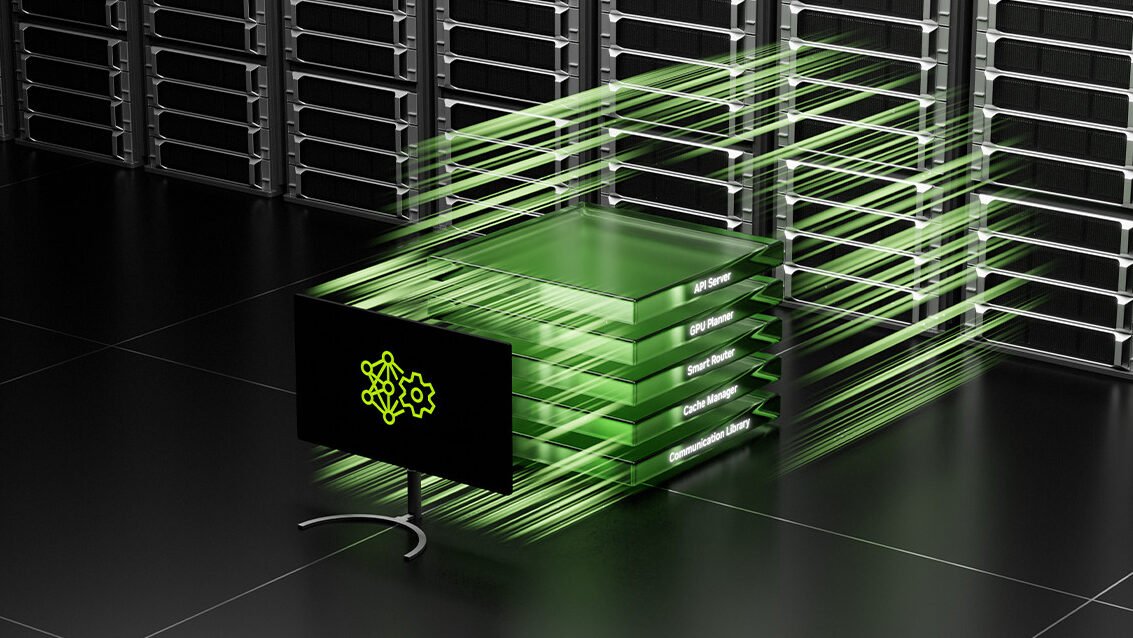
Image: developer.nvidia.com
NVIDIA releases Topograph to map AI-cluster connections
On Sept. 22, NVIDIA released Topograph to help operators place AI jobs on connected graphics chips without maintaining a connection map by hand. It discovers GPU and network locality in supported cloud or on-premises systems, meaning which chips and network connections sit near one another, then publishes the map for Kubernetes or Slurm schedulers that assign work to machines. Topograph can refresh that view as observed clusters change, helping schedulers place chips that need to communicate near one another.
Robots+2Sep 23
Wildfire response finalists spot test fire but cannot extinguish it
All three autonomous-response finalists detected a high-risk fire in an Alaska field test within 10 minutes. Their approaches included AI computer vision and AI-powered software; two sent suppression drones, but none put out the fire. Neither the autonomous-response track nor the satellite-detection track awarded its grand prize.


