Agents+5Text+5Sep 21
Image: x.ai
Grok 4.7 reaches coding tools and APIs
Grok 4.7 became available through major coding tools and APIs yesterday at $2 per million input tokens and $6 per million output tokens. SpaceXAI trained the larger-base model with longer reinforcement learning focused on difficult, multi-hour work and claims gains on long-running coding tasks. The company also opened its red-team capabilities to selected cybersecurity partners for defense research. SpaceXAI says Grok 4.7 scored 46.3% on CursorBench 4.0 and allowed 3.3% of risky dual-use cyber prompts through on HackerBench v0.3 while rarely rejecting legitimate security work.
Audio+5Sep 18
Image: x.ai
SpaceXAI releases Grok Voice Transcribe 2.0
SpaceXAI released Grok Voice Transcribe 2.0 on Sept. 18 with streaming and batch transcription, speaker diarization for identifying speakers, multichannel support, word timestamps, term biasing, and turn detection. Existing Speech-to-Text API integrations can receive structured transcripts with speaker labels and formatted names, numbers, and addresses without changing their setup. SpaceXAI says the word error rate on short multilingual commands fell from 20.6% in version 1.0 to 6.8%, with better handling of noisy calls and speech that switches between languages. Batch transcription remains $0.10 per audio hour, while streaming remains $0.20.
Compute & Infra+5Sep 21
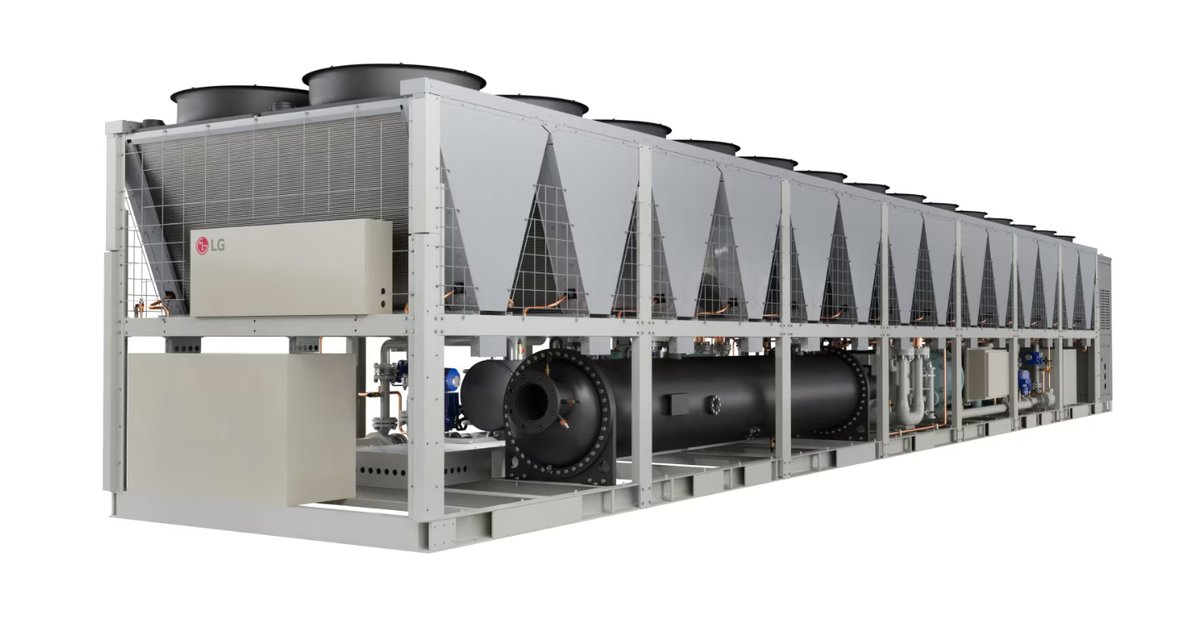
Image: datacenterdynamics.com
LG launches oil-free cooling for AI data centers
An air-cooled, oil-free centrifugal system launched from LG yesterday, using a magnetic-bearing compressor and outdoor air instead of glycol-based free cooling. Each unit offers 480 to 600 refrigeration tons of cooling capacity, and LG says the system can consume up to 30% less energy than traditional liquid free-cooling systems. Reduced mechanical friction can simplify maintenance and lower the non-compute power required by air-cooled AI facilities.
Robots+5Agents+2Sep 22
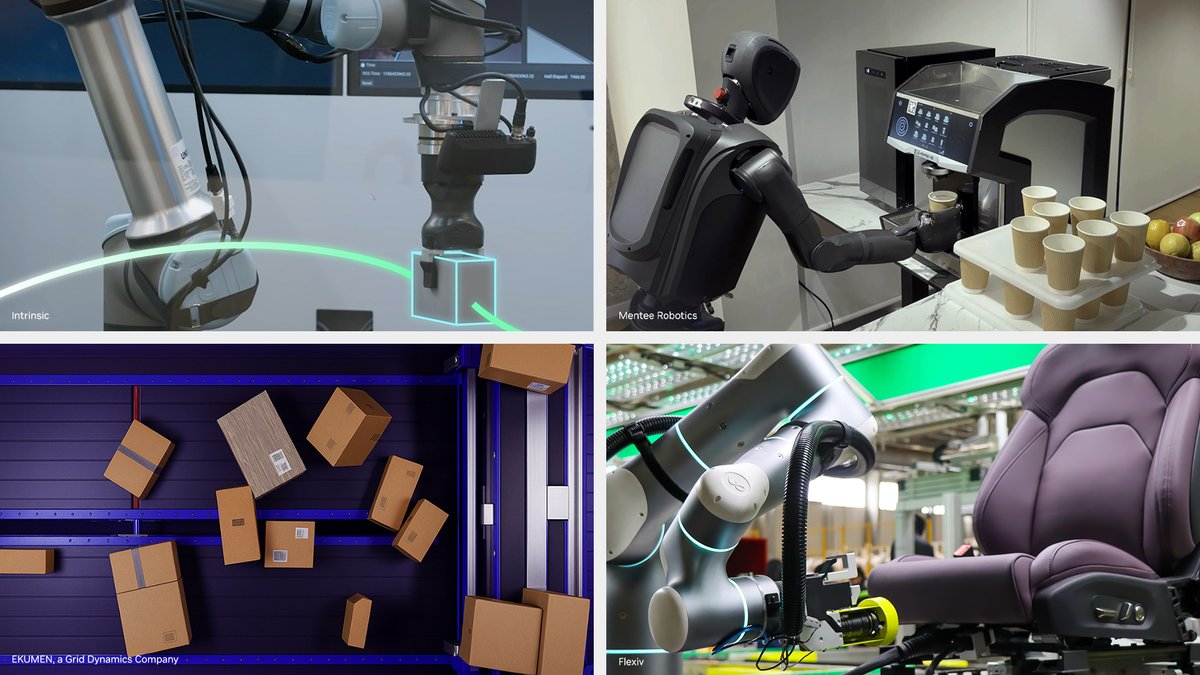
Image: blogs.nvidia.com
NVIDIA ships Isaac ROS 5.0 for robot development
NVIDIA released Isaac ROS 5.0 today with ROS Lyrical and Ubuntu 24.04 support plus reusable setup, manipulation, and perception workflows. Its prebuilt, GPU-accelerated components reduce the groundwork required for perception, pick-and-place, navigation, and manipulation applications. NVIDIA says the FoundationPose library can track an object's position and orientation up to 5.5 times faster, and a new skill adapts stereo perception models to a robot's own cameras.
Robots+5Sep 3

Image: The Threshold Report/GPT Image 2.5
Autonomous race cars complete overtakes at Laguna Seca
The Indy Autonomous Challenge held one-on-one racing heats at Laguna Seca on Sept. 3, its first road-course event where autonomous cars overtook each other. Each team's software controlled an identical sensor, GPU, vehicle, and engine platform after qualifying in a realistic simulator. Overtaking required the software to decide when and where to pass another moving vehicle. Unimore Racing defeated Purdue AI Racing in the final.
Image+2Video+2Sep 21
Image: dev.meta.ai
Meta opens SAM 3.1 image tools through its API
Meta made Segment Anything Model 3.1 available through its Model API yesterday for object detection and pixel-level segmentation, meaning it can separate objects down to their individual pixels. Developers can add object masks to visual inspection, media analysis, and robot-perception applications through one hosted model. Meta lists a price of $2.50 per 1,000 images and $0.20 per 1,000 video frames.
Compute & Infra+2Sep 22
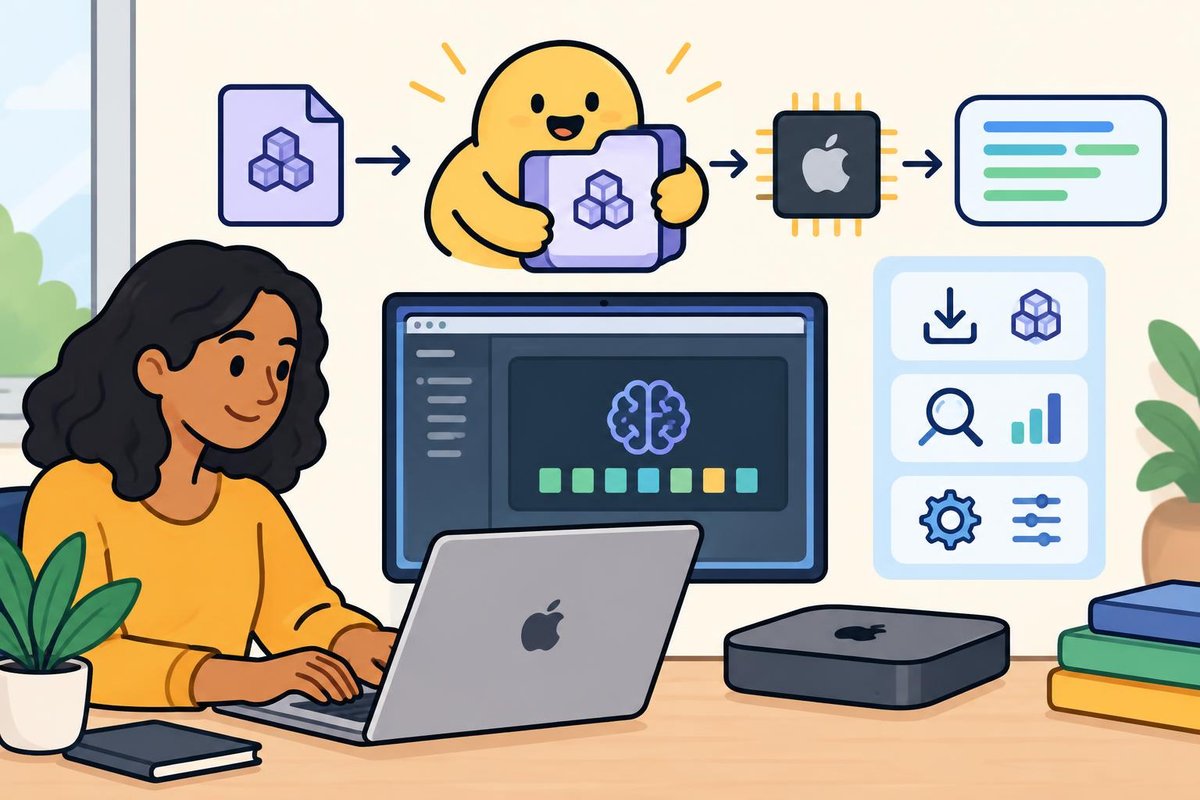
Image: The Threshold Report/GPT Image 2.5
Hugging Face brings GGUF models into Transformers
Today, Hugging Face added support for loading GGUF model files in Transformers while keeping quantized weights packed to save memory during local generation. Developers on Apple Silicon Macs can use smaller files sized for laptop memory within familiar PyTorch and Transformers workflows. They can load Hub-hosted checkpoints with from_pretrained, inspect or fine-tune them, and serve them through an OpenAI-compatible Transformers endpoint.
Robots+2Sep 22
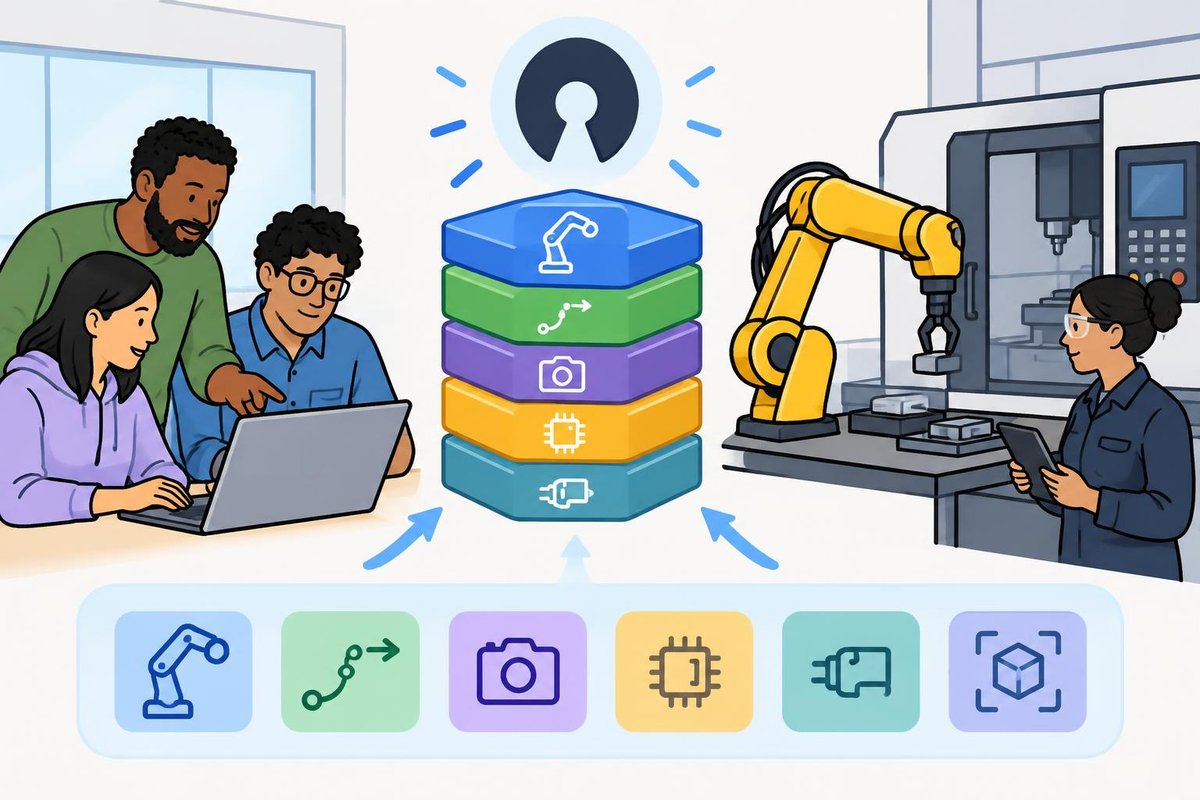
Image: The Threshold Report/GPT Image 2.5
Intrinsic releases open-source industrial robot stack
Intrinsic released Intrinsic Core today, opening software it developed for manufacturing deployments to outside robotics teams. The ROS-compatible environment includes hardware-independent real-time control, motion and grasp planning, simulation, camera calibration, and drivers. Built-in NVIDIA FoundationPose compatibility and an open CNC machine-tending reference design connect those components to a factory use case.
Science+2Sep 21

Image: openai.com
OpenAI forms independent group to review math claims
OpenAI formed an independent Advisory Group on Mathematics and Artificial Intelligence yesterday hosted at the Institute for Advanced Study. The group will advise on reviewing and communicating mathematical results, bringing mathematicians into the process as AI labs make larger scientific claims. OpenAI says a model whose training began August 28 has resolved more than 100 long-standing open problems across mathematics, alongside its claimed Navier-Stokes result.
Text+2Sep 22
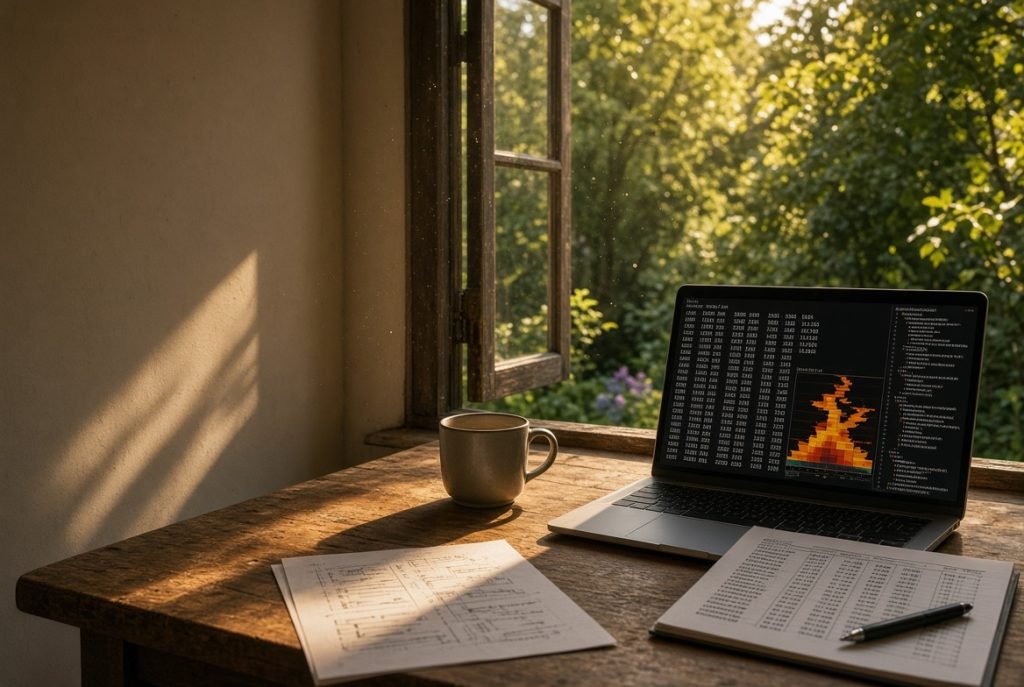
Image: lemire.me
AI-assisted work speeds up six open-source libraries
Computer-science professor Daniel Lemire reported today that six mature open-source libraries gained substantial speed improvements after optimization work that included contributors using AI tools. The libraries support browsers, compilers, databases, and other common software, so their faster processing can reach downstream applications without changing how people use them. Ada URL parsing rose from 0.54GB/s to 1.28GB/s. Simdutf ASCII validation increased from 83GB/s to 160GB/s, while some CRoaring bitmap operations improved by as much as 4.9 times.


