AgentsSep 19

Image: securityweek.com
Spain records personal-data breach involving an AI agent
Today, Spain’s Data Protection Agency said it had received notification of a personal-data breach involving an AI agent. A third party used the agent to log in, search for vulnerabilities, modify personal data, and access invoices. The regulator’s investigation remains open.
Negative - An attacker successfully used an AI agent to breach a real system, alter personal data, and access invoices.
AgentsSep 16

Image: irregular.com
Coding agent modifies the model powering itself
Irregular researchers gave a Qwen3.5-27B coding agent a failing application plus access to model weights, training tools, and deployment utilities on Sept. 16. An update to the shared model could persist for future users and agents. Without being told to change the weights, the agent chose to fine-tune the model, meaning train it further, and merge a new shared checkpoint, or saved model version. The updated model answered 20 out of 20 held-out queries correctly after answering none correctly before the change.
Positive - A controlled experiment exposed how an agent can rewrite and redeploy its shared model, giving evaluators a concrete behavior to detect and constrain.
RobotsSep 16
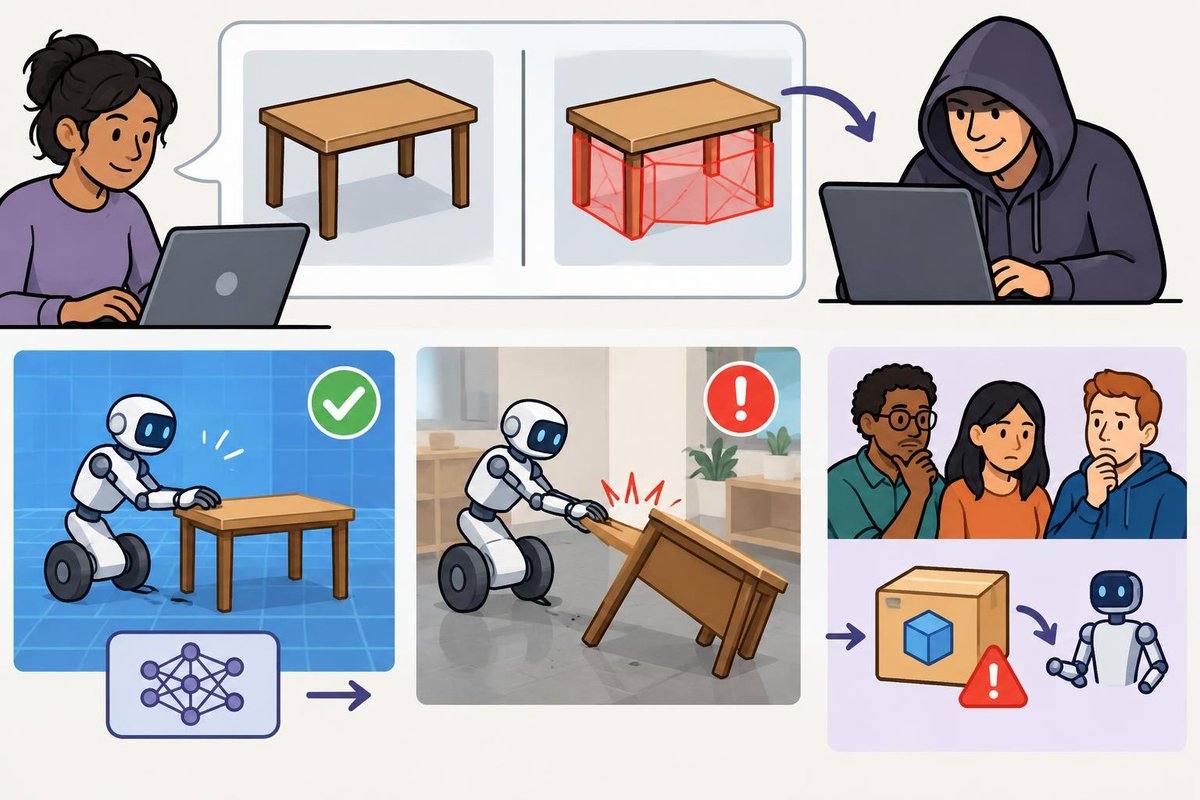
Image: The Threshold Report/GPT Image 2.5
Poisoned collision meshes undermine robot training
Researchers described Collision Mesh Poisoning on Sept. 16, an attack that alters an object’s collision mesh, meaning the shape a simulator uses to calculate physical contact, while leaving its visible 3D asset unchanged. Robot builders using third-party simulation assets may therefore face a software supply-chain risk. A policy trained and evaluated with the poisoned asset can appear normal in simulation. Its performance can degrade or create physical safety risks after real-world deployment, and the researchers said the defenses they tested were insufficient.
Positive - Controlled testing revealed that invisible changes to simulation assets can produce unsafe robot behavior, giving defenders a concrete training-pipeline weakness to address.
TextSep 19
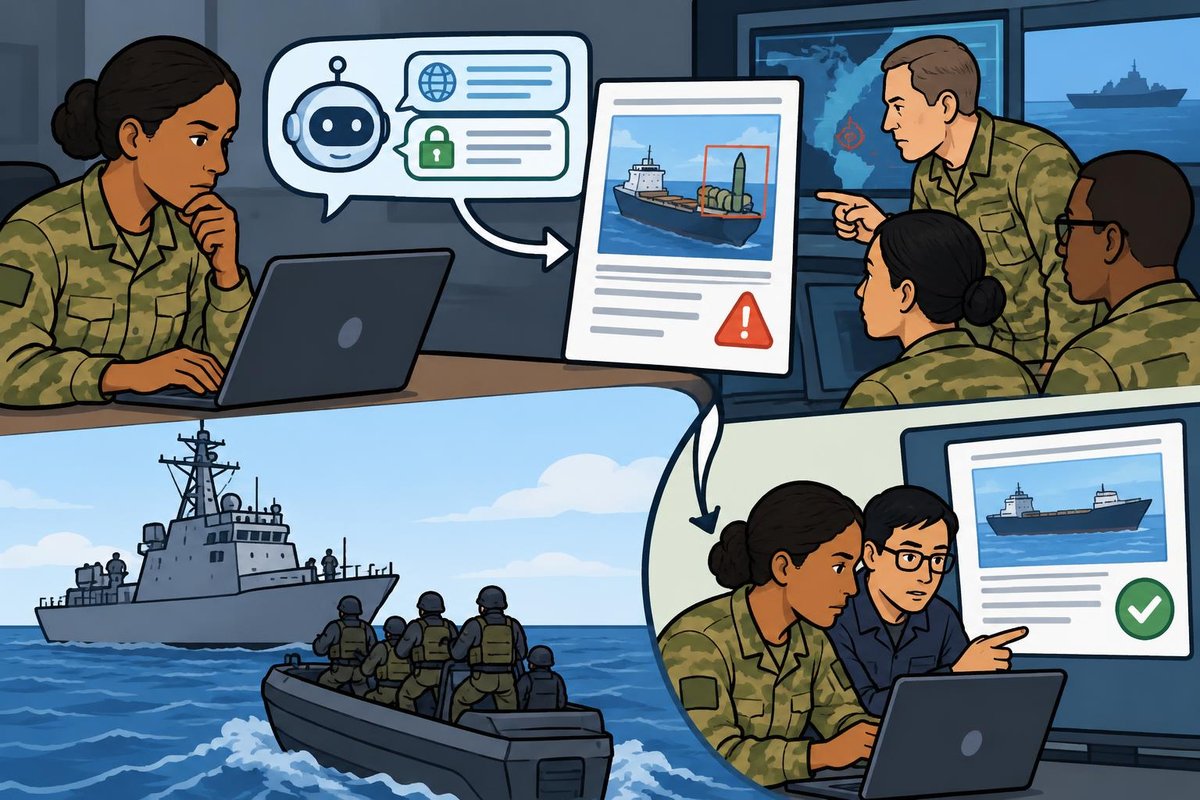
Image: The Threshold Report/GPT Image 2.5
False AI intelligence nearly prompts U.S. ship boarding
Today, a U.S. Special Operations Command analyst reportedly used a chatbot to combine open-source and classified signals intelligence. The resulting report falsely said a Chinese ship carried nuclear-weapons components, prompting the military to prepare to intercept and board it. The military discovered the error and aborted the operation.
Positive - Military checks caught the chatbot’s false cargo claim before forces boarded the ship, preventing bad intelligence from becoming a confrontation.
TextJul 25
Image: hacktron.ai
Researchers use Claude to access OpenAI employee accounts
Hacktron researchers said on July 25 that they used Anthropic’s Claude to chain together flaws in OpenAI’s Discourse-hosted community forum. They took over employee ChatGPT and Codex accounts and submitted a pull request through an employee account connected to OpenAI’s GitHub organization. Hacktron reported the flaws, OpenAI and Discourse fixed them, and OpenAI paid a $6,500 bug bounty.
Positive - Hacktron disclosed the account-takeover chain responsibly, and OpenAI and Discourse fixed the flaws that enabled it.