

Malicious Hugging Face models targeted users and tool-enabled agents
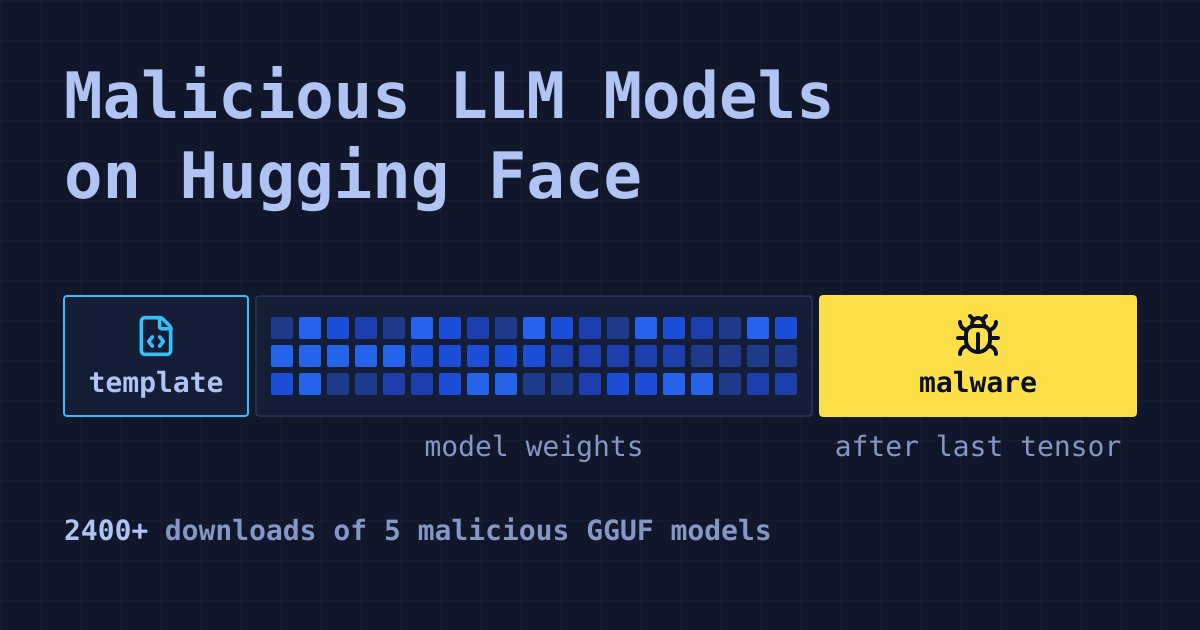
Five malicious Hugging Face repositories uploaded between November 21, 2026, and November 24, 2026, targeted users and tool-enabled agents, researcher Root0ne (Düzgün) disclosed yesterday. Two Mir2k models concealed Windows malware and prompted users to run it; attack instructions were added to their chat templates (rules for formatting conversations) on November 26, 2026. Three timdedid copies steered tool-using agents toward a downloader. Root0ne also released gguf-radar (a Python model-file scanner), which checks public model links or local files without running a model. The researcher says they removed the appended malicious bytes from both live Mir2k samples while keeping the weights intact.
NegativeAttackers put five rigged model files on Hugging Face, a site for sharing AI models, urging users to run hidden Windows malware and steering AI agents toward a malicious download, a researcher found.
Earlier on this thread
- Nov. 26Hugging Face releases $50 recipe for training cooperating agents
- Nov. 23Hugging Face closes a loophole in an agent test
- Nov. 20Hugging Face releases Qwen adapters for coding agents
- Sept. 3Hugging Face releases funes, a local memory store for coding agents