

NVIDIA study: reusing initial student outputs often beats regenerating them
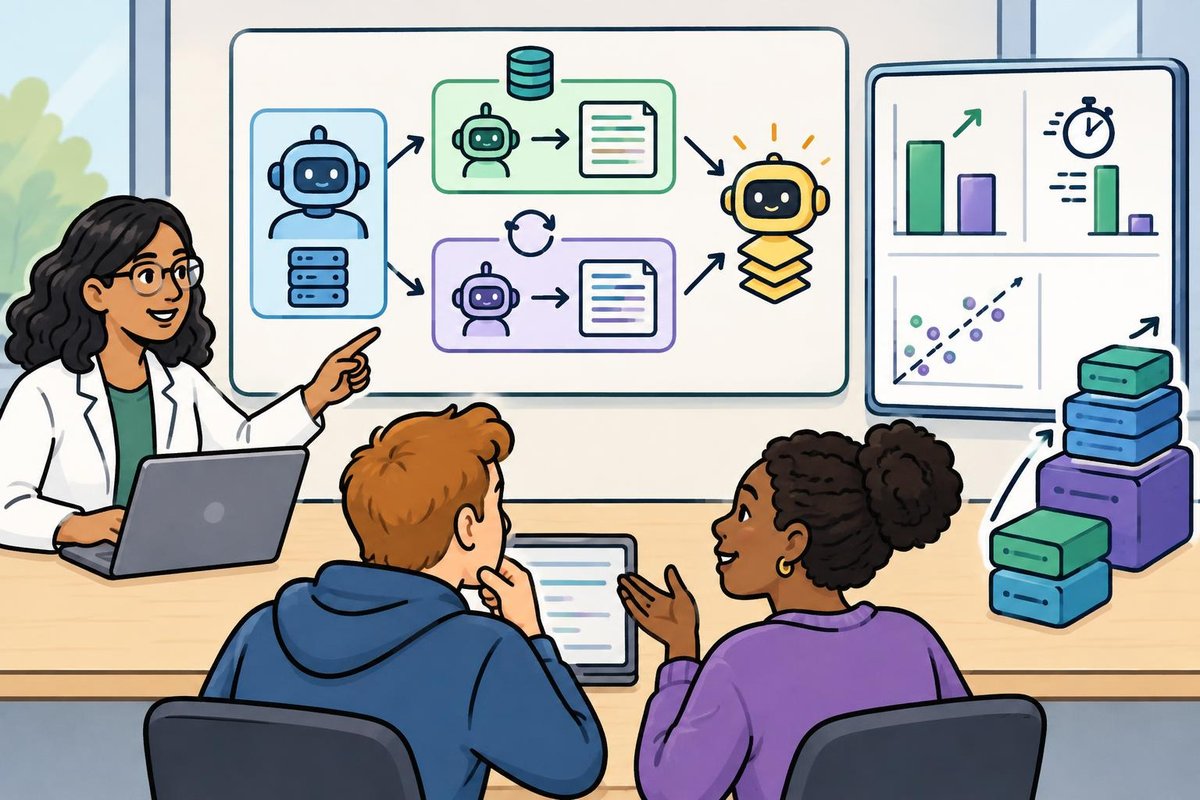
NVIDIA researchers report that a method called Semi-OPD outperformed on-policy distillation in 14 of 17 tested teacher-student model pairs, which span 1.5B to 235B parameters. Distillation means training a smaller student model to learn from a larger teacher. The on-policy version keeps generating fresh student rollouts (the student's own sample answers) as it goes, while Semi-OPD trains from offline rollouts generated by the initial student model. How much the teacher's and student's output tokens overlap helps predict which approach will work better, and fixed rollouts look cheaper especially when the two models are poorly aligned. The reported gains reach up to 13.6% in accuracy and up to 11.4 times in training speed.
Earlier on this thread
- Oct. 12NVIDIA robots assemble tester-tray parts but miss factory targets
- Oct. 9NVIDIA publishes seven agent-assisted simulation prototypes
- Oct. 7NVIDIA releases Nemotron specialists with gold-level math and coding results
- Sept. 30NVIDIA releases Kumo Tabular for predictions without task-specific training