

Computer search finds wing patterns that distort perceived motion
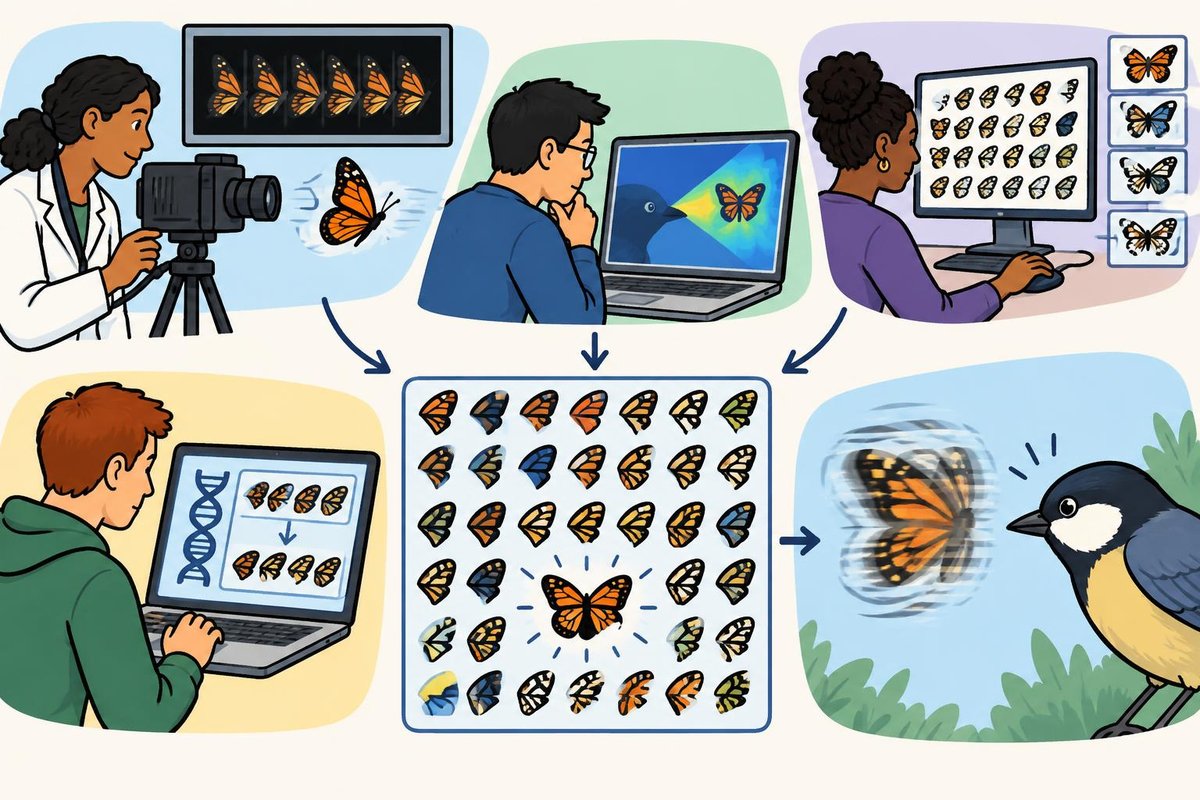
University of Exeter researchers used computational search to investigate how butterfly wing patterns can make flight harder to track. They combined high-speed footage, models of bird vision, simulations of nearly 400 European species and human touchscreen-catching tests. Genetic algorithms, meaning searches that repeatedly select and modify better-performing designs, evolved more than 50,000 wing patterns for stronger motion confusion. The selected designs resembled real butterflies' patterns, adding evidence that misleading motion cues could help shape their evolution alongside signalling and camouflage.