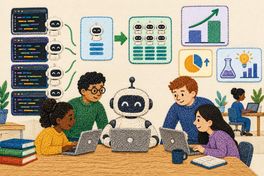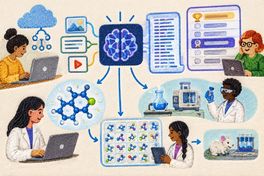
Alibaba reports experimentally validated coolant from a Qwen4 agent workflow
Developers can use Qwen4-Max through Alibaba’s API, and the company places it sixth on Code Arena.
Codex users can use GPT-6.2 Astra and Sol for coding work, with both models also available in ChatGPT Work and through OpenAI’s API.
Decision 1.1 is generally available for developers who want to automate decisions in their software.
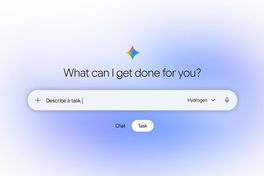
Google is rolling out Gemini Tasks for free in the US, Japan, Korea, Canada, Australia and India, replacing the paid Spark service.
Replit released Missions to coordinate groups of agents within budgets and approval limits set by the user.
An NVIDIA agent adapted part of a weather model to run on GPUs, and NVIDIA says that routine ran more than five times as fast.
At its default setting, Gemini 4 Neon costs 32% less per task than Gemini 4 Carbon, according to Google, which began offering Neon for long coding and agent jobs.
On two- to four-hour research tasks, OpenAI’s coding agents succeeded without human help 46% of the time in October 2026, up from 23% in March 2026, the company says.
Project Genie’s generated sound changes with the scene as eligible Google AI Ultra subscribers use text to alter the weather, characters or action in a Genie 4 world without restarting it.
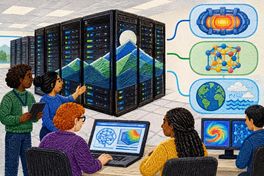
Researchers with allocations can train and run AI models alongside simulations on Oak Ridge’s Lux supercomputer, which has opened to scientific users.
Cerebras put a system into production that uses AMD GPUs to process prompts and its CS-3 systems to generate replies.
OpenAI says AMD has incorporated some AI-assisted changes into a chip design headed to manufacturing.
At China Telecom’s submarine cable landing station in Shantou, an AI data center running on Huawei’s Ascend 950DT chips began operating in November 2026, according to the South China Morning Post, as cited by DCD.
Isomorphic Labs reported positive results from its AI-assisted drug work in cancer and immune-system research on Nov. 17.
Lex Toumbourou had Claude Fable 5.2 write a small image classifier’s weights (the numbers it uses to decide what’s in an image).
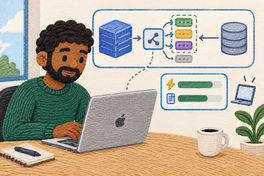
Agents used curl’s source code, documentation and tests to rewrite the data-transfer tool in Rust.
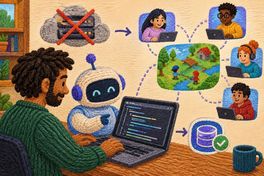
When Seeker Entertainment lost funding for the AWS servers running KinForge, co-founder Travis McGeathy used Claude Code to adapt the game so players could host their own sessions.
A proposed change to Hugging Face’s Transformers library ran the 180-billion-parameter Qwen3.8-Flash-Next on a MacBook with 32 GB of memory.
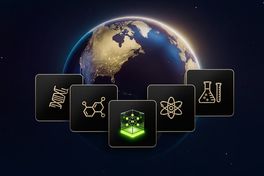
Lila Sciences trained Nemotron on feedback from its automated labs to improve instructions for making quantum dots (tiny semiconductor particles), NVIDIA said on Nov. 16.
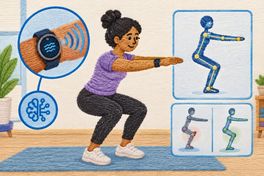
Using a smartwatch’s speaker and microphone, Cornell researchers tested an AI system called EchoMotion to estimate body-joint positions without cameras or additional body-worn sensors.
Across 668 proteins from bacteria and archaea (another group of single-celled organisms), Claude Fable 5.2 predicted the next amino acid (a protein building block) correctly 54% of the time.
Tencent released Hy4 flash for text and image tasks on Nov. 17.
Cloudflare released Clairic and Clairic-flash for teams that need to pull structured fields from documents, with hosted access through Workers AI and weights on Hugging Face for teams that want to run the models themselves.
What AI can actually do today, what’s still ahead, and the money flows shaping its progress. Tuesday and Friday mornings.
SubscribeUnsubscribe any time.
One more thing: what should we call you?
So the report can greet you by name.
While you’re here: can AI do that yet?
Dial scores as of Nov. 19, 2026
Our running score of AI risk and readiness. Stronger defenses and safeguards pull the dial toward Under Control; breaches, jailbreaks, and misuse push it toward Chaos. Only security stories affect the score, and bigger impacts carry more weight. The lit bars show the running balance between the two sides.
Announced or reported, but not yet real or available.
Waiting on: Assessments beginning - Apollo’s pilot is scheduled for the week of Nov. 16, while the other assessments have different start dates.
Waiting on: Windows rollout - Microsoft plans to bring Aion Instruct to Copilot+ PCs in the Windows Insider Program on December 4, 2026, and to retail devices in late January 2027, with a standalone test package available to developers.
Get one short email on days your lanes have real progress.
Alerts go to this address.
By setting an alert, you agree to our Terms of Use
You already get the report, and it carries on as before. To get alerts only, turn the report off from Manage alerts in your first alert email.
You get alerts only, so the report stays off. To get it again, use Manage alerts in your alert emails.
Every alert email has a link to stop it or manage your alerts.