Experts affirm and release OpenAI’s Yang-Mills existence proof
On Nov. 10, a committee led by physicist David Gross released OpenAI’s AI-generated Yang-Mills existence proof for researchers to scrutinize.
Using an early Fable 5.2 model, 1,000 Claude agents shared a database and Git (software for tracking changes) to divide up a proof of Fermat’s Last Theorem, according to Anthropic.
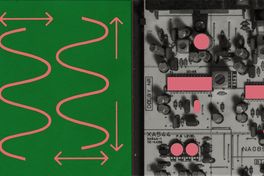
Claude Fable 5.2 designed complete electronic prototypes, coordinating circuit boards, enclosures and firmware (software that runs the hardware), Anthropic says.
Paying developers and enterprises gained access to Gemini 4 Carbon for extended coding and scientific work, and Google began rolling it out to Google AI Ultra subscribers.
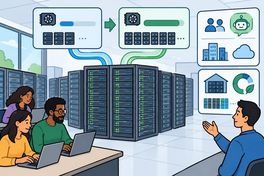
Cisco pooled its AI computing capacity across users and workloads, raising average use of its GPUs (graphics processors) from 15% to about 50%, the company says.
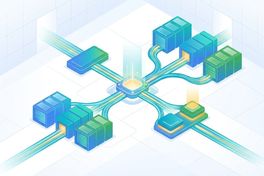
Google Cloud made two tools generally available for managing TPUs (its chips designed for AI), reducing manual work on large training and response-generation jobs.
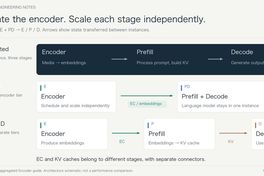
vLLM contributors expanded tools that process images, video and audio separately from generating answers, so operators can scale media processing independently and avoid repeating some preparation work.
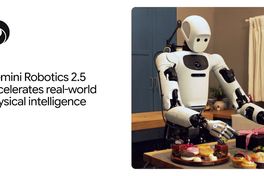
Google is rolling out Gemini Robotics 2.5 to robotics partners and says Apptronik’s Apollo 2 achieved 96% success sorting automotive parts in a Mercedes-Benz production-line proof of concept.
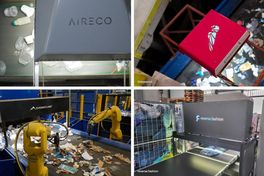
About 150 deployed EverestLabs robots identify and sort material on moving recycling belts, with roughly 25,000 tons recovered, according to NVIDIA.
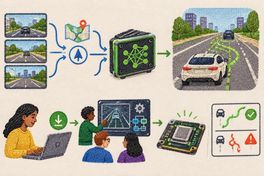
Autonomous-vehicle developers can download and adapt NVIDIA’s Alpamayo 2 Edge, a driving model designed for onboard computing limits.
Google DeepMind released AlphaGenome 2 through its API for non-commercial research into how DNA changes affect specific cell types and states.
On Nov. 9, Anthropic broadly released Claude Fable 5.2 and offered the same underlying model as Mythos 5.2 through verification programs for cybersecurity and life-sciences work.
An independent tester directed Claude Fable 5.2 through research projects in entrepreneurship and narrative patterns.
Meta released Muse Ember for tool use, coding and document analysis at $0.10 per million input tokens and $0.50 per million output tokens (units of data a model handles).
U.S. healthcare providers and health plans can test Gemini for healthcare in a Google Cloud preview.
On Nov. 10, Anthropic began rolling out full interactive views of connected apps in Claude on the web and desktop across plans.
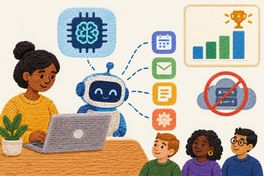
Gemini task automation is expanding to the UK, India and Japan through Google's Pixel Drop, allowing more users to ask it to handle supported jobs across apps.
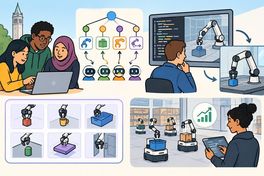
UC Berkeley and NVIDIA released open-source tools, meaning anyone can inspect and modify the code, for AI agents to write, simulate and refine readable robot programs.
Tether AI Research has made BotPsy available for local tool use, with the model first reported on Nov. 11 and confirmed available on November 12, 2026.
AWS Emulator, released on Nov. 11 lets developers and coding agents test cloud-dependent software locally without running every test against live infrastructure.
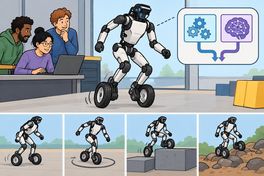
Boston Dynamics attached wheels to Atlas and combined conventional motor control with a whole-body reinforcement-learning policy (a controller trained through trial and error).
Serve Robotics opened a public API portal and sandbox (a test environment) for building delivery applications on its robot fleet.
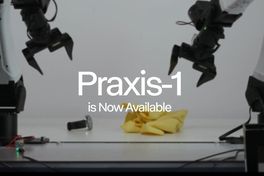
First reported on Oct. 1 and confirmed available on November 12, 2026, Runway’s Praxis-1 is downloadable with code for adapting it to robots.
Robbyant released LingBot-Touch, a model that represents touch data in a form robot-control software can use.
Meituan’s LongCat-2.5 is available to download and run from a public Hugging Face repository under an MIT license.
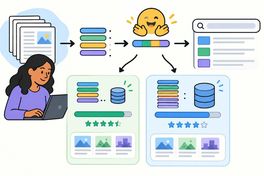
A Hugging Face example trains a document-search model to keep useful results while reducing the data stored for each document.
J.Crew’s Style Advisor lets shoppers describe an occasion or start with one item, then refine suggestions for a complete outfit.
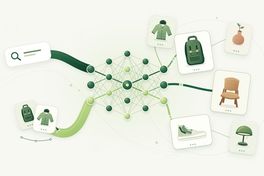
Shopify put a shared generative AI model into production to select products for search results and recommendations.
What AI can actually do today, what’s still ahead, and the money flows shaping its progress. Tuesday and Friday mornings.
SubscribeUnsubscribe any time.
One more thing: what should we call you?
So the report can greet you by name.
While you’re here: can AI do that yet?
Dial scores as of Nov. 12, 2026
Our running score of AI risk and readiness. Stronger defenses and safeguards pull the dial toward Under Control; breaches, jailbreaks, and misuse push it toward Chaos. Only security stories affect the score, and bigger impacts carry more weight. The lit bars show the running balance between the two sides.
Announced or reported, but not yet real or available.
Waiting on: Customer availability - Databricks has unveiled the updated Genie agent and demonstrated it internally.
Waiting on: Delivery and operation - Anthropic has agreed to buy additional Microsoft computing capacity.
Waiting on: Approval and construction - SpaceX's facility is still planned, and Starbase's city commission will consider a property tax reduction on December 9, 2026.
Get one short email on days your lanes have real progress.
Alerts go to this address.
By setting an alert, you agree to our Terms of Use
You already get the report, and it carries on as before. To get alerts only, turn the report off from Manage alerts in your first alert email.
You get alerts only, so the report stays off. To get it again, use Manage alerts in your alert emails.
Every alert email has a link to stop it or manage your alerts.