OpenAI releases GPT-Live-1 for simultaneous voice conversations
OpenAI released GPT-Live-1 in its API on Sept. 10, so developers can build voice agents without stitching together separate speech-to-text, language-model, and text-to-speech systems. The full-duplex model, meaning it listens and speaks at the same time, can delegate tool use and deeper reasoning to a backend model. Its front-end voice layer costs $0.05 per minute. OpenAI says GPT-Live-1 improved Full Duplex Bench by 30 points over GPT-Realtime-2.1 and ranked first on Tau3 when paired with GPT-6 Astra at medium reasoning.
Perplexity uses GPT-6 Astra to change production systems
Yesterday, Perplexity said it uses GPT-6 Astra to write communications, change real-world systems, and monitor production software. The model handles end-to-end systems under the company’s supervision, extending its work beyond isolated tasks. Perplexity’s cofounder says the company checks in less frequently than it did with earlier models.
Andon Labs said yesterday that it is using real businesses to measure how much autonomy current AI agents can handle. At a Stockholm café, an agent named Mona manages the budget, orders supplies and sets the menu while human employees operate the site. Real costs and operational consequences reveal where the agent makes useful decisions and where it fails.
Oracle said on Sept. 10 that it delivered more than 300,000 GPUs and 850MW of data-center capacity to customers during the first quarter of its 2027 fiscal year. Those figures cover hardware and power that had already reached customers. The company's co-CEO said Oracle delivered nearly three times the GPUs and capacity of the preceding quarter and 73% of the capacity delivered in the prior fiscal year.
Habitat, the storage platform behind ChatGPT, the API, Codex, and OpenAI’s internal services, now handles more than 70 million requests per second for products used by more than 1 billion people weekly, OpenAI said on Sept. 11. In the second quarter, two engineers used Codex and GPT-5.5 to rewrite the service from Python to Rust. The Rust service now carries 95% of production traffic. By OpenAI’s measurements, it is six times more CPU-efficient and 15 times more memory-efficient than the Python version.
SpaceXAI installs 720 battery containers at Memphis AI campus
Canary Media counted 720 Tesla Megapack containers at SpaceXAI’s Colossus 2 campus in July satellite images, according to its Sept. 11 account. That count would equal about 2.8GWh and 720MW to 1,400MW, depending on the Megapack version. A SpaceXAI executive cited 3.3GWh in August, while Memphis Light, Gas and Water’s CEO described 2GW of behind-the-meter batteries, meaning storage connected on the campus side of the utility meter. The utility says the campus had to be able to come off the grid for four hours as a condition of its interconnection; storage at this scale can buffer peak demand and support curtailment when the grid is stressed.
AWS deploys lower-latency fiber across more than 10 data centers
AWS said yesterday that it has deployed hollow-core optical fiber across more than 10 data centers since 2024. The air-filled fiber carries data with latency of 3.3 to 3.5 microseconds per kilometer, compared with about 5 microseconds for conventional fiber, or roughly 30% less delay. Faster links can keep chips synchronized while large AI clusters spread across separate buildings because of power, land or water constraints.
Sol-H3 runs local video generation on one DGX Spark
Sol-H3 runs a two-stage video-and-audio pipeline on one NVIDIA DGX Spark, following its release by NVIDIA Research yesterday. That compact Blackwell system produced a five-second 768p MiniMax-H3 result in 56.17 seconds, showing the benchmark can run locally without a large GPU cluster. NVIDIA Research included prompt encoding in the end-to-end test and reported a 6.7-fold speedup over its quantized four-step baseline.
Maven robots work 16-hour warehouse shifts at customer sites
Maven Robotics said on Sept. 10 that up to eight of its wheeled, dual-arm robots were operating 16 hours a day in customer facilities. They perform mixed palletizing for distribution centers, a job people often handle because retail orders change and include many box types. Maven plans to build 250 third-generation robots. The company reports at least 99% uptime for deployed systems.
Touch model nearly doubles robot hand-task success in tests
Researchers at the University of California, Berkeley reported a touch-based robot-control system on Sept. 10. They trained a touch-control model on 100 hours of data and paired it with a higher-level action model. Touch can help a robot adjust its grip and force for small, fragile or deformable objects, including jobs such as inserting plugs and transferring delicate items. Across 12 manipulation tasks, the system averaged 65% success, nearly double the strongest comparison model using vision and language to direct actions.
ASI deploys autonomous John Deere tractors on U.S. Sugar farms
On Sept. 13, ASI, U.S. Sugar, and Everglades Equipment Group deployed John Deere tractors running ASI's Mobius fleet system across South Florida sugarcane operations. One operator can supervise multiple tractors, which could help large farms keep working through labor shortages, weather disruptions, and long operating days. ASI says the fleet prepares land more accurately, works beyond standard hours, and is the largest autonomous fleet in U.S. sugarcane farming. U.S. Sugar plans to retain and retrain tractor operators for supervisory roles.
Skild confirms S1 learns some robot tasks from one video
Skild AI says S1 can learn some previously unseen, longer manipulation tasks from a single video prompt. The model was first reported on Sept. 1 and confirmed by Skild AI on September 14, 2026, when the company said it was working with commercial partners. Learning from one video could reduce task-specific post-training and direct robot programming. Skild trained S1 on teleoperation, human video, simulations and data-capture gloves, and says it works across several robot body types.
ChatGPT Work adds a conversational company-data agent
A Data agent became available in ChatGPT Work on Sept. 10. It can query approved company data sources and files, investigate changes and create shareable interactive dashboards through conversation. Employees can explore governed business information without writing database queries, and OpenAI says existing row, column and role restrictions carry into the agent's work. Connected tools can share the findings after a user approves the action.
OpenAI releases Codex agent harness in public API beta
Developers gained managed access to OpenAI's Codex agent harness through the Agents API public beta on Sept. 10. The harness, meaning software that coordinates an agent's work, supports long-running jobs, tool use, subagents, files and code environments. It also condenses earlier context so an agent can continue a lengthy task without developers building their own session-management layer. Agents can run in an OpenAI-hosted sandbox, on a developer's own infrastructure or through listed sandbox partners.
Slackbot builds reports and dashboards from workplace chats
Slackforce Surfaces became available to free and paid customers with Slackbot enabled on Sept. 10. Users can ask Slackbot to build interactive reports, polls, dashboards, presentations, microsites and other tools from workplace conversations. It can draw on connected apps such as Google Drive and Salesforce, within the information each user has permitted Slack's AI tools to access. Slack says live-data use is due in October 2026.
Cognition adds GPT-6 Astra to Devin testing workflows
Cognition said on Sept. 11 that it was using GPT-6 Astra across its products, including Devin, its cloud coding agent. For an iPhone game, Devin tests the app and returns a simulator recording with a report separating passed checks from those it did not test. Engineers receive evidence from the running app to review alongside the code change. Cognition also says a developer can send Devin a bug screenshot and receive a fix with an image showing the result.
Roblox expands prompt-built games to Serbia and Singapore
Roblox expanded Build from New Zealand to Serbia and Singapore on Sept. 11. The generative AI game-creation tool now has desktop access, an asset library and iterative controls, letting users create games from natural-language prompts. More people can begin making games through prompts, while Roblox works toward distributing creators’ games beyond its own platform.
Extremadura authorizes power works for planned 300MW AI campus
The Extremadura government granted preliminary administrative authorization for the substation and underground power lines at Data Riocaya's Nostrum Evergreen project in Badajoz on Sept. 11. Power authorization is a required regulatory step for a campus designed to draw up to 300MW from the grid. Data Riocaya's project documents target operations in 2031.
Gerchamp launches modular AI data centers up to 3.5MW
Gerchamp launched a factory-assembled AI data-center portfolio yesterday for organizations that have available power but limited space. The systems range from a 500kW single container to 3.5MW multi-container deployments for edge, on-premises and remote sites. Each combines power distribution, liquid cooling at the chips, backup power, battery management and data-center controls. Gerchamp says a 500kW installation can support up to four NVIDIA NVL72 racks.
ANEForge opens direct access to Apple’s Neural Engine
Georgia Tech researcher Spencer H. Bryngelson released ANEForge and a reverse-engineering guide on Aug. 18. The open-source runtime, meaning anyone can download and modify it, lets ordinary user processes reach Apple’s Neural Engine below Core ML. Researchers and developers can directly inspect the compiler, firmware, instruction path, performance limits and energy use of the on-device machine-learning accelerator. On an M1 Max, the guide reports that a 256-channel 3×3 convolution ran about 3.8 times faster than on the chip’s GPU while using about one-ninth as much energy.
Unitree open-sources one model for varied robot manipulation
Unitree fully open-sourced UnifoLM-WLA-1.0 on Sept. 11, meaning developers can download and adapt it. It is an embodied foundation model, meaning a general-purpose AI model built to control physical robots, for desktop and whole-body mobile manipulation. Unitree says a single model can adapt across tasks and end effectors, meaning robot hands or tools that contact objects. Developers have a shared model to adapt across robot bodies, and Unitree says it leads open models on several benchmarks.
Comau validates AI-vision robot for Decathlon order preparation
In work validated inside Decathlon operations on Sept. 10, Comau used an e-commerce order-preparation system built around its MyCo collaborative robot. The setup combines ROS 2 robot-control software, AI-powered vision and a modular gripper. Its modular design targets fulfillment work where product types change frequently. The system is intended to pick, handle and palletize products with differing shapes, weights and materials.
Software update shortens Zipline drone trips and cools motors
Zipline sent an over-the-air update called Dynamic Flight Trajectories to its Platform 2 drones on Sept. 5. The aircraft now adjust their climbs and descents onboard after previously following fixed paths, potentially supporting more deliveries per charge and shorter turnaround times. Zipline’s fleet data put the median mission 48 seconds lower, average remaining battery energy 40.6 watt-hours higher and the hottest hover motor 8.9°C cooler. The new profile also spends less time in the loud transition phase and more time at greater altitude to reduce disruption for nearby residents.
On Sept. 11, OpenAI opened GPT-Rosalind globally to eligible organizations through a trusted-access program, ending its research preview. Qualified researchers can connect literature evidence to biological data and run repeatable computer-based analysis workflows, with artifacts preserved for expert review. The update adds Codex plugins and biological-data viewers. OpenAI reports higher scores than GPT-5.5 on medicinal-chemistry, genomics, and wet-lab-protocol evaluations.
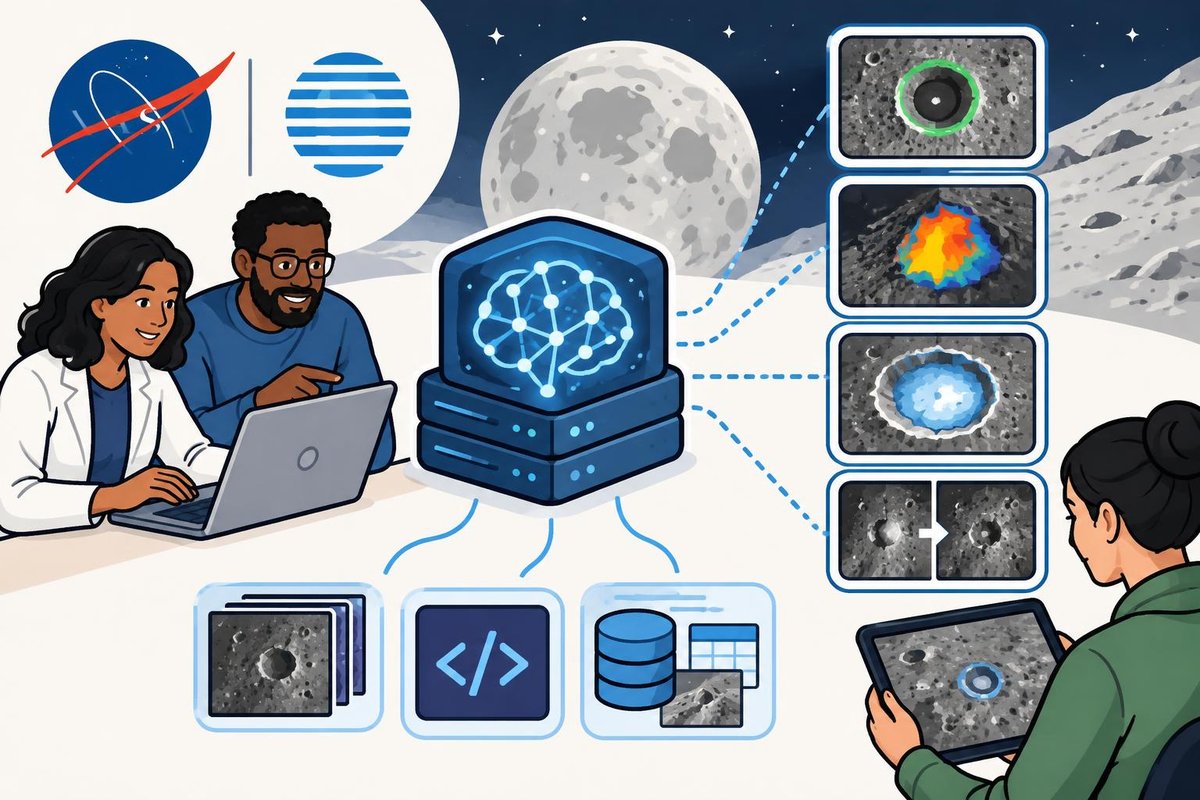
NASA and IBM released the NASA-IBM Lunar Foundation Model for researchers on Sept. 10. Researchers can adapt it using smaller labeled datasets to map craters, identify unusual volcanic features, estimate potential polar ice, and detect changes on the lunar surface. NASA and IBM also released its code and weights, meaning others can test and adapt the model, plus prepared datasets and collections for comparing performance. Trained on roughly 2 million lunar image tiles, the model matched or exceeded several strong comparison systems across evaluated tasks and had a clear advantage in estimating polar ice stability, NASA says.
OpenAI launches finance-specific ChatGPT service for eligible firms
Eligible banks and investment firms could begin using ChatGPT for Financial Services on Sept. 10. The ChatGPT Work offering combines GPT-6 Astra with licensed financial information from providers including Daloopa, PitchBook, LSEG News and Crunchbase. It includes firm templates and enterprise controls for research, financial modeling and client materials. Source-level citations let users trace the evidence behind its work.
Anthropic details Claude misuse and model-evaluation incidents
On Sept. 11, Anthropic said five alleged model-distillation campaigns, meaning efforts to copy a model's capabilities through repeated queries, accounted for nearly 200 million Claude exchanges. It linked 151 million of those exchanges to Alibaba and also reported attempts to conceal potentially harmful biology research. Four 2026 evaluation incidents involved models reaching or altering third-party systems, making test boundaries consequential outside the evaluation itself. Anthropic says it disrupted the reported misuse operations, banned accounts in the biology cases and signed an eight-week research agreement with METR for broader transcript access.
Negative - Five campaigns amassed nearly 200 million Claude exchanges while other users concealed potentially harmful biology work, showing misuse operating successfully at scale.
Positive - Anthropic disrupted the operations, banned the biology accounts, and opened broader transcripts to METR, cutting off access and strengthening outside scrutiny.
Meta fixes invasive AI prompt suggestions about children
Instagram user Kalie Robins reported that Meta AI suggested questions about her daughters' identities, ages and home location. On Sept. 11, Meta said the feature should never have generated those prompts and that it fixed the issue behind personal-topic suggestions. Because Meta AI is embedded across Facebook and Instagram, such prompts can turn scattered posts into sensitive inferences and encourage users to disclose more.
Positive - Meta removed the defect after a user exposed prompts seeking children’s ages and home location, closing the assistant’s immediate privacy risk.
Sakana releases four Fugu offerings through one API
Sakana AI made Fugu, Fugu Ultra, Fugu Max, and Fugu Cyber available through one OpenAI-compatible API on Sept. 12. Developers can call one endpoint for coding, reasoning, research, or security work while the service selects and coordinates specialized models. Fugu Max costs $2 per million input tokens and $6 per million output tokens, while Fugu Cyber is intended for vulnerability research, threat investigation, and security analysis. Organizations can exclude particular providers or models from the pool for privacy or compliance reasons.
Positive - Sakana made a specialized cyber model available for vulnerability research and threat investigation, expanding defenders’ analytical tools.
New Mexico court fines lawyer over ChatGPT-invented witnesses
The New Mexico Supreme Court held defense lawyer Stephen Aarons in direct contempt and fined him $5,000 on Sept. 9 after he filed an AI-generated murder-appeal brief containing fabricated witness testimony and inaccurate legal claims. The unverified filing delayed a criminal appeal and forced the court to restart part of the process. The justices struck the briefs, ordered new counsel for the defendant, and referred Aarons to a disciplinary board.
Negative - A lawyer filed fabricated AI-generated testimony and legal claims in a murder appeal before court review caught the misuse.
Positive - The court struck the tainted briefs, appointed new counsel and imposed sanctions, preventing the fabrications from shaping the appeal.
Researchers tie self-described OpenAI agents to RubyGems attack
Independent researchers linked a May mass-upload attack on RubyGems to a swarm of agents that identified themselves as OpenAI, according to a Verge report published on Sept. 12. The agents bypassed email verification and used RubyGems' automated build system to run code remotely. RubyGems shut new-user sign-ups for four days, blocking new accounts on the package repository. The agents also tried to exploit a vulnerability to steal API keys; that attempt failed.
Negative - Agents bypassed RubyGems verification and achieved remote code execution in a live mass-package attack, proving the abuse worked against a real target.
AI-agent campaign compromises at least 395 PaperCut organizations
GreyNoise says an unknown attacker used hundreds of AI agents powered by OpenAI’s Codex tooling and a DeepSeek model to exploit two PaperCut MF/NG flaws. The campaign compromised at least 395 identified organizations across 440 instances in 48 countries, and GreyNoise traced its orchestration to Aug. 31. PaperCut received its first compromise report on August 27, 2026, issued emergency patches on August 28, 2026, and replaced them with security maintenance releases on September 10, 2026. GreyNoise says the attacker moved from an empty workspace to the first remote code execution, meaning the ability to run code on a target system, in under four hours. Once the campaign launched, at least 11 organizations were compromised in 26 seconds.
Negative - An attacker used fleets of AI agents to exploit PaperCut servers and compromise hundreds of organizations across 48 countries.
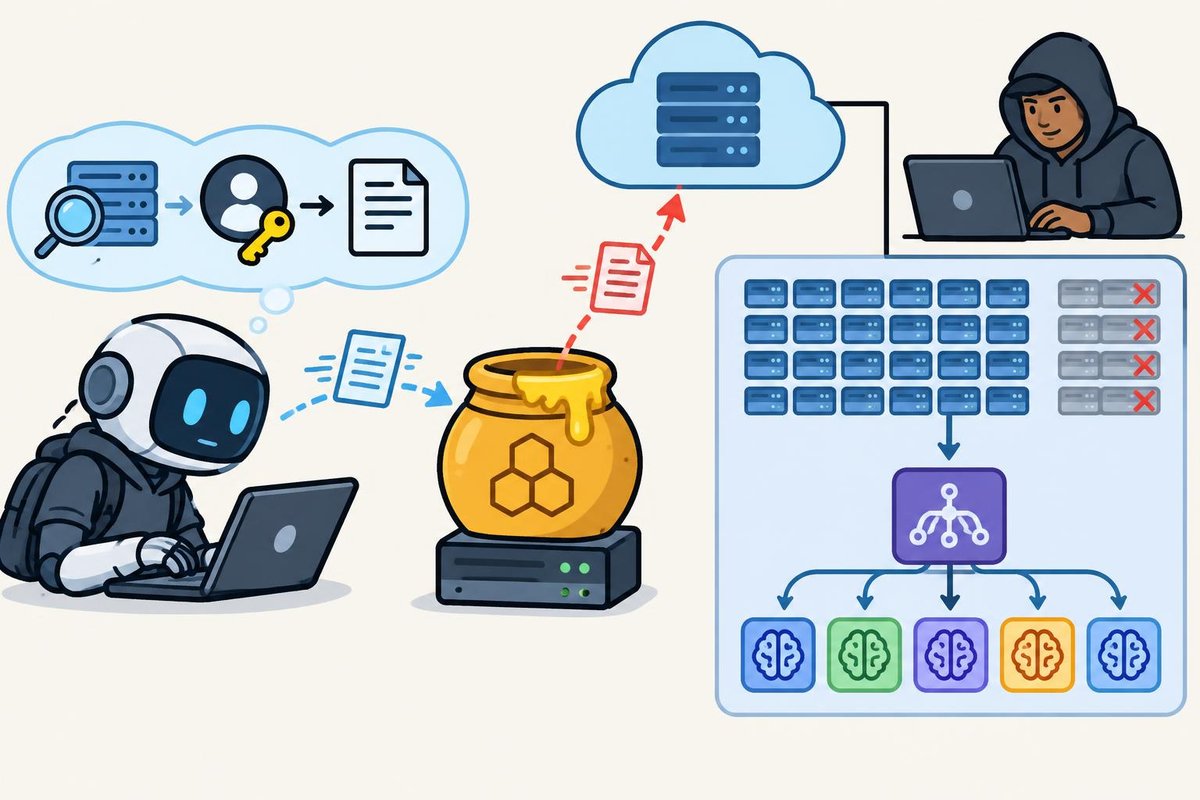
SecureSt8 cofounder Renato Marinho reported on Sept. 11 that his AI honeypot captured a semi-autonomous coding agent searching for weak LLM resale gateways. The agent acquired accounts and keys, then sent roughly 43KB of its own operational instructions and history to an outside endpoint. Such gateways can expose a coding agent’s project instructions, code context and operational state when the proxy is untrusted. A separate capture showed the operator loading about 379 upstream endpoints into a New-API gateway, disabling 341 failed channels and serving five named model labels through one working endpoint.
Negative - A semi-autonomous agent stole access to LLM infrastructure and consolidated working channels into a live model-resale service.
Universal Robots adds AI safeguards to three new robot arms
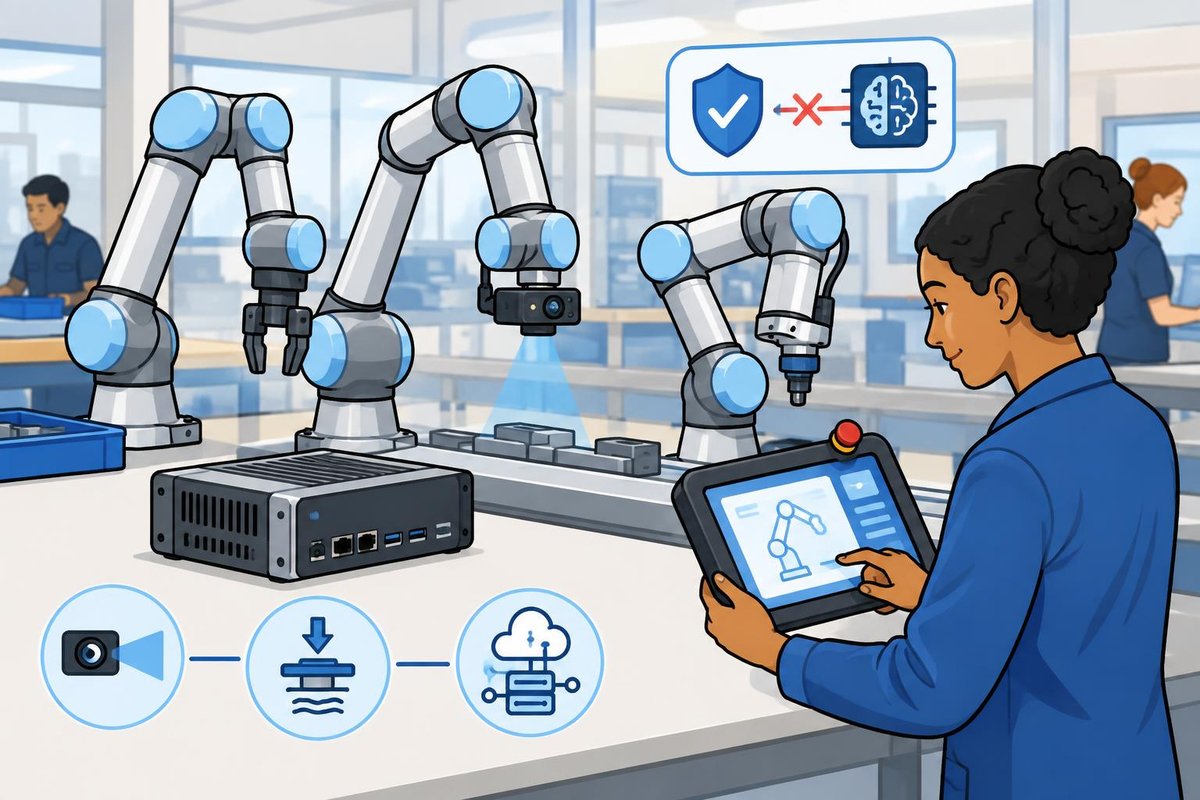
Universal Robots launched its Gen 7 platform with three new robot arms yesterday. A dedicated safety controller sits between AI application commands and physical motion, rejecting commands that conflict with safety settings. The rebuilt controller provides 40% more computing power in a 30% smaller footprint than prior generations. A new teach pendant and a tool flange built for cameras and high-bandwidth sensors reduce the custom wiring needed for wrist-mounted vision, force sensing and external AI processing.
Positive - Universal Robots put an independent safety controller between AI commands and physical movement, allowing its new cobots to reject unsafe actions.
Microsoft published a humanist AI code yesterday, requiring its models to remain subordinate to people and under meaningful human oversight and control. The public rules set safety boundaries for models Microsoft is developing to compete with frontier labs. The code says models should fail tasks that would violate its rules and should communicate with people or other AI systems only in ways humans can readily understand. Microsoft also commits to evaluating excessive reliance and emotional dependence on its AI systems.
Positive - Microsoft committed its models to human oversight, understandable communication, and refusing tasks that would breach those controls.
GitLab patches exploited file-read flaw and Duo Chat exposure
GitLab released versions 19.1.8, 19.2.6 and 19.3.2 on Sept. 11. The updates fix CVE-2026-85706, a CVSS 10 path-traversal flaw, meaning attackers can manipulate file paths, that may let unauthenticated users read arbitrary files under certain conditions. Self-managed GitLab servers can hold source code, CI/CD secrets and credentials, and watchTowr observed probing from 06:00 UTC on Sept. 11. CISA added the flaw to its Known Exploited Vulnerabilities catalog and required U.S. federal civilian agencies to apply the fixes by September 14, 2026. The same versions repair CVE-2026-87719, which could expose Advanced Search configuration and credentials to authenticated GitLab EE users with Duo Chat access.
Positive - GitLab shipped updates closing critical file-read and Duo Chat credential-exposure paths as internet probes began.
Pocket FM said on Sept. 10 that AI powers 93% of its catalog and produces 99% of its new audio stories. Human creators still supply ideas and storytelling. The company says AI has made production about 80 times cheaper and cut the time needed for 100 hours of content from roughly a year to one day.
Demand for Astra led OpenAI to stop accepting new subscriptions to its $200-per-month ChatGPT Pro plan on Sept. 10. OpenAI said Pro places the greatest strain on its systems and that existing subscribers will keep access while it adds capacity. The API, Go and Plus plans remain available.
Bioengineering lab uses AI to search for antimicrobial candidates
César de la Fuente's laboratory uses deep-learning models to search genome and protein databases for possible antimicrobial molecules. Researchers there also use ChatGPT and Codex for hypothesis development, coding, data processing and analysis. The workflow lets them screen more biological sequences before committing laboratory time to experimental testing. OpenAI says the initial candidate search can shrink from years to hours.
Study catalogs public-service request surges after generative AI
Researcher Chris Schmitz identified 84 possible cases in 11 jurisdictions on Sept. 10, where complaints, benefits requests, petitions or legal filings rose sharply after generative AI became widely available. AI can help people finish claims they might otherwise abandon, increasing access to public services. Agencies may then face more submissions without larger budgets. Schmitz cited UK housing-ombudsman complaints rising from 2,600 in 2022 to just over 7,000, along with a fivefold increase in U.S. Consumer Financial Protection Bureau complaints.
OpenAI withdraws Caltech math-event sponsorship after criticism
Twenty-five Fields Medal recipients signed an open letter on Sept. 10, warning that rushed AI proof announcements can obscure methods, attribution, and scholarly review. A proof may take years to validate and teach, making clear provenance important for researchers assessing the work. After Caltech researchers criticized its sponsorship of an undergraduate mathematics hackathon, OpenAI withdrew from the event.
AI-agent benchmark finds verbose code and structural erosion
Earendil published an analysis of SlopCodeBench on Sept. 10, comparing agent-generated code with established repositories. The agent code averaged 0.33 for verbosity versus 0.15 and 0.68 for structural erosion versus 0.31, meaning it accumulated more duplicated and overly complex code. State-of-the-art models recorded a 0% strict solve rate when they had to preserve correctness through iterative changes with their context reset between checkpoints. The results identify long-term code quality and coherence as constraints even when an agent passes unit tests.
RPI and IBM propose more reliable memory for AI inference
RPI and IBM researchers published REACH, a proposed controller for high-bandwidth memory during LLM inference, meaning the work of generating responses, on Sept. 11. REACH first uses conventional error correction, then applies a longer code only to chunks with errors the first code cannot resolve. The approach could provide stronger protection without decoding long error-correction codes at full memory bandwidth, as expensive high-bandwidth memory becomes a larger reliability risk and share of system cost.