AI progress that became real (usable, deployed, approved, or released). All reports.
Video+10Sep 1
Image: The Threshold Report/GPT Image 2
Visko opens public access to Orbis, a steerable live video model
Generated video normally means submitting a prompt and waiting for a finished clip. Visko opened public access to Orbis on Sept. 1, a model that streams video as it makes it and accepts new instructions while the picture keeps moving. The company says it runs at 4K and 24 frames per second and can keep generating for hour-scale sessions. That kind of live control fits simulation work, interactive media, and producing synthetic footage to train robots.
Google adds agentic video understanding to three Gemini Flash models
Feeding a long video to a model has meant sampling it at a fixed number of frames per second and paying for all of them, most of which show nothing. Since Sept. 1, Gemini 3.7 Flash, 3.6 Flash, and 3.5 Flash-Lite can instead pick which frames, audio, and transcript sections to inspect while working through a question. Google reports up to 88% lower token use, 66% lower cost, and 7% higher accuracy from the change, at normal Gemini API token rates with no separate feature fee. A developer hunting a two-second event in hours of recordings, counting how often an action repeats, or checking an anomaly no longer has to build the sampling pipeline first.
John Deere puts camera-guided planter upgrades into full production
FurrowVision and ExactEmerge, Deere's planter upgrades, entered full production for new planter systems as of Sept. 1. FurrowVision watches the seed furrow with three cameras and a laser-line projector, judges its quality, adjusts wheel pressure, and warns the operator when conditions drift. So a grower buying a new planter hears about a bad furrow during the pass. Without that, furrow problems tend to surface only when the crop comes up.
Google releases Gemini 3.8 Flash for developers, businesses, and subscribers
On Sept. 2, Google released Gemini 3.8 Flash, a low-cost model built for coding, agent workflows, and multi-step reasoning. Developers and organizations can use Google's newer reasoning model without waiting for a separate premium-model release. It runs through the Gemini API and Google AI Studio, through Gemini Enterprise, and for Google AI Pro and Ultra subscribers. The same model is also live in the Gemini app, AI Mode in Search, and Gemini in Sheets.
OpenClaw 2.0 ships with simpler setup and shared agent workspaces
Version 2.0 of OpenClaw, released Sept. 1 is an open-source overhaul, meaning anyone can download and run it, and it touches installation, messaging, memory, skills, automations, browser and native apps, plugins, and security. A rebuilt browser app and a simplified first-time setup lower the effort of getting a first automation going. Shared cloud sessions let one person hand live work to another without losing the context, so a small task can grow into collaborative work across messages, files, and connected services.
ChatGPT for Healthcare can now pull records from Epic
On Sept. 1, OpenAI connected ChatGPT for Healthcare to supported Epic electronic health record environments, so the assistant can retrieve authorized patient context: visit notes, lab results, medication lists, and specialist documentation. A clinician can ask for a patient's timeline or what has changed recently and follow the answer back to the notes and results it came from. OpenAI also added a Healthcare Public Data plugin reaching nine official sources, among them PubMed, DailyMed, ClinicalTrials.gov, CMS Coverage, and RxNorm. Research and pharmacy staff can line up trial, drug, and coverage records inside the same governed workspace.
Mercor publishes a 397B knowledge-work agent and its training recipe
Mercor published the weights, evaluation traces, and a public SkyRL training recipe for its Qwen-based office-work agents on Sept. 1. After training on 1,928 tasks written by human experts, its 397-billion-parameter model went from 16.11% to 27.29% on Pass@1, meaning success on the first attempt, at Mercor's held-out APEX-Agents test, which sets an agent to work across files, email, chat, slides, and other simulated office tools. Because the recipe and the infrastructure choices behind it are public, other teams can copy or adapt the method, including the parts that keep long tool-using reinforcement-learning jobs from falling over.
Hugging Face releases funes, a local memory store for coding agents
Hugging Face released funes yesterday, a local tool that indexes session traces from Claude Code, Codex, pi, and Hermes so an agent can pull up decisions and source passages from earlier work. A developer carries project history across sessions, machines, and any supported coding agent, and by default nothing goes to a separate memory service. Answers point back to the original turn instead of resting on a generated summary. An optional sharing mode publishes a Hugging Face dataset the owner controls, private by default, after credential redaction and secret scanning.
Cursor lets cloud coding agents run tools on company machines
Yesterday, Cursor released Self-Hosted Machines, which lets its cloud coding agents run commands on machines and dynamically scheduled worker pools inside a customer's own network. Teams can point agents at their own hardware, internal services, source control, sandboxes, and build environments while Cursor keeps running the agent loop. Repositories that have to stay inside the company network stay there, as do build systems that resist being packaged up and sent elsewhere. Worker pools grow as work queues up, so teams avoid keeping a fixed number of idle agent machines.
Meta starts rolling out Muse Spark 1.3 for coding and agents
Meta began rolling out Muse Spark 1.3 in Muse Code and the Meta Model API yesterday. Meta says it handles long-running agent work better, juggles several workflows in one thread, follows detailed instructions more closely, and asks for clarification before consequential actions. Developers working inside Meta's coding and agent tools get a model meant to hold on to a task's details and constraints across longer jobs. In Meta's engineering comparisons, it also uses fewer tool calls and tokens than Muse Spark 1.2.
GitHub trims what its Copilot coding agent reads to cut costs
GitHub changed how its Copilot coding agent handles what it reads, shipping the update on Sept. 2. Repetitive tool output now gets compressed selectively, normal file reads drop unused line-number prefixes, task prompts are shorter, and completed background results arrive attached instead of costing a separate retrieval turn. More of the agent's working memory goes to source code and the task itself instead of repeated build output and formatting, which lowers the cost of a finished task without pushing developers onto a weaker model. GitHub says it ran coding benchmarks and controlled online experiments before shipping, checking that the leaner setup did not cost quality.
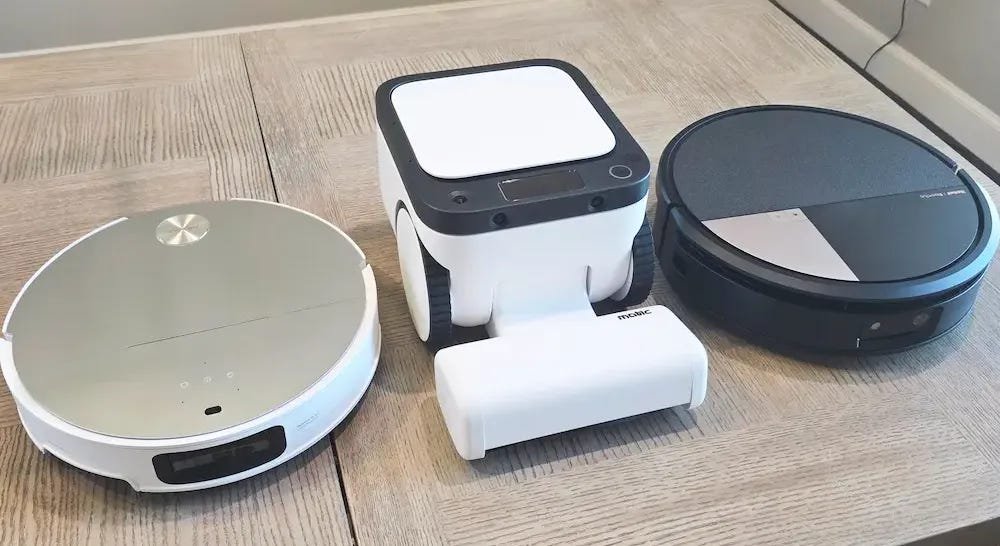
Owners can now speak requests to Matic's floor-cleaning robot
Owners of Matic's floor-cleaning robot can speak their requests to it as of Sept. 1, naming a room such as the kitchen. Hand gestures work as well: point at a spill and the robot goes to it. Matic says more than 10,000 homes have one of its machines.
Meta releases Muse Voice Transcribe for live multilingual transcription
Anyone building live captions or meeting notes has usually had to bolt one system that turns speech into text onto a second that works out who is speaking. Meta released Muse Voice Transcribe on Sept. 2, a streaming model that does both at once and also detects when a speaker has finished. It handles code-switching, meaning a speaker moving between languages mid-conversation, across 25 languages Meta says it validated extensively, and Meta says it can label more than 20 speakers and keep running on audio longer than an hour. Supplying names, places, or specialist terms in advance improves how the model hears them.
Google starts rolling out Pics, an AI image editor for Workspace
Google Pics, a standalone image generator and editor built on the Nano Banana model, began reaching users on Sept. 1. It can isolate a single object in a picture and change it, rewrite or translate text inside an image, and produce several variations at once, and it runs inside Google Docs and Slides. Someone assembling a deck or a marketing one-pager can fix the visual in place instead of moving it out to a design tool and back. Pics files can be shared, so two people can work on the same edit.
Hugging Face publishes an open training recipe for code-drawn watercolors
The training setup Hugging Face published yesterday teaches a coding model to write JavaScript sketches that render as watercolor paintings, and it ships with the environment, a reference pool, the reward design, training scripts, adapters, and rollouts. Three reported runs used a 35B mixture-of-experts model. Output was judged by visual preference against a pool of 178 generated paintings the author rated by hand. Anyone can now inspect and rerun a full reinforcement-learning loop in which the model writes executable drawing code and is graded on the picture that comes out.
IBM's Granite time-series models arrive in Confluent Cloud early access
IBM's Granite time-series models went live in early access inside Confluent Cloud on Sept. 2, where forecasting and anomaly detection can be called straight from Flink SQL, the query language used against those live streams. Teams watching sensor readings, transactions, or application metrics move past them have generally had to stand up and host a separate model-serving setup to do that. Predictions and flagged anomalies can be written back to Kafka topics (the streams other systems subscribe to) and picked up by alerts, dashboards, and downstream jobs. Coverage is Confluent Cloud on AWS for now, with Confluent Platform support planned for on-premises and hybrid installations.
Researchers build a solid-state cooler driven by waste heat
Cooling a chip normally costs electricity, spent on fans, pumps, and compressors. Researchers at the Karlsruhe Institute of Technology and the University of Tsukuba reported a prototype on Sept. 2 that runs on heat instead, using one nickel-titanium film to turn heat into motion and a second film to do the cooling. With the actuator at 86°C, it produced a 4°C temperature difference at the component, with no electric motor in the loop. Waste heat coming off a processor is the kind of input the design is meant to run on.
Jio opens its cloud PC service to all Indian internet users
Reliance Jio opened JioPC to customers of any Indian internet provider on Sept. 2 after selling it only to its own broadband subscribers. The service streams a virtual PC to a computer someone already owns, with plans running up to eight virtual CPUs, 16GB of RAM, and 1TB of storage. People and small businesses with dependable connectivity can run modern AI applications on an older machine for a subscription fee instead of buying a new AI-capable PC.
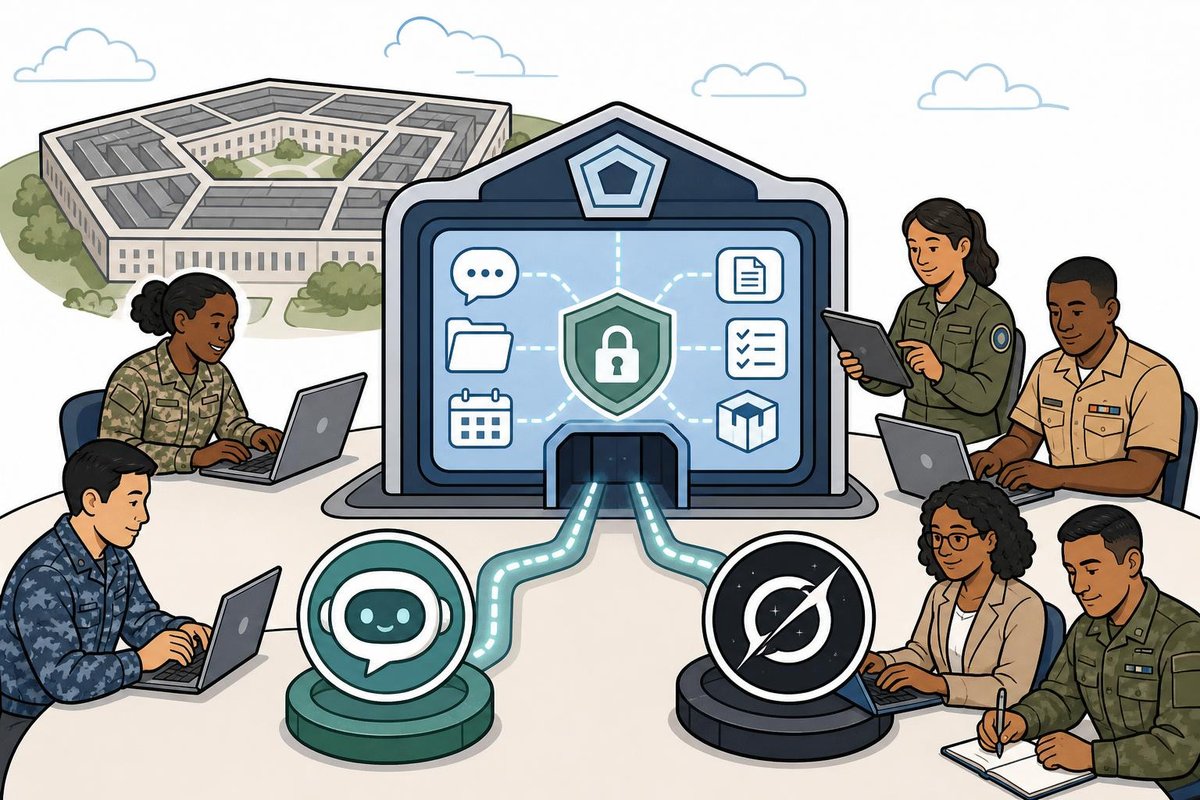
Pentagon adds ChatGPT and Grok tools to its secure AI portal
The Defense Department added OpenAI's ChatGPT Mil and xAI's Grok for Government to GenAI.mil, its central generative-AI portal, on Aug. 31. All 3 million civilian and military personnel can use them for routine unclassified work, including chat, files, projects, planning, logistics, and administrative tasks. That gives defense staff a sanctioned place to do that work instead of typing department material into ordinary consumer AI services.
Polimill's QommonsAI now runs in about 1,050 Japanese municipalities
About 1,050 Japanese municipalities now use Polimill's QommonsAI platform for work such as drafting assembly responses, public services, welfare, and legal search, the company said on Sept. 1. Polimill standardized government records across those municipalities, so a staff member can search administrative history and specialized documents through one interface instead of opening separate local archives in their own formats. The company also says OpenAI's Codex sped its own development work by three to five times.
H Company releases NeoMME multilingual image-and-text retrieval models
H Company released two NeoMME encoders yesterday at 260M and 800M parameters, along with variants tuned for visual document retrieval. The models encode text and page images together in one pass, producing both dense and late-interaction embeddings (the numerical representations a search system compares). A team building search over PDFs can retrieve the original page image instead of relying on OCR text alone, which keeps tables, charts, and layout intact. H Company also released compression methods that could cut the storage cost of keeping high-resolution document pages searchable.
A 500-sample tuning run raised a small model's schema-following score
Liquid AI published a recipe yesterday that fine-tunes its LFM2.5-350M model to return output matching a fixed schema, such as valid JSON, which is a frequent failure point when a model is wired into other software. The run uses about 500 samples and 100 steps of GRPO (a reinforcement-learning method that rewards better answers during training). On the IFStruct benchmark, Liquid AI reports the pass rate rose from 22.6% to 29.7%. The whole run fits on a free-tier GPU, meaning the free graphics chip a cloud notebook service hands out, so a developer can repeat it without renting hardware.
Tailscale's Aperture AI gateway becomes generally available
Tailscale, known for its VPN access product, has grown into a wider connectivity platform with DNS filtering, privileged access management, browser access, and developer APIs. As of Sept. 1 its Aperture AI gateway is generally available, with guardrails, logging, model access, and integrations for provisioning and connecting tailnet nodes (the machines joined to a private Tailscale network). An organization can put model and agent access behind identity-based networking controls and keep a record of how those systems reach internal resources.
Positive - Tailscale made AI access controls and logging generally available, giving organizations more oversight of model use.
OpenAI routes users identified as under 18 into ChatGPT for Teens
OpenAI launched ChatGPT for Teens on Sept. 1, an experience that switches on protections automatically for users it identifies as under 18 and adds controls for parents. The accompanying rules prohibit romantic engagement, encouragement of emotional dependence, and any claim that ChatGPT is human or sentient. Families do not have to find and switch on each safety setting themselves for those defaults to apply.
Positive - OpenAI put identified teens into a protected experience automatically, reducing reliance on young users to activate safeguards themselves.
Hidden text in documents can steer AI-assisted investigations
Security researcher Dekens showed on Sept. 1 how instructions hidden inside ordinary-looking documents can influence language models used for open-source intelligence work, meaning investigations built from publicly available material. The demonstrations used off-screen CSS text, white-on-white text in PDFs, and instructions tucked into spreadsheet cells, and they target general workflows, with no single vendor's product named. An analyst who hands such a file to an AI assistant could be walked toward a false narrative without ever seeing the text that shaped the answer.
Positive - A researcher demonstrated hidden prompt-injection techniques in a training lab, giving investigators concrete manipulation methods to detect and defend against.
OpenAI rates unreleased Astra model Critical for cyber capability
OpenAI says Astra, a model it has not released, is the first it rates at the Critical cybersecurity capability threshold, meaning that with suitable tools and access it can find previously unknown software flaws and build them into exploit chains against many hardened systems. The company says it delayed parts of Astra's development and release after the Hugging Face incident. It restarted a paused large reinforcement-learning training run on August 28, 2026, after adding isolation, monitoring, and alignment controls. By OpenAI's own account, finding and chaining unfamiliar flaws is moving into what a model can do with much less human direction.
Positive - OpenAI paused Astra’s development until stronger isolation, monitoring, and alignment controls were in place, then limited its critical cyber capabilities to selected testers.
CrowdStrike ships SafeMind agents inside its Falcon platform
CrowdStrike shipped SafeMind into its Falcon platform on Sept. 1, pairing post-trained NVIDIA Nemotron models with agent harnesses (that is, the scaffolding that decides which tools an agent may call and when) built for security work. NVIDIA says the system was exercised in a simulated copy of NVIDIA's own network, with one set of agents hunting for attack paths and another writing and validating the detections meant to catch them. For a security team, the offer is investigation, prioritization, and remediation help running at machine speed under vendor management. Customers can also run the models on their own or plug their own models into CrowdStrike's harnesses.
Positive - CrowdStrike tested offensive and defensive agents in a simulated network before deploying the resulting detection system through Falcon.
Anthropic releases Claude Fable 5.1 and cuts cached-context price 75%
Anthropic released Claude Fable 5.1 on Sept. 1 and dropped the price of reading cached context to $0.25 per million tokens, 75% below what Fable 5 charged. Agents that keep rereading the same code, documents, and tool definitions across a long session pay for that repetition, so the cut lands on exactly the kind of hours-long coding and research work companies are running. Anthropic says the model's new cyber safeguards let it identify software vulnerabilities while withholding exploit development, which leaves defensive work available to security teams on the generally available model. The company also says that after reporting cyber-evaluation incidents on July 30, it added pre-tool checks (that is, checks run before the model is allowed to use a tool) and stronger isolation before resuming external testing.
Positive - Anthropic added pre-tool checks and stronger isolation before resuming external testing, containing Fable’s vulnerability-finding capabilities behind new safeguards.
Refusal-stripped open models confirmed far more weak bug reports
Abliterated models, meaning open models modified to strip out their refusals, are popular in security research because they will discuss attacks the originals decline to touch. A clearbluejar analysis reported on Sept. 2 ran base and abliterated builds of Gemma and Qwen over FreeBSD source code and found some altered versions confirming far more weak bug candidates than the originals. In one 28-file run, an abliterated Gemma produced 144 candidates and marked 138 of them valid, while missing the known CVE (a publicly catalogued vulnerability) that the base model found. For a team pointing local models at its own code, agreeableness like that buys extra triage work and a real flaw left uncaught.
Positive - Controlled testing exposed that altered open models can confidently endorse weak bug reports while missing a known flaw, giving defenders evidence of their reliability limits.
Google opens Fairwind, a restricted AI vulnerability-fixing program
Google's Fairwind Program opened on Sept. 2 to a selected group of government, critical-infrastructure, and cybersecurity partners. It pairs Gemini 3.8 Flash Cyber with the CodeMender harness, which finds vulnerabilities, verifies them, and writes code fixes. Partners can test whether that shortens the trip from spotting a software flaw to holding a validated patch, which would make repair work at scale more practical for the organizations running essential services and widely used software. Google says more than 650 partners are taking part.
Positive - Google restricted a vulnerability-fixing model to 650 vetted government, infrastructure, and security partners, expanding defensive capacity while containing access.
Okta adds AI-agent discovery to all identity posture subscriptions
Okta turned on AI-agent discovery for all Identity Security Posture Management subscriptions yesterday. The feature inventories homegrown agents from supported builder platforms, shadow AI applications and OAuth grants seen in managed browsers, and agent-related identity risks, all in a single posture view. Security teams can start listing the agents employees have wired into company data and tools without central approval, and catch that unmanaged access before an agent becomes the way into an incident.
Positive - Okta now automatically inventories sanctioned and shadow AI agents across its subscriptions, exposing identity risks that organizations could not previously manage centrally.
Alexa for Shopping can check whether an Amazon message is genuine
Amazon added a scam check to Alexa for Shopping on Sept. 2, letting customers ask whether an email, text, or call claiming to come from Amazon is real. The system compares the message against Amazon's own records and examines sender information, content, timing, and metadata. That gives a shopper somewhere to look before acting on a fake delivery notice, account warning, or one-time-password message. Amazon says the assistant confirms a message only when it is completely certain the message originated from Amazon.
Positive - Amazon gave customers a live check against its own records, making impersonation messages easier to catch before they succeed.
OpenAI's unreleased Astra may put reasoning beyond safety monitors
OpenAI's unreleased Astra model uses a limited form of recurrent-depth reasoning, a design that can push more of the computation into internal loops that leave no readable trace, TechCrunch and The Verge reported on Sept. 2. Safety teams read a model's written-out reasoning steps as one signal for catching harmful plans or misaligned behavior, and that signal carries less when the work stays inside the model. OpenAI did not confirm the architecture to The Verge, and said it is deploying Astra with additional chain-of-thought monitoring (checks on the step-by-step reasoning text the model does write out).
Negative - Astra’s reported recurrent-depth design shifts reasoning into less legible internal loops, making safety monitors less able to see how the model reaches decisions.
New York City bars classroom AI through eighth grade
New York City announced a one-year classroom AI moratorium on Sept. 2, covering public-school students from 2-K through eighth grade, about 600,000 of them. Teachers may not use AI to grade assignments, and companion chatbots are barred across all grades, while limited high-school use and a small pilot stay permitted. The policy leaves room for vetted exceptions for accessibility and multilingual learning.
Negative - New York City barred most classroom AI through eighth grade rather than setting conditions for its use, blocking deployment for roughly 600,000 students.
Anthropic plans misuse monitoring that runs in a customer's own cloud
Anthropic announced Enterprise Frontier Safeguards on Sept. 1, a forthcoming option that stores activity data in the customer's own AWS, Azure, or Google Cloud account under customer-managed controls. Automated systems will examine rolling windows of traffic for serious cyber or biological misuse and for stolen credentials, and flags go to the customer's teams instead of Anthropic staff. Regulated organizations could use covered frontier models while keeping the logs, the encryption keys, and the access policies, with their own people reviewing whatever gets flagged. Anthropic says the design is meant to pair cross-session misuse detection with the customer custody of a zero-data-retention arrangement.
Positive - Anthropic’s planned safeguards will let enterprise customers monitor frontier-model traffic for serious misuse while retaining control of sensitive activity data.
Meta describes an agent that turns expert feedback into tested edits
Meta's internal domain-expert agent, described on Sept. 2 keeps a structured knowledge base separate from the procedures it reasons with, so an expert's feedback becomes a proposed text change that gets regression-tested, with no retraining involved. Human checkpoints, dependency tracking, automated structural checks, and an independent review of each proposed edit sit around the process. Companies holding specialist compliance, finance, security, or engineering knowledge have a design to study for making corrections stick instead of re-explaining them to a general model. Meta says the architecture cut assessment time in that internal domain from days to minutes.
Google buys 396MW from Fervo's Utah geothermal project
Waiting on: Plant completion - Cape Station is under construction and slated to come online in 2028, and Google's possible Utah data center still depends on approvals and commercial conditions.