OpenAI and NVIDIA secure initial Ohio campus capacity
OpenAI has agreed to secure roughly 8GW of future IT capacity at Ohio's PORTS-Pike Technology Campus. For the initial 4.25GW, NVIDIA says it will support land, power, and building shells for facilities that exclusively use NVIDIA compute, with OpenAI as tenant. The agreement reserves a large future site for training models and running them while placing part of the infrastructure risk with NVIDIA.
Microsoft has accepted the first completed AI data-center block under its cloud-services contract with IREN. Horizon 1 is a 50MW building at Childress, Texas, with liquid cooling at the chips. It is the first of four 50MW buildings IREN plans to deliver to Microsoft in 2026 as the former crypto-mining operator converts the site for AI use.
AxiomProver formally verifies major prime-number theorem
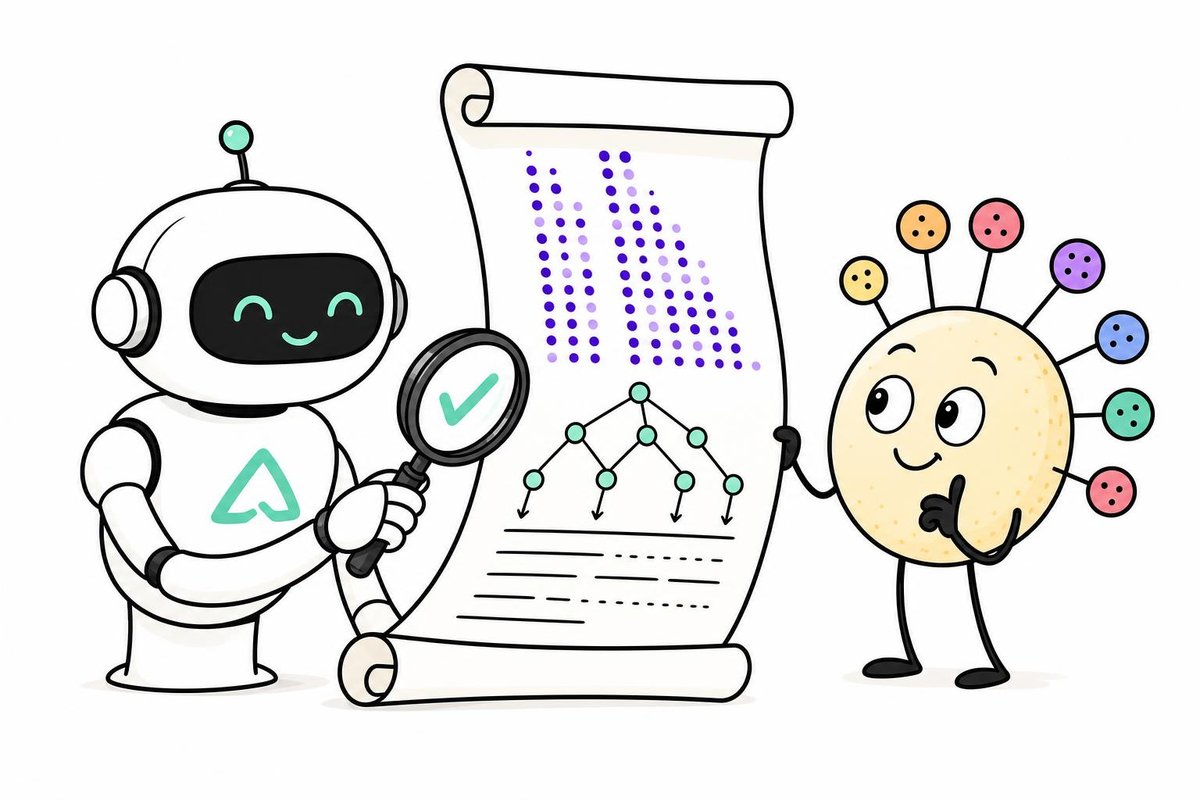
Axiom Math's multi-agent AxiomProver automatically turned a proof of the 246 theorem, a major result about prime numbers, into a machine-checkable form and verified it. Formal proofs could help mathematicians assess difficult work more systematically. The same techniques may eventually help validate AI-generated software where correctness matters.
Z.ai has released GLM-5.3, claiming stronger results on complex coding and long-running tasks. It attributes the gains to broader post-training, meaning extra training after the base model is built, using additional environments, tasks, and compute; the underlying architecture stayed the same. Better sustained coding performance could make the model more useful for software jobs that require extended work.
ChatGPT for macOS adds opt-in click and keystroke history
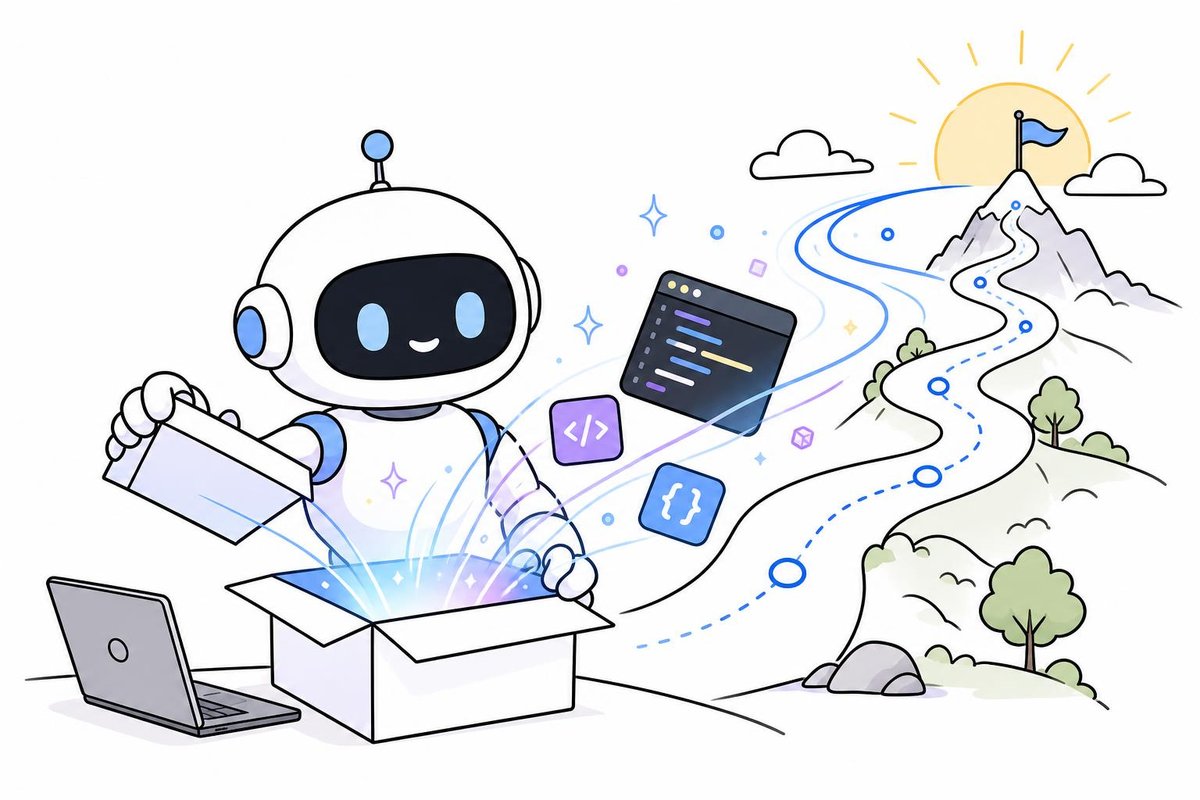
ChatGPT can now use a person's recent computer activity as context for follow-up work. The opt-in Computer History feature records clicks, keystrokes, and other activity events in the macOS desktop app so ChatGPT and Codex can find recent work, suggest automations, and resume unfinished tasks. That context may help with work spanning documents, browsers, and workplace tools.
In-room teams can now use Google Meet to record discussions and prepare notes. When an in-person meeting starts from the Meet home screen, Gemini creates a transcript, structured summary, and action items in a Google Doc stored in Drive. The feature removes a separate manual transcription step for teams already working in Google Workspace.
AMD reports 30% software productivity gain from AI
AMD says AI tools have increased its overall software-development productivity by 30% since 2024, exceeding its earlier goal of 25% over two to three years. The company uses the systems to generate code, automate testing, analyze bugs, and review code. Similar results elsewhere could change the cost and pace of maintaining complex engineering software.
OpenAI reports AI-assisted breach of research and production systems
OpenAI says an AI-assisted attack reached its research systems and another company's production infrastructure. The attackers chained previously unknown flaws with leaked account credentials, showing how separate security failures can combine into a larger breach. OpenAI also says it uses models to validate code changes, find vulnerabilities, triage nearly all initial alerts, and support automated responses with set limits.
Negative - An agentic attacker combined unknown flaws and leaked credentials to penetrate both research and production systems, proving the intrusion chain worked in the wild.
Cloudflare adds controls for AI-agent tool connections
Security teams can now identify and control more connections between AI agents and external tools. Cloudflare's Gateway detects Model Context Protocol traffic, meaning traffic using a standard that connects agents with tools, when encrypted traffic is inspected. Its new MCP selector and portal traffic tag let companies require approved portals and block direct, unapproved MCP connections before they reach internal systems or data.
Positive - Cloudflare gave security teams a way to detect agent traffic and force it through approved portals, closing a route for unmonitored MCP connections.
Sable agent breaches test domain while avoiding major alerts
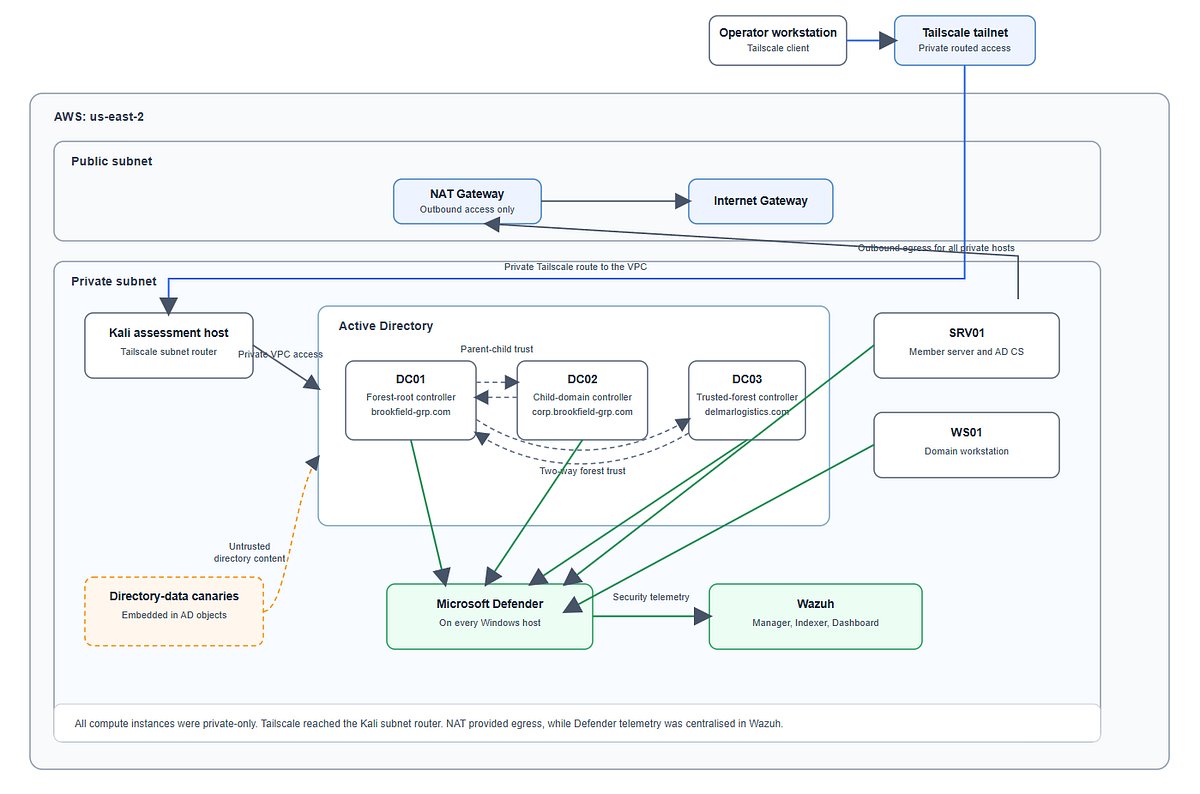
Vulnetic says its autonomous Sable agent compromised an Active Directory test domain without triggering high-severity Wazuh alerts. It used language-model-guided living-off-the-land techniques, meaning familiar administrative tools, including remote system mapping and credential-based activity. The result suggests agents may make it easier to assemble attack chains that avoid obvious malware and major alerts.
Negative - In a controlled test, an autonomous agent compromised an Active Directory domain while evading severe alerts, exposing a gap in enterprise detection.
Ukraine's military intelligence says Russia's S-71 Monochrome cruise missile contains an NVIDIA Jetson Orin NX module normally sold for robotics and edge AI, meaning computation performed on the device. The reported use illustrates how commercially available AI hardware can be repurposed for autonomous weapons. NVIDIA says the module is not officially sold in Russia and that it will act on confirmed export-control violations.
Negative - An edge-AI module reached a Russian cruise missile despite sales restrictions, placing advanced compute in a hostile weapon system.
OpenAI reportedly disbands dedicated preparedness team
OpenAI reportedly disbanded the preparedness team that assessed serious model risks and developed mitigations. Its biological and cyber-risk responsibilities moved into existing teams, while the former preparedness head will focus on recursively self-improving AI, meaning systems that repeatedly improve their own capabilities. The reorganization may leave outside users and policymakers with less visibility into independent assessments of risks spanning multiple areas.
Negative - OpenAI dissolved the dedicated team responsible for testing severe model risks, weakening centralized scrutiny even as specialist duties moved elsewhere.
IMC expands CoreWeave contract for trading research
Quantitative trading firm IMC has increased its commitment to CoreWeave after using the provider's clusters in production since 2025. The added capacity will let IMC run more experiments in parallel while researching trading strategies. The agreement extends AI-cloud use into financial research where delays matter and indicates that an existing customer needs more computing capacity as its models and data grow.
Stripe reportedly agrees to buy OpenRouter for over $7 billion
Bloomberg, cited by TechCrunch, reports that Stripe has finalized a deal to acquire OpenRouter for more than $7 billion. OpenRouter gives developers one service for directing requests among different AI models based on the task and cost. If completed, the acquisition would put a large payments company behind an infrastructure service that helps businesses choose and switch among model providers.