SpaceXAI launches Grok Bot for persistent workplace tasks
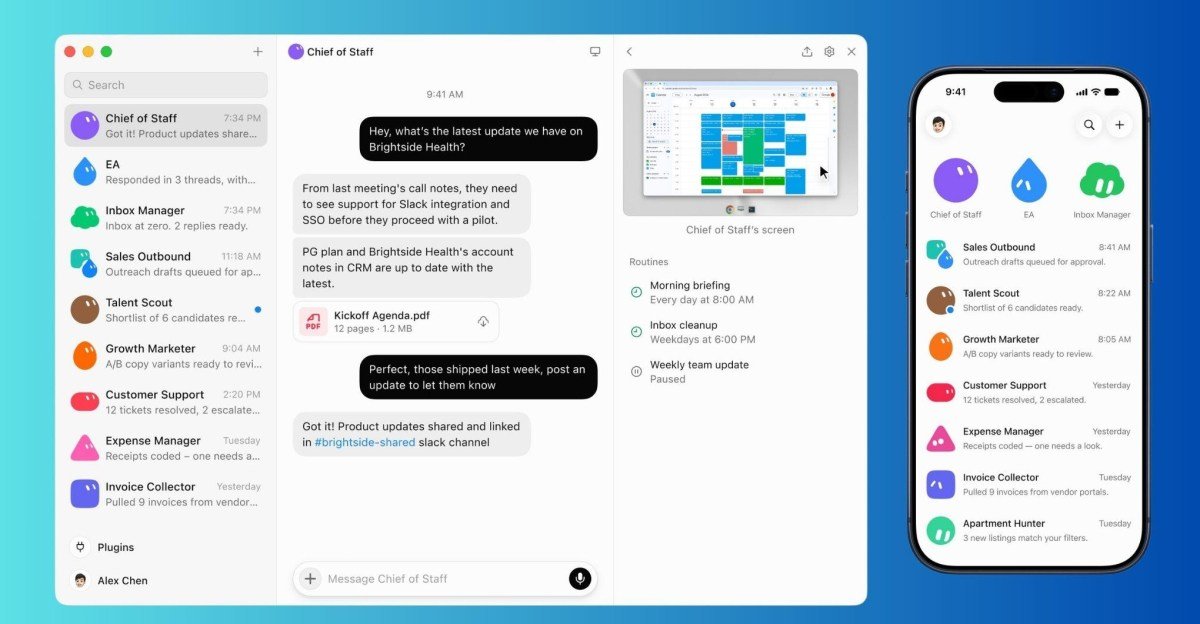
Grok Bot lets users hand off longer workplace assignments that span multiple services. SpaceXAI launched the service in beta, with bots that share cloud computers, sign into apps and websites, and complete multi-step work. The company says it has used the system internally for engineering, sales, marketing, and finance.
IBM and Together AI sign $240 million B300 cloud deal
The agreement gives IBM and Together AI a defined path to more cloud capacity for training and running models. The companies signed a $240 million deal to deploy an NVIDIA HGX B300 cloud cluster. That cluster is expected to go live in the first quarter of 2027.
US Army funds TALUS autonomous logistics development
The US Army put autonomous supply transport in contested environments into a funded development program. A team led by Stratom won the contract to develop TALUS, an autonomous distribution system. The work targets places where moving supplies with human transport is difficult or dangerous.
Google deploys sign-language-to-text AI in accessibility features
Signed communication can now be turned directly into text through new Google accessibility features for Deaf and hard-of-hearing users. Google DeepMind's SL2T sign-language-to-text model powers the tools. The features widen access to services built around written or spoken language.
JudgeGPT raises case completion in Pakistani court trial
JudgeGPT gave a national court system a measured increase in completed cases. Researchers offered the tool to 1,559 Pakistani trial judges; it combined GPT-4 with nearly 130,000 local judicial opinions and statutes. The trial reported 6.3% more cases resolved with no obvious decline in judgment quality, suggesting that a legal assistant paired with local law and training can increase judicial throughput.
Linux users now have a dedicated desktop route into ChatGPT. OpenAI released a native application for Linux operating systems. The app lets those users avoid relying entirely on the web interface.
Apple reportedly develops capture-time provenance for iPhone photos
Apple is reportedly developing capture-time provenance for iPhone photos, which could provide evidence that an image originated in the phone's camera. Code in iOS 27 beta 5 references an Apple Reference Image system. That system could embed provenance metadata, meaning information about an image's origin, when a photo is captured.
Positive - Apple is building provenance into photo capture itself, preserving an origin trail before images can be edited or stripped of context.
A Zoom vulnerability could let an attacker hijack a meeting participant's device through annotation and screen sharing. Researchers said publicly available AI models helped uncover the flaw in fewer than 20 prompts. Zoom has patched it, providing a concrete example of general-purpose AI speeding up vulnerability discovery in widely deployed software.
Positive - Researchers used AI to uncover a device-hijacking path, and responsible disclosure let Zoom close it before any reported exploitation.
Rapid7 researchers used AI assistance to build an exploit chain against SharePoint. They combined a JWT validation bug, CVE-2026-55040, with a .NET type-instantiation flaw, CVE-2026-63520. Together, the flaws enabled unauthenticated remote code execution, meaning an attacker could run code without logging in.
Negative - AI helped researchers combine two SharePoint flaws into an unauthenticated route for running code on vulnerable servers.
OpenAI Daybreak cyber models arrive on Amazon Bedrock
Security teams using AWS can now add OpenAI's cyber-focused models to existing enterprise workflows. OpenAI and AWS made the Daybreak cybersecurity capabilities available through Amazon Bedrock. Using the managed cloud platform removes the need for teams to set up separate serving infrastructure.
Positive - OpenAI and AWS put cyber-defense models into Bedrock's managed enterprise channel, giving more organizations controlled access to security capabilities.
Texas grid pause threatens US data-center pipeline
Texas paused grid interconnections affecting data-center projects, threatening planned computing capacity in a major US market. BloombergNEF estimates the pause puts 20% of the US data-center development pipeline at risk. If it continues, projects could be delayed or forced to seek power elsewhere.
OpenAI has started testing clearly labeled ads in ChatGPT to support free access. The company says ads will not determine the chatbot's answers. Its test also includes privacy protections and user controls, exploring whether commercial messages can be kept separate from model responses.
Gemini reaches one billion monthly users, Google says
Gemini is now operating at mass consumer scale, according to Google. The company says the assistant has more than one billion monthly active users and is its fastest-growing product. Google also reports that 63% of users speak to Gemini, more than 150 million images are generated daily, and over 100 million people use it on iOS.
NVIDIA announces infrastructure partnerships targeting over $500 billion
Waiting on: Binding commitments - NVIDIA has announced the partners and intended scale, while the proposed platforms still lack binding financing commitments.